
Ryan had heard the phrase his whole life. He grew up going to church with his grandma. Every time someone prayed, they ended with “in Jesus’ name, amen.” When he got older and people talked about being saved, they always said the same thing: “You just have to believe in the name of Jesus.”
Ryan nodded along. He figured he already did that. He said “Jesus” when he stubbed his toe. He wore a little cross necklace his mom gave him. He even posted “Jesus loves you” on his social media once. He assumed that counted as believing in the name. However, deep down, something felt off.
One Tuesday night after work, Ryan sat in his truck in the parking lot of a fast-food place, staring at the steering wheel. He had just listened to a podcast where the guy kept saying, “Salvation comes when you believe in the name of Jesus.” Ryan turned the engine off and muttered out loud “What does that even mean?”
The New Testament has multiple verses that refer to believing in the name of Jesus. The 13th chapter of Numbers helps us understand what that phrase means.
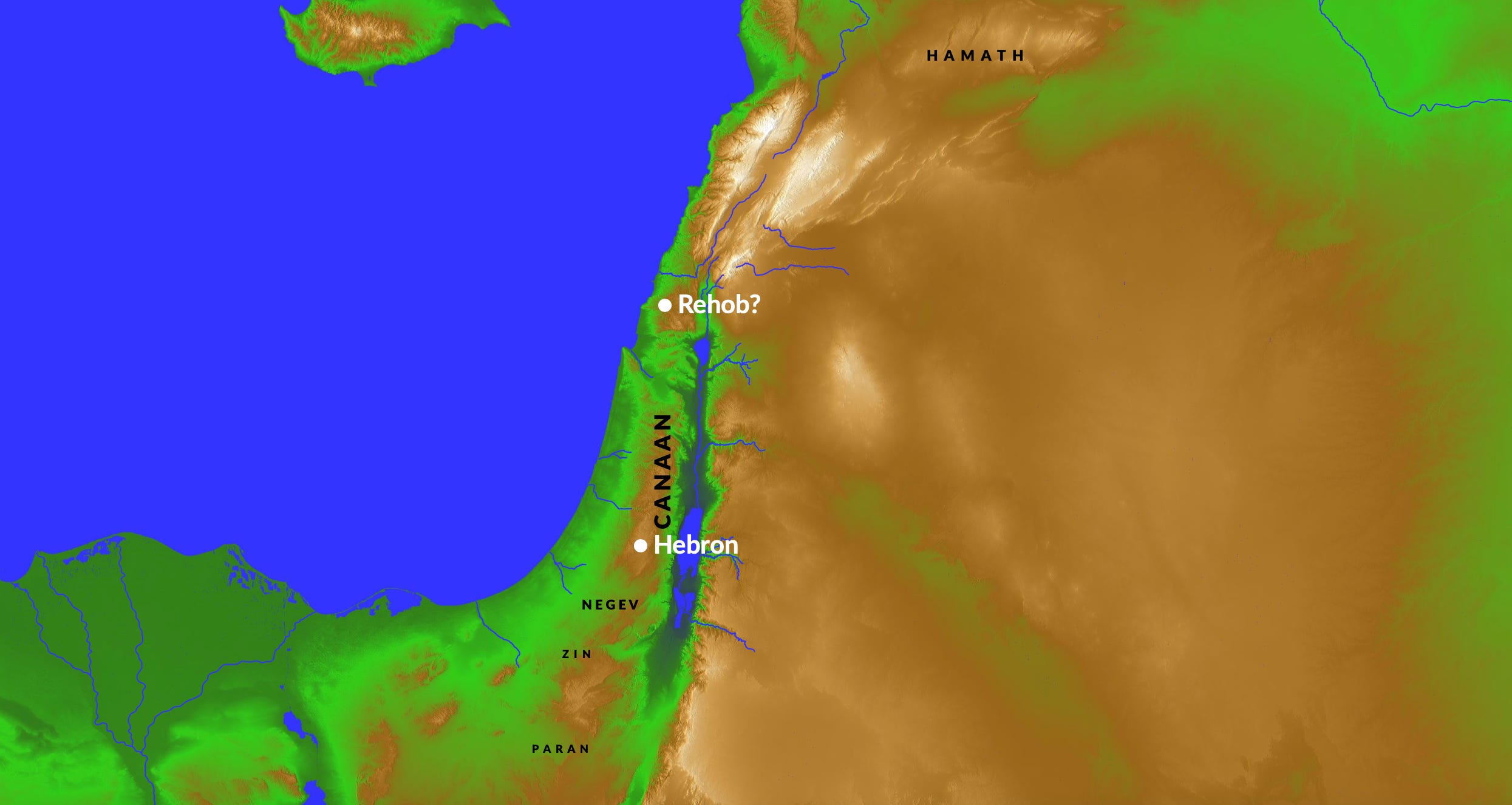
The first ten chapters of Numbers tell us about events that took place at Mount Sinai right before the Israelites left the mountain. The eleventh chapter records discontent within the Israelites as they began traveling. Then in chapter 12 we read that Miriam and Aaron launched a mini-rebellion against Moses which Yahweh dealt with by temporarily giving Miriam leprosy. The final verse of chapter 12 tells us the Israelites arrived in the wilderness of Paran, which was south of the promised land.
Num. 13:1 ¶ Then Yahweh spoke to Moses saying,
Notice that Yahweh was speaking.
Num. 13:2 “Send out for yourself men so that they may spy out the land of Canaan, which I am going to give to the sons of Israel; you shall send a man from each of their fathers’ tribes, every one a leader among them.”
Take note that it was Yahweh’s idea to send men to spy out the land.
Don’t miss the phrase “which I am going to give to the sons of Israel”. Yahweh stated His intention to give Israel the land which they were about to spy out.
Look at the word “leader”. Moses did not send random men from the tribes. He sent a leader from each tribe, men who were supposed to lead the Israelites in the direction Yahweh wanted to go.
Num. 13:3 So Moses sent them from the wilderness of Paran at the command of Yahweh, all of them men who were heads of the sons of Israel.
The wilderness of Paran was south of the promised land.
Num. 13:4 These then were their names:
from the tribe of Reuben, Shammua the son of Zaccur;
Num. 13:5 from the tribe of Simeon, Shaphat the son of Hori;
Num. 13:6 from the tribe of Judah, Caleb the son of Jephunneh;
This is the first time in the Bible we see the name “Caleb”, but it is not the last. Caleb is a prominent figure in the books of Numbers, Joshua, and Judges.
Num. 13:7 from the tribe of Issachar, Igal the son of Joseph;
Num. 13:8 from the tribe of Ephraim, Hoshea the son of Nun;
This is the first time in the Bible we see the name “Hoshea”. The Hebrew word “hoshea” is a variation of the Hebrew word “yasha”. Yasha means salvation.
Num. 13:9 from the tribe of Benjamin, Palti the son of Raphu;
Num. 13:10 from the tribe of Zebulun, Gaddiel the son of Sodi;
Num. 13:11 from the tribe of Joseph, from the tribe of Manasseh, Gaddi the son of Susi;
Num. 13:12 from the tribe of Dan, Ammiel the son of Gemalli;
Num. 13:13 from the tribe of Asher, Sethur the son of Michael;
Num. 13:14 from the tribe of Naphtali, Nahbi the son of Vophsi;
Num. 13:15 from the tribe of Gad, Geuel the son of Machi.
Other than Caleb and Hoshea, the Bible tells us very little about the other ten men who went out as spies.
Num. 13:16 These are the names of the men whom Moses sent to spy out the land; but Moses called Hoshea the son of Nun, Joshua.
This is the same Joshua who led the Israelites after the death of Moses. Take note that Moses gave Joshua his name. This fact is almost an afterthought in the narrative, but it is hugely significant.
The Hebrew word “hoshea” means salvation. The Hebrew word that is translated “Joshua” is actually the word “yehoshua”. “Yehoshua” is a combination of the words “Yahweh” and “hoshea”. “Yehoshua” means “Yahweh saves”. Eventually, “Yehoshua” was shortened to “Yeshua”. Thus, “Yeshua” is a Hebrew name that means “Yahweh saves”. In the first century AD, the Greek version of the name “Yeshua” was “Jesus”. In other words, Jesus’ Hebrew name was “Yeshua”. The names “Jesus/Yeshua” mean “Yahweh saves”. When the Bible talks about believing in the name of Jesus, it means believing that Yahweh saves.
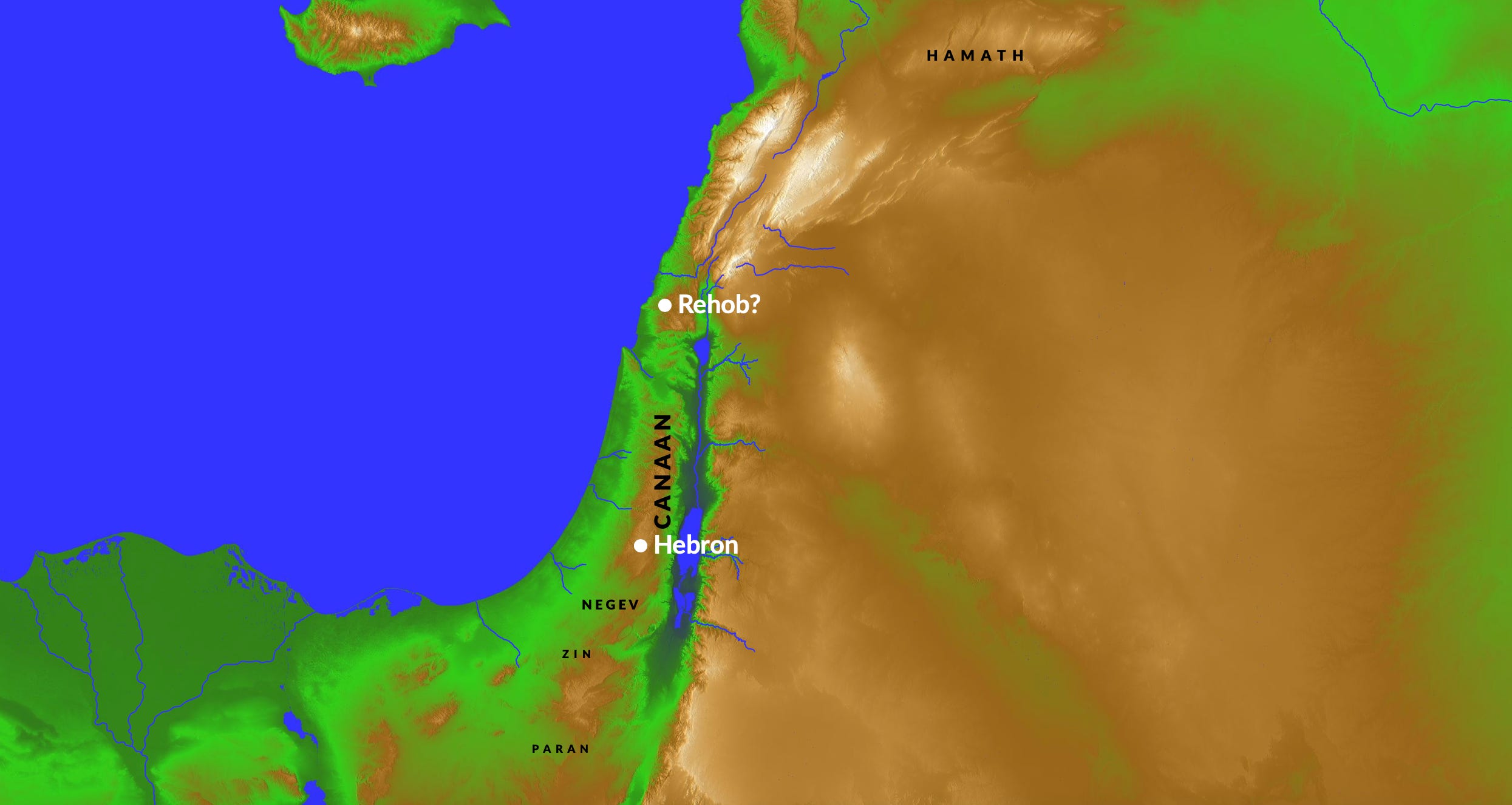
Num. 13:17 ¶ So Moses sent them to spy out the land of Canaan and said to them, “Go up there into the Negev; then go up into the hill country.
The hill country was north of the Negev. Hebron is in the hill country.
Num. 13:18 And see what the land is like, and whether the people who live in it are strong or weak, whether they are few or many.
Num. 13:19 And how is the land in which they live, is it good or bad? And how are the cities in which they live, are they like open camps or with fortifications?
Num. 13:20 And how is the land, is it fat or lean? Are there trees in it or not? Make an effort then to get some of the fruit of the land.” Now the time was the time of the first ripe grapes.
Num. 13:21 ¶ So they went up and spied out the land from the wilderness of Zin as far as Rehob, at Lebo-hamath.
The wilderness of Zin was at the southern end of the promised land. The Hebrew word “Lebo” means “to enter”; thus, Lebo-Hamath is the entrance to Hamath. There was a city at the north end of the promised land named “Rehob” that was on the path into Hamath. This verse tells us they spied out the land from the north tip to the southern tip.
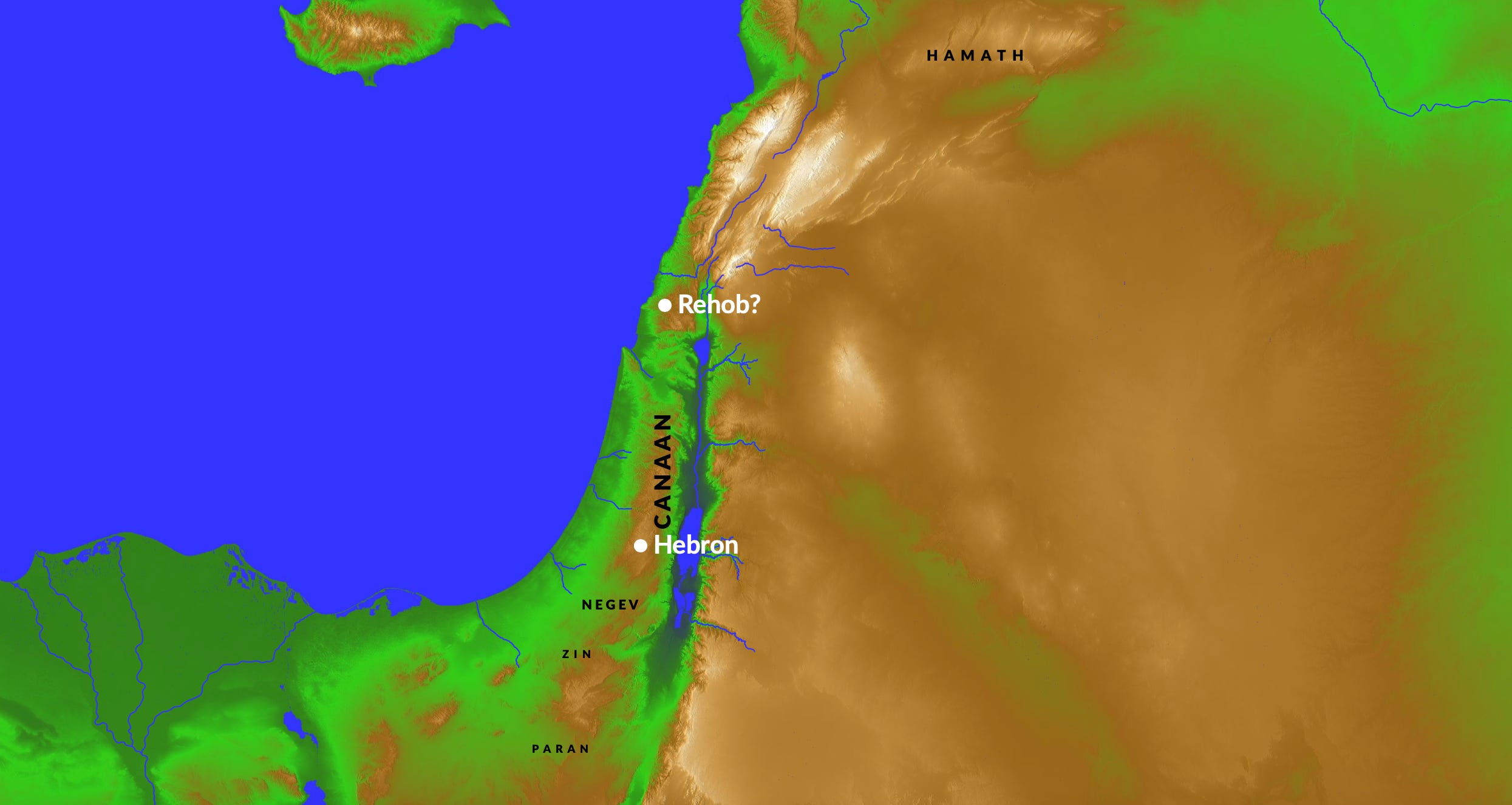
Num. 13:22 And they had gone up into the Negev and came to Hebron where Ahiman, Sheshai, and Talmai, the descendants of Anak were. (Now Hebron was built seven years before Zoan in Egypt.)
Num. 13:23 ¶ Then they came to the valley of Eshcol and from there cut down a branch with a single cluster of grapes; and they carried it on a pole between two men with some of the pomegranates and the figs.
Num. 13:24 That place was called the valley of Eshcol, because of the cluster which the sons of Israel cut down from there.
The Hebrew word “Eshcol” means “cluster”. In other words, this verse could read “That place was called the valley of Cluster, because of the cluster which the sons of Israel cut down from there.”
The phrase “believe in the name of Jesus” is commonly used. It is used so often everyone assumes everyone knows what that phrase means. However, it is used so often without explanation that some people don’t know what it means. It simply means that Yahweh saves. Yahweh is the only One who saves. Acts 4:12 tells us Peter declared “And there is salvation in no one else, for there is no other name under heaven that has been given among men by which we must be saved.”
Thanks for visiting Bible Mountain. If you have already joined my email list, thank you and please tell others about Bible Mountain. If you have not joined my email list yet, please do so now. In order to join, go to BibleMountain.com, click on subscribe, and that will take you to a page where you can sign up. Your email address will not be sold nor given away. Once again, thanks for visiting Bible Mountain.
“Scripture quotations taken from the (LSB®) Legacy Standard Bible®, Copyright © 2021 by The Lockman Foundation. Used by permission. All rights reserved. Managed in partnership with Three Sixteen Publishing Inc. LSBible.org and 316publishing.com.”