
Any person who feels their lot in life is unfair is tempted to question God, complain about God, and petition God for fairness and preferential treatment. Since the Bible tells us to bring all our requests to God, there is some basis for telling God exactly how we feel, what we think, and what we wish God would do for us.
When Job was suffering due to the calamity that had befallen him, he wanted to petition God for redress and fairness. However, he recognized that arguing with God and contending with Him was futile since God controls the universe. Job’s mindset regarding the overwhelming power of God reminds us to have a humble mindset, even as we bring all our petitions and requests before Him.
Yesterday, we began reading section 5, which consists of Bildad expressing his thoughts on why Job was suffering.
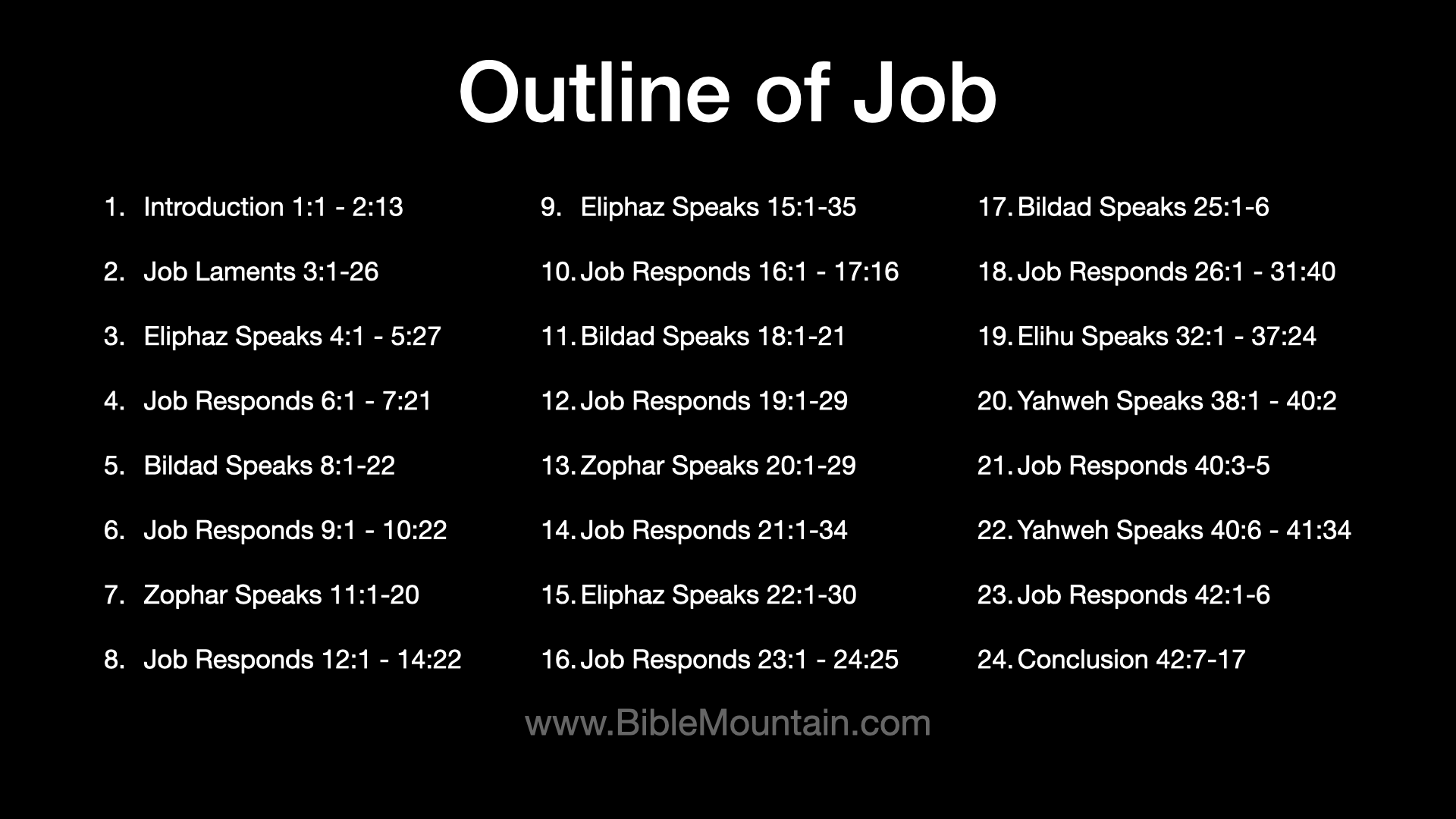
He began by pointing out that Yahweh does not pervert justice, and accused Job’s sons of sin which resulted in their death. The following verses continue Bildad’s description of what happens to those who forget God.
Job 8:16 He thrives before the sun,
And his shoots go forth over his garden.
Notice the word “before”. Before the sun comes up, the plant can thrive. The implication is once the hot sun appears, then the plant will wither.
Job 8:17 His roots wrap around a rock pile;
He looks upon a house of stones.
Job 8:18 If He swallows him up from his place,
Then it will deny him, saying, ‘I never saw you.’
Job 8:19 Behold, this is the joy of His way;
And out of the dust others will spring.
Job 8:20 Behold, God will not reject a blameless man,
Nor will He strengthen the hand of the evildoers.
This was a clear statement of Bildad’s belief. He believed if Job repented, then God would not reject him and make him suffer. Likewise, no evil man can prosper.
Job 8:21 He will yet fill your mouth with laughter
And your lips with shouting.
Bildad promised that Job could prosper again, all he had to do was repent.
Job 8:22 Those who hate you will be clothed with shame,
And the tent of the wicked will be no longer.”
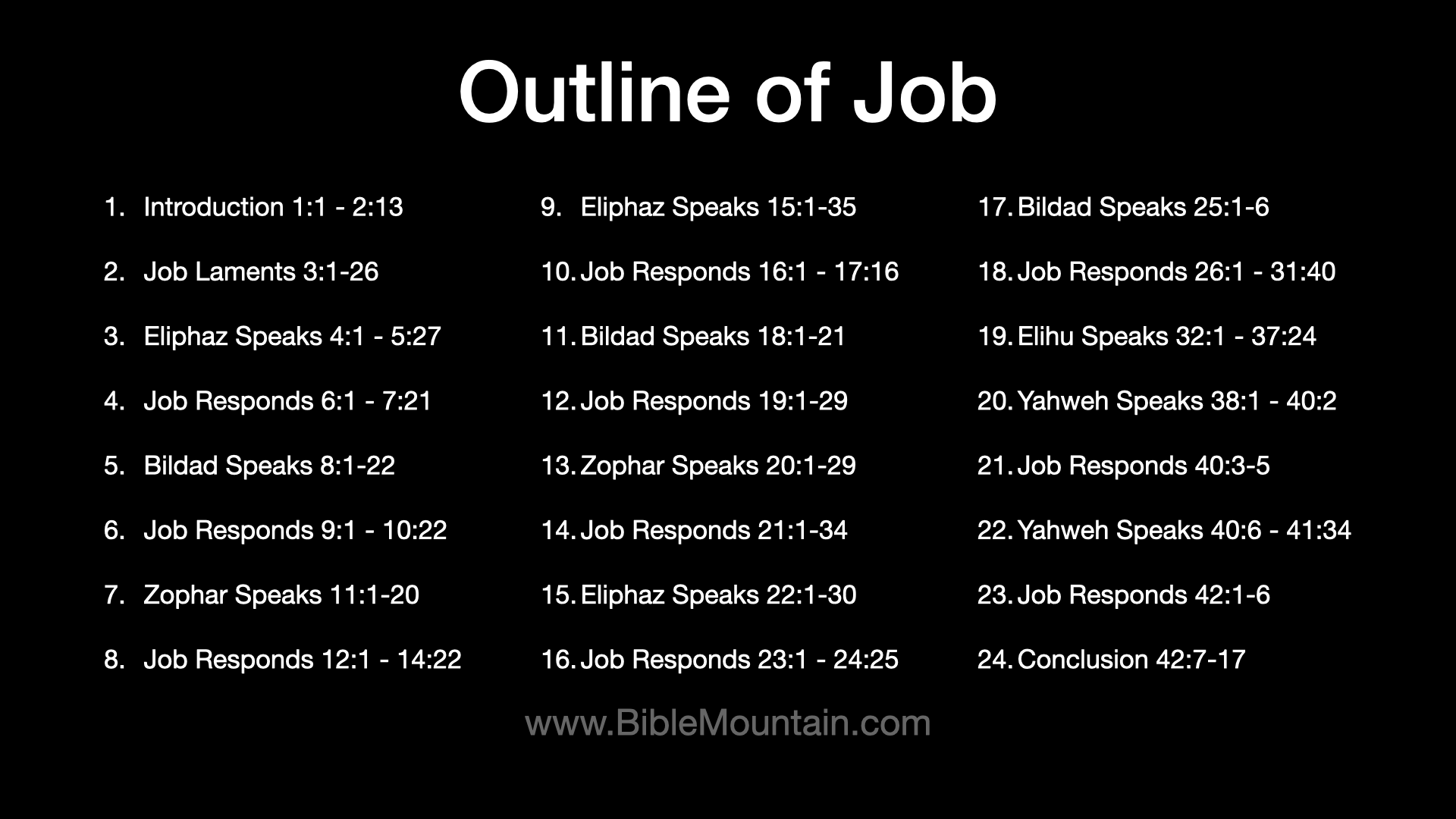
The following verse starts section 6 in which Job responded to Bildad’s assertions about life.
Job 9:1 ¶ Then Job answered and said,
Job 9:2 “In truth I know that this is so;
But how can a man be in the right before God?
Job agreed with Bildad that God would not reject a blameless man, but Job went on to claim it is impossible for a man to be blameless.
Job 9:3 If one desired to contend with Him,
He could not answer Him once in a thousand times.
Job stated it is futile to argue with God because it is impossible to win.
Job 9:4 Wise in heart and mighty in power,
Who has stiffened his neck against Him and been at peace?
Look at the word “stiffened”. Job asserted that resisting God does not end well.
Job 9:5 God is the One who removes the mountains, they know not how,
When He overturns them in His anger;
Job 9:6 The One who shakes the earth out of its place,
And its pillars tremble;
Job 9:7 The One who says for the sun not to shine,
And sets a seal upon the stars;
Job 9:8 Who alone stretches out the heavens,
And tramples down the waves of the sea;
Job 9:9 Who makes the Bear, Orion, and the Pleiades,
And the chambers of the south;
Job 9:10 Who does great things, unsearchable,
And wondrous works, innumerable.
Job declared that God controls the universe; therefore, arguing with Him, questioning Him, or resisting Him is futile.
Job 9:11 Were He to sweep by me, I would not see Him;
Were He to move past me, I would not perceive Him.
Job 9:12 Were He to snatch away, who could turn Him back?
Who could say to Him, ‘What are You doing?’
Job acknowledged that God has the ability to be invisible and undetected. The implication is it is impossible to fight or resist Someone who can’t be detected.
Job 9:13 ¶ “God will not turn back His anger;
Beneath Him crouch the helpers of Rahab.
Job 9:14 How then can I answer Him,
And choose my words before Him?
Job had a dilemma. On the one hand, he believed he had not sinned or done anything to deserve the calamity that had befallen him; therefore, he wanted to plead his case with God and get God to stop attacking him. On the other hand, Job understood how futile it is to argue with God. Job comprehended that God can and does do anything He wants to do and no one can question Him.
Adversity is a regular part of life. Jealousy and envy are also common reactions to the perceived inequalities of life. Any person who feels their lot in life is unfair is tempted to question God, complain about God, and petition God for fairness and preferential treatment.
The Bible tells us to bring all our requests to God, so there is nothing wrong with telling God everything we want (see Phil. 4:6). On the other hand, Job demonstrated a humble mindset that we should emulate. We are nothing compared to God. We are in no position to demand anything from God, nor accuse God of being unfair.
Job 9:15 For though I were right, I could not answer;
I would have to plead for the grace of my judge.
Look at the word “grace”. Job understood the importance of needing grace from God.
Job 9:16 If I called and He answered me,
I could not believe that He was giving ear to my voice.
Job expressed how astounding it is that God listens to the voice of men.
Prayer is very common in modern Christianity, and rightly so. We should pray often. However, the familiarity of prayer can cause us to lose sight of the astonishing fact that we have the ability to talk to the Creator of the universe.
Job 9:17 For He bruises me with a tempest
And multiplies my wounds without cause.
Job 9:18 He will not allow me to get my breath,
But saturates me with bitterness.
Job 9:19 If it is a matter of power, behold, He is the mighty one!
And if it is a matter of justice, who can make Him testify?
Job 9:20 Though I am righteous, my mouth will condemn me;
Though I am blameless, He will declare me perverse.
Job 9:21 I am blameless;
I do not know my soul;
I reject my life.
Job 9:22 It is all one; therefore I say,
‘He consumes the blameless and the wicked.’
Bildad had asserted that God rewards the blameless and condemns the wicked (see Job 8:20). Job came to the conclusion that God consumes both the wicked and the blameless.
Job 9:23 If the scourge puts to death suddenly,
He mocks the despair of the innocent.
Job 9:24 The earth is given into the hand of the wicked;
He covers the faces of its judges.
If it is not He, then who is it?
Job saw a lot of inequity in the world and believed that God had to be the One dispensing the inequity.
Job 9:25 ¶ “Now my days are swifter than a runner;
They flee away; they do not see good.
Job 9:26 They sweep by like reed boats,
Like an eagle that swoops on its food.
Job 9:27 Though I say, ‘I will forget my musing,
I will forsake my sad countenance and be cheerful,’
The Bible tells us to bring all our requests to God, so there is nothing wrong with telling God everything we want (see Phil. 4:6). Sometimes we are tempted to demand that God rectify an injustice. Job demonstrated a humble mindset that we should emulate. We are nothing compared to God. We are in no position to demand anything from God, nor accuse God of being unfair.
To what extent have you forgotten to revel in the fact that we can talk to the Creator of the universe?
Are you guilty of complaining about God or demanding that He do what you want Him to do?
Thanks for visiting Bible Mountain. If you have already joined my email list, thank you and please tell others about Bible Mountain. If you have not joined my email list yet, please do so now. In order to join, go to Bible Mountain dotcom, click on subscribe, and that will take you to a page where you can sign up. Your email address will not be sold nor given away. Once again, thanks for visiting Bible Mountain.
“Scripture quotations taken from the (LSB®) Legacy Standard Bible®, Copyright © 2021 by The Lockman Foundation. Used by permission. All rights reserved. Managed in partnership with Three Sixteen Publishing Inc. LSBible.org and 316publishing.com.”