
We live in a culture today which celebrates youth. Young people have demanded that churches throw away several centuries of church hymns which were written by mature men, in favor of contemporary Christian music, much of which is written by immature Christians. Our culture encourages young people to demand that old people follow the lead of the young in morality and acceptable lifestyles.
While old people are not always right, the Bible tells us old age brings wisdom. Therefore, we should listen to the opinions of those older than us. The story of Job includes some speeches by a man named Elihu. He demonstrated an attitude towards the elderly which we should consider emulating.
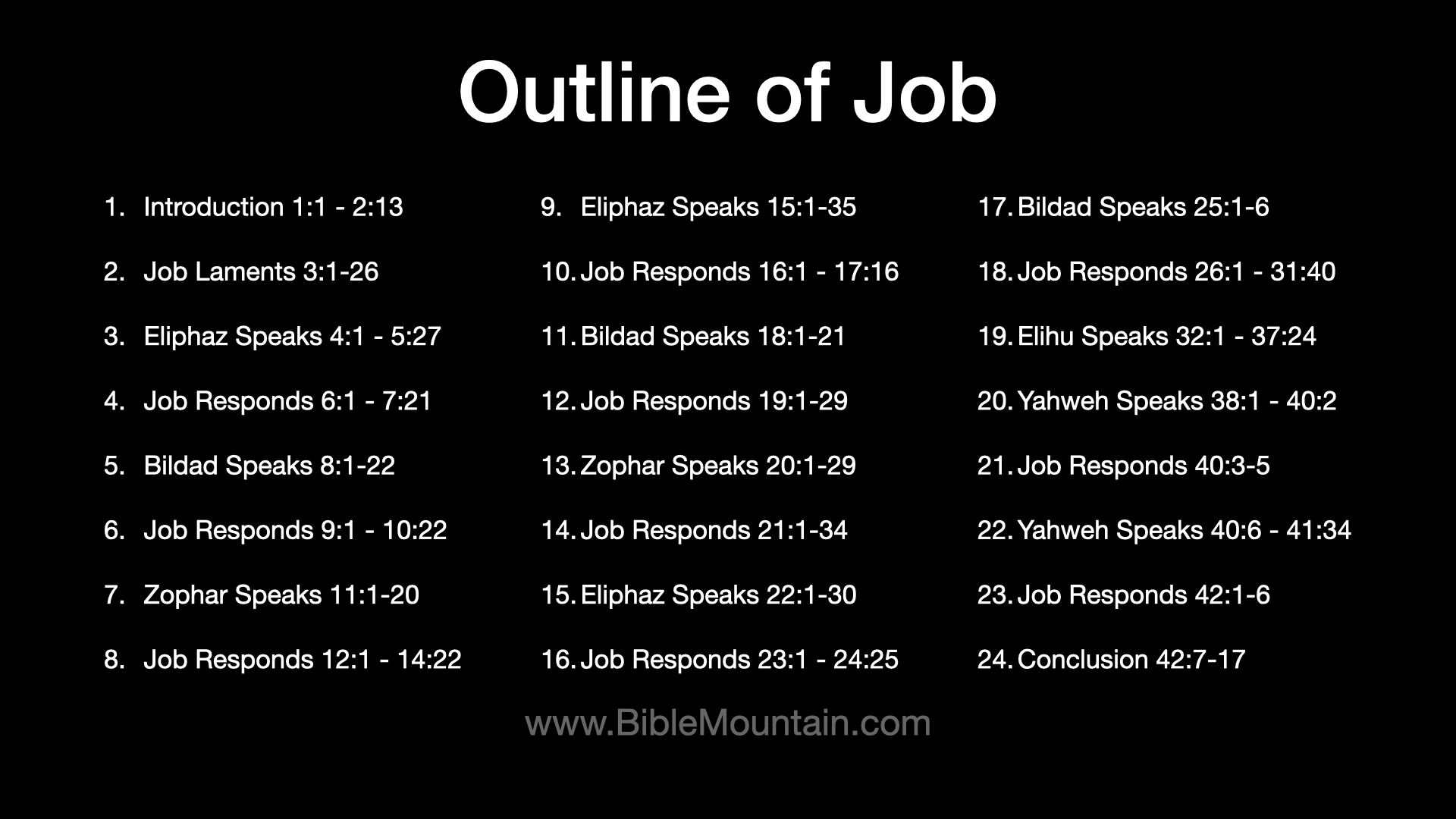
When we stopped reading in the middle of section 18 yesterday, we were reading a passage in which Job used a series of if statements to describe the consequences he should endure if he had committed certain sins. Job’s implication was that he had not committed any of those sins. As we continue reading today, we will see more of those if statements.
Job 31:23 For disaster from God is a dread to me,
And because of His exaltedness I can do nothing.
Look at the word “dread”. Job dreaded receiving any disaster that came from God because he was powerless to do anything about it.
Job 31:24 ¶ “If I have put my confidence in gold,
And called fine gold my trust,
Job 31:25 If I have been glad because my wealth was great,
And because my hand had found so much,
Job 31:26 If I have looked at the sun when it shone
Or the moon going in splendor,
Job 31:27 And my heart became secretly enticed,
And my hand threw a kiss from my mouth,
Notice the words “enticed” and “threw a kiss”. Many people in ancient cultures worshipped the sun and moon. Being enticed by the sun and moon or blowing kisses at them would be a way of worshipping them.
Job 31:28 That too would have been an iniquity calling for judgment,
For I would have denied God above.
If Job had put his confidence in his wealth or worshipped the sun and moon, then he would have been guilty of denying God. Job believed he had not denied God.
Job 31:29 ¶ “If I have been glad at the upheaval of the one who hated me,
Or exulted when evil found him—
Verses 29 thru 40 are hard to follow because this passage is a long conditional statement with several parenthetical expressions thrown in. Verses 29, 31, 33, 38, and 39 are the if statements. Verse 40 is the consequence Job said he would deserve if he had done anything listed in the if statements.
Verses 30, 32, and 35-37 are interruptions to the main idea Job was expressing in verses 29-40.
Job 31:30 But I have not given over my mouth to sin
By asking for his life in a curse—
Verse 30 is a parenthetical expression. In verse 29 Job said if he exulted at the misfortune of his enemies, then he would deserve the consequence he eventually listed in verse 40. In verse 30 Job assured his audience that he had not spoken a curse against his enemy.
Job 31:31 If the men of my tent have not said,
‘Who can find one who has not been satisfied with his meat’—
Since Job was generous, it would have been normal for Job’s men to say it was impossible to find someone who had not eaten Job’s meat. In verse 31 Job implied if his men were not saying that, then that meant Job was not generous, which meant Job would deserve the consequence which he eventually listed in verse 40.
Job 31:32 The sojourner has not lodged outside,
For I have opened my doors to the traveler—
Verse 32 is a parenthetical expression where Job assured his audience that he had opened his house to sojourners and travelers; thus, demonstrating his generosity.
Job 31:33 If I have covered my transgressions like Adam,
By hiding my iniquity in my bosom,
Job 31:34 Because I feared the great multitude,
And the contempt of families terrified me,
And I kept silent and did not go out of doors—
Job 31:35 Oh that I had one to hear me!
Behold, here is my signature;
Let the Almighty answer me!
And the indictment which my accuser has written,
Job 31:36 Surely I would carry it on my shoulder;
I would bind it to myself like a crown.
Job 31:37 I would declare to Him the number of my steps;
Like a prince I would approach Him—
Verses 35-37 are a parenthetical expression in which Job pined for the opportunity to state his innocence before God.
Notice the word “prince” in verse 37. Job thought he could approach God as a prince. A prince would deserve dignity and ceremony.
Job 31:38 ¶ “If my land cries out against me,
And its furrows weep together,
Job 31:39 If I have eaten its fruit without money,
Or have caused its owners to lose their lives,
Job 31:40 Let briars come out instead of wheat,
And stinkweed instead of barley.”
The words of Job are ended.
Verse 40 is the consequence Job said he would deserve if he was guilty of any of the sins and shortcomings listed in verses 24-39.
Notice the last sentence of verse 40. This ended Job’s dialogue with Eliphaz, Bildad, and Zophar.
Job 32:1 ¶ Then these three men ceased answering Job because he was righteous in his own eyes.
Eliphaz, Bildad, and Zophar gave up trying to convince Job he was suffering because he had sinned.
Notice the phrase “righteous in his own eyes”. That is generally a negative statement. When you accuse someone of being righteous in their own eyes, that is a criticism. The three friends thought Job was righteous in his own eyes, and they meant that as a criticism.
In Job’s case, Job was somewhat justified in declaring his innocence because the first two chapters of Job tell us Job was blameless and upright, and his misfortune was not the result of sin.
Job 32:2 But the anger of Elihu the son of Barachel the Buzite, of the family of Ram, burned; against Job his anger burned because he was proving himself righteous before God.
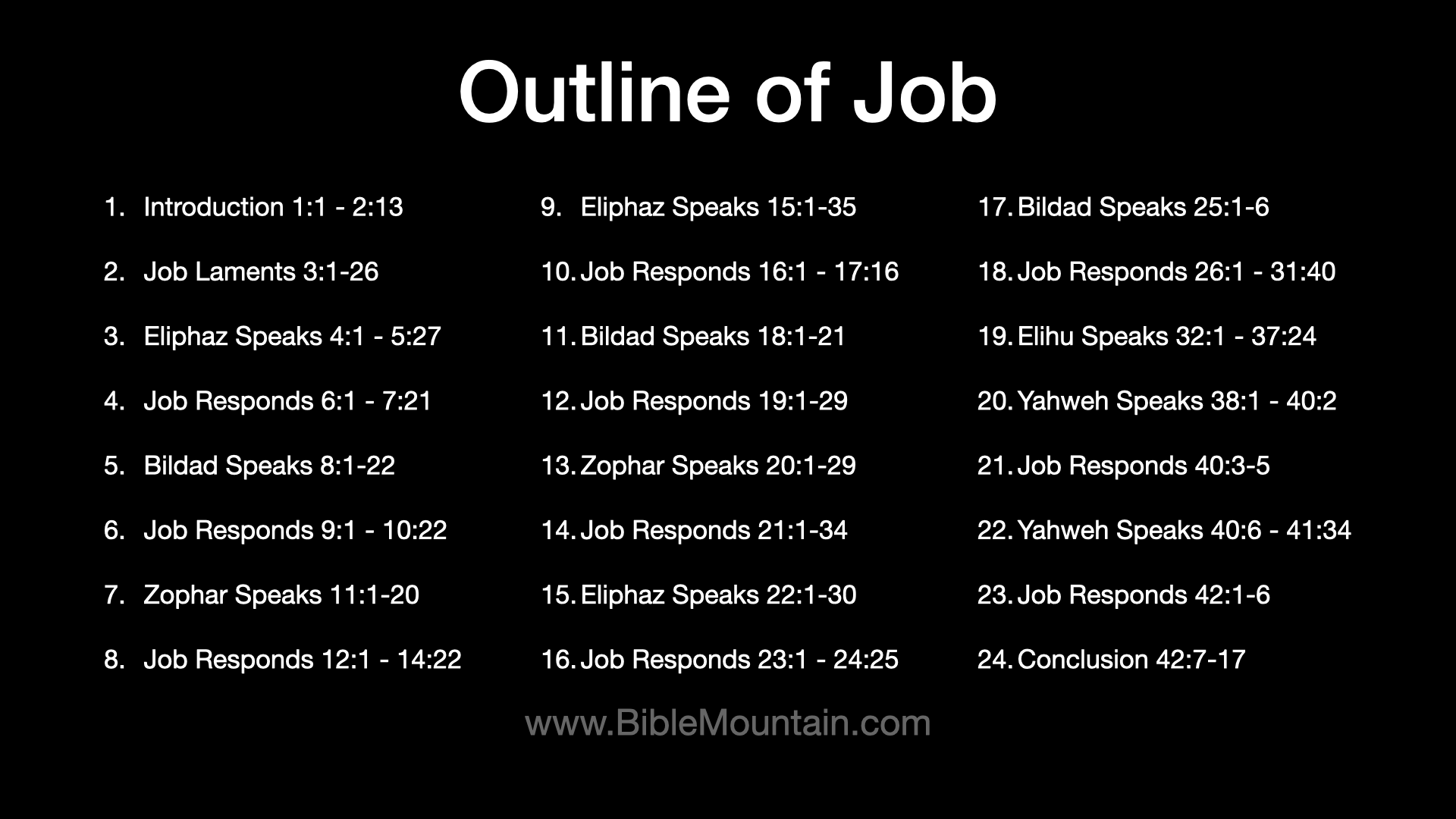
Notice the name “Elihu”. This is the 19th section of the book of Job.
Job 32:3 And his anger burned against his three friends because they had found no answer, and yet had condemned Job.
Job 32:4 Now Elihu had waited with his words for Job because they were years older than he.
Take note of the words “years older than he”. Elihu was young compared to the other men.
Job 32:5 Then Elihu saw that there was no answer in the mouth of the three men, so his anger burned.
Job 32:6 ¶ So Elihu the son of Barachel the Buzite answered and said,
“I am young in years and you are old;
Therefore I was shy and afraid to tell you my knowledge.
Job 32:7 I thought age should speak,
And increased years should make wisdom known.
Think about Elihu’s attitude towards those who were older than he. Elihu held his tongue and allowed the elderly men to speak first.
We live in a culture today which celebrates youth. Young people have demanded that churches throw away several centuries of church hymns which were written by mature men, in favor of contemporary Christian music, much of which is written by immature Christians. Our culture encourages young people to demand that old people follow the lead of the young in morality and acceptable lifestyles.
Proverbs tells us gray hair is a crown of glory (Prov 16:31). The Bible tells us to honor parents. Paul told Timothy to honor elderly widows and plead with older men as with fathers (see 1Timothy 5). Elihu’s attitude towards the elderly is what we should emulate, not the youth worship of our culture.
Job 32:8 But it is a spirit in man,
And the breath of the Almighty gives them understanding.
Job 32:9 The abundant in years may not be wise,
Nor may elders understand justice.
This is a true statement. Not all old people are wise. There is such a thing as an old fool.
Job 32:10 So I say, ‘Listen to me,
I too will tell my knowledge.’
We live in a culture today which celebrates youth. However, the Bible tells us to honor parents and the elderly because old age brings wisdom and gray hair is a crown of glory.
On the other hand, old people are not perfect. They are not always right. While we should listen to the opinions of those older than us, sometimes we need to disagree with them.
Elihu was a young man, so he allowed the older men to speak first. He did not speak until he believed they had failed to speak the truth.
What is an occasion when you learned a lot from an older person?
What is an occasion when an older person was wrong and you, as a younger person, were right?
Do you emulate Elihu’s example of listening to the elderly before you speak?
Thanks for visiting Bible Mountain. If you have already joined my email list, thank you and please tell others about Bible Mountain. If you have not joined my email list yet, please do so now. In order to join, go to Bible Mountain dotcom, click on subscribe, and that will take you to a page where you can sign up. Your email address will not be sold nor given away. Once again, thanks for visiting Bible Mountain.
“Scripture quotations taken from the (LSB®) Legacy Standard Bible®, Copyright © 2021 by The Lockman Foundation. Used by permission. All rights reserved. Managed in partnership with Three Sixteen Publishing Inc. LSBible.org and 316publishing.com.”