
People often think morality is merely external. Do not lie, steal, murder, or commit adultery. However, morality is also a matter of attitude and internal thoughts. We see this in 1Samuel 16:7 when we are told that Yahweh looks at the heart, not just the outward appearance. Also, Matthew 15:15-20 records Jesus saying it is not the things that go into a man which defile him; rather, it is the evil thoughts that come out of a man which defile him.
Job understood this. When Job declared his innocence and righteousness, he did not merely list external good deeds that he performed or bad deeds which he avoided. He also explained how he policed his inner thoughts and attitudes. His mentality about his heart illustrates how we can make sure our inner thoughts do not defile us.
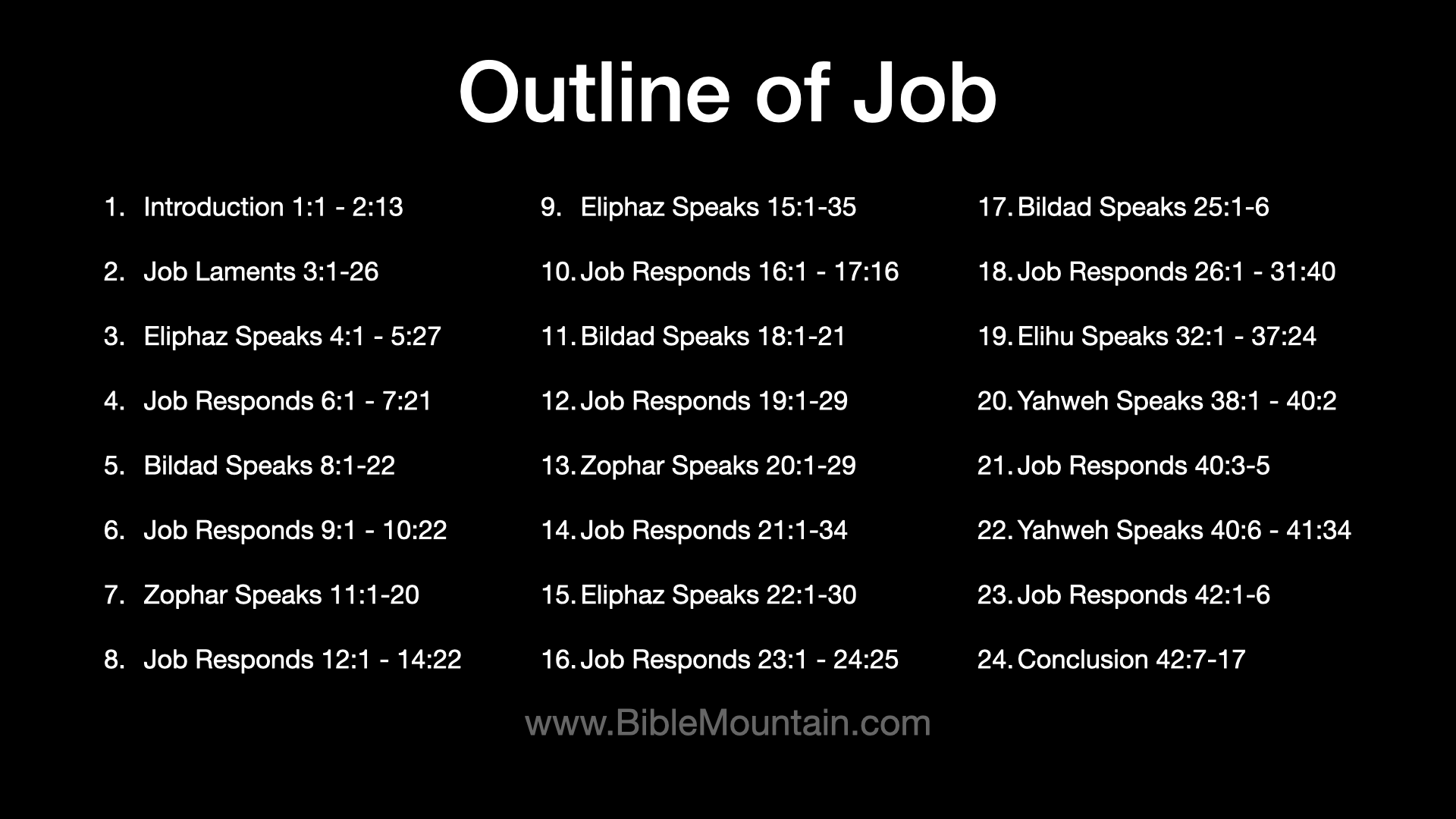
Yesterday, we stopped reading in the middle of the 18th section of Job, which was Job speaking to his friends. Job described how he had gone from a life of ease to a life of pain and suffering, which meant he went from a life of being respected to a life of being scorned.
Job 30:20 I cry out to You for help, but You do not answer me;
I stand up, and You carefully consider how to be against me.
The pronoun “You” refers to God.
Job 30:21 You have become cruel to me;
With the might of Your hand You hunted me down.
Job 30:22 You lift me up to the wind and cause me to ride;
And You melt me away in a storm.
Job 30:23 For I know that You will bring me to death
And to the house of meeting for all living.
Job 30:24 ¶ “Yet does not one in a heap of ruins stretch out his hand,
Or, in his upheaval, is there a cry for help because of them?
Job 30:25 Have I not wept for the one whose life is hard?
Was not my soul grieved for the needy?
These are rhetorical questions. The answer is yes, Job did these things.
Job’s point was he did not merely give of his excess wealth to help people. He also wept and grieved for those who were hurting. Job understood that his inner attitude towards other people was just as important as the external help he gave them.
It is easy for humans to fall into the trap of thinking that morality is merely performing external deeds. However, we should not just give someone tangible help out of our excess. We should also care about poor people as people.
Job 30:26 When I hoped for good, then evil came;
When I waited for light, then thick darkness came.
Job 30:27 I am boiling within and cannot be silent;
Days of affliction confront me.
Job 30:28 I go about darkened but not by the sun;
I stand up in the assembly and cry out for help.
Job 30:29 I have become a brother to jackals
And a companion of ostriches.
Job 30:30 My skin turns black on me,
And my bones burn with fever.
Job 30:31 Therefore my harp is turned to mourning,
And my flute to the sound of those who weep.
Job 31:1 ¶ “I have cut a covenant with my eyes;
How then could I gaze at a virgin?
Think about Job’s statement in the first line of this verse. He put limits on his own eyes.
Look at the word “gaze”. The Hebrew word that is translated “gaze” in this verse was used 23 times in the book of Job and is translated as “understand”, “discern”, “perceive”, and “carefully consider”. Job avoided looking at a virgin in a way that was intended to understand or perceive her shape and form.
It is not enough to simply avoid adultery. We also need to avoid lust.
Job 31:2 And what is the portion of God from above
Or the inheritance of the Almighty from on high?
Job 31:3 Is it not disaster to the unjust
And misfortune to those who work iniquity?
Job 31:4 Does He not see my ways
And number all my steps?
Job 31:5 ¶ “If I have walked with worthlessness,
And my foot has hastened after deceit,
Take note of the word “if”. The word “if” appears eight times in verses 6-22. Job listed a series of sins, and described the consequences he should endure if he had committed any of those sins. Job’s implication was that he had not committed any of these sins.
Job 31:6 Let Him weigh me with just scales,
And let God know my integrity.
Job 31:7 If my step has turned from the way,
Or my heart followed my eyes,
Or if any spot has stuck to my hands,
Look at the word “heart”. Once again we see that Job understood the importance of what happens in the heart.
Job 31:8 Let me sow and another eat,
And let my crops be uprooted.
Job 31:9 ¶ “If my heart has been enticed by a woman,
Or I have lain in wait at my neighbor’s doorway,
Once again we see the word “heart”. Job understood that allowing his heart to be enticed by a woman would be wrong.
Job 31:10 May my wife grind for another,
And let others kneel down over her.
Job 31:11 For that would be lewdness;
Moreover, it would be an iniquity punishable by judges.
Job 31:12 For it would be fire that consumes to Abaddon,
And would uproot all my produce.
Job 31:13 ¶ “If I have rejected the justice of my male or female slaves
When they filed a complaint against me,
Job 31:14 What then could I do when God arises?
And when He calls me to account, with what will I respond to Him?
Job 31:15 Did not He who made me in the womb make him,
And the same one fashion us in the womb?
Job 31:16 ¶ “If I have held back the poor from their desire,
Or have caused the eyes of the widow to fail,
Job 31:17 Or have eaten my morsel alone,
And the orphan has not eaten from it
Take note of the word “alone”. Job did not merely send food to the poor, he invited the poor to eat with him so that they were not alone.
Job 31:18 (But from my youth he grew up with me as with a father,
And from the womb of my mother I guided her),
Job 31:19 If I have seen anyone perish for lack of clothing,
Or that the needy had no covering,
Job 31:20 If his loins have not blessed me,
And if he has not been warmed with the fleece of my sheep,
Job 31:21 If I have waved my hand against the orphan
Because I saw my help in the gate,
The concept here is if Job was in the gate and saw both an orphan who needed help and someone who could do something for Job, it would have been wrong for Job to shoo away the orphan so that he could give his attention to the person who could do something for Job.
Job 31:22 Let my shoulder fall from the socket,
And my arm be broken off at the elbow.
People often think morality is merely avoiding physical acts such as lying, stealing, murdering, or committing adultery. However, morality is also a matter of our heart. 1Samuel 16:7 tells us Yahweh looks at the heart, not just the outward appearance. Matthew 15:15-20 records Jesus saying it is not the things that go into a man which defile him; rather, it is the evil thoughts that come out of a man which defile him.
When Job declared his innocence and righteousness, he did not merely list external good deeds that he performed or bad deeds which he avoided. He also explained how he policed his inner thoughts and attitudes. His mentality about his heart illustrates how we can make sure our inner thoughts do not defile us.
Do you have a covenant with your eyes to avoid gazing on virgins?
Do you weep and grieve with those who are suffering?
Do you give your time and energy to those in need, and not just your excess wealth?
Did you ever ignore someone in need in order to give attention to someone who could do something for you?
Thanks for visiting Bible Mountain. If you have already joined my email list, thank you and please tell others about Bible Mountain. If you have not joined my email list yet, please do so now. In order to join, go to Bible Mountain dotcom, click on subscribe, and that will take you to a page where you can sign up. Your email address will not be sold nor given away. Once again, thanks for visiting Bible Mountain.
“Scripture quotations taken from the (LSB®) Legacy Standard Bible®, Copyright © 2021 by The Lockman Foundation. Used by permission. All rights reserved. Managed in partnership with Three Sixteen Publishing Inc. LSBible.org and 316publishing.com.”