
Humans have a tendency to assume the current reality will last forever. If a society is prosperous and united, the people within that society will live as if their pleasant circumstances will last forever. If the opposite is true, and a society is riven with discord, crime, and poverty, the people in that society will presume the problems will never go away.
This happens on an individual scale. A person who is healthy and wealthy expects that they will always enjoy good times and a person who is sick and penniless accepts that life will continue to be miserable.
We will read a verse today in which Job revealed that he made that assumption. When Job was living the good life, he assumed his prosperity would last the rest of his life. One of the lessons of the life of Job is that things change. Prosperity comes and goes. Our current situation is not necessarily what we are stuck with for the rest of our days on earth.
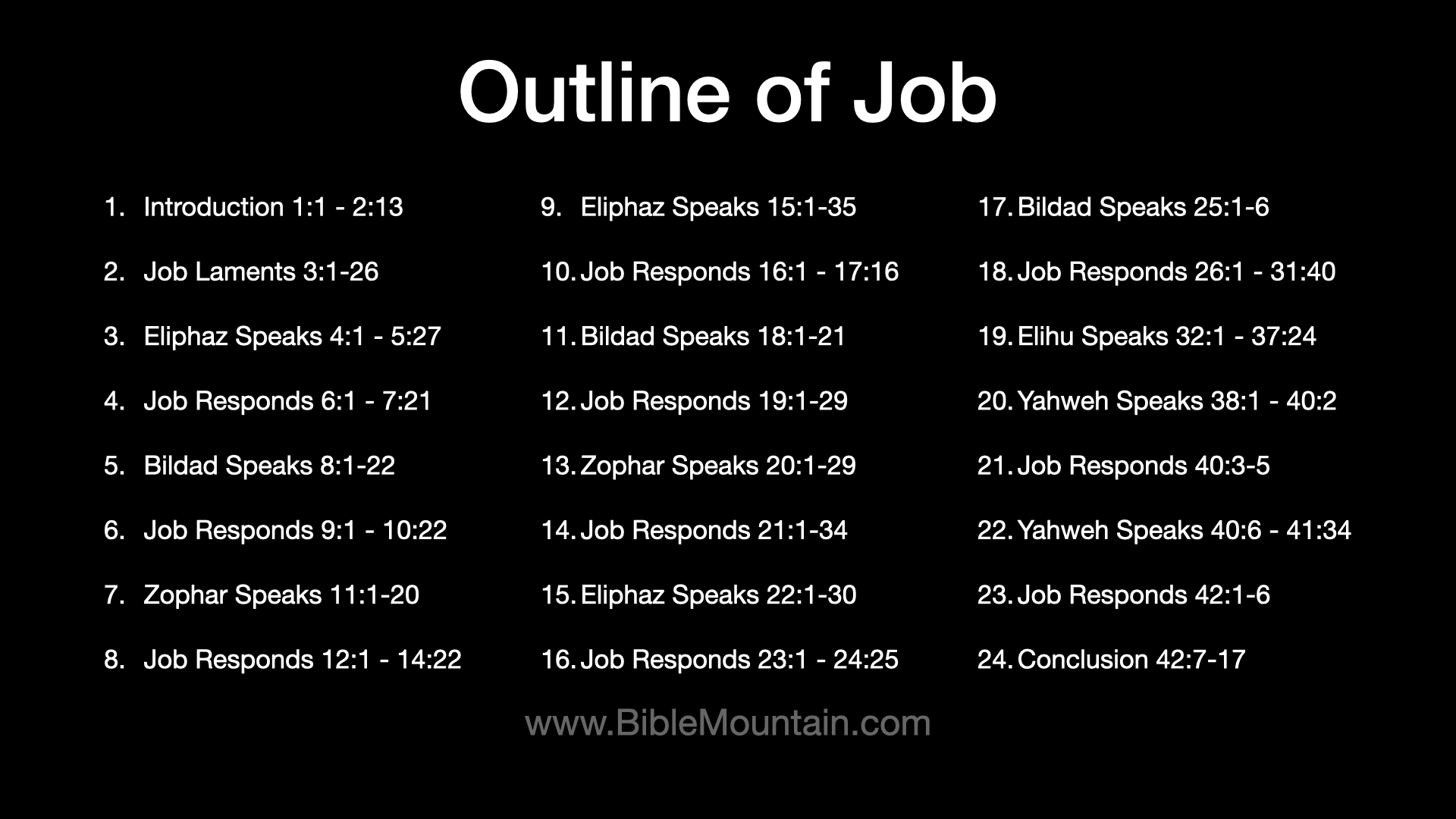
We are in the midst of reading the 18th section of Job. At this point, Job was describing his life before the calamity struck. The art of Hebrew poetry is repetition. Notice the many different statements in verses 14-25 which Job used to communicate the respect and deference he was given before his calamity due to his previous wisdom, wealth, and generosity.
Job 29:14 I clothed myself with righteousness, and it clothed me;
My justice was like a robe and a turban.
Job 29:15 I was eyes to the blind
And feet to the lame.
Job 29:16 I was a father to the needy,
And I searched out the case which I did not know.
Look at the word “searched”. If Job came across a situation he did not understand, he researched it to learn the truth.
Job 29:17 I broke the fangs of the unjust
And snatched the prey from his teeth.
Job 29:18 Then I said, ‘I will breathe my last in my nest,
And I shall multiply my days as the sand.
Think about Job’s expectation for the end of his life. When he was wealthy and prosperous, he assumed his life would end that way. He never expected to lose everything.
This is a common human assumption. If we live many years in poverty, sickness, or adversity, we tend to assume our life will always be that way. On the other hand, if we live many years in wealth, health, and prosperity, we assume the good times will last forever. One of the lessons from the life of Job is that our circumstances may change very drastically.
Job 29:19 My root is spread out to the waters,
And dew lies all night on my branch.
Job 29:20 My glory is ever new with me,
And my bow is renewed in my hand.’
Job 29:21 ¶ “To me they listened and waited,
And kept silent for my counsel.
Job 29:22 After my words they did not speak again,
And my speech dropped on them.
Job spoke with such wisdom, and his opinion was so highly respected, that after he spoke, no one else said anything. Job’s opinion was considered the final say on a matter.
Job 29:23 They waited for me as for the rain,
And opened their mouth as for the late rain.
Job 29:24 I laughed with them as they could not believe it,
And the light of my face they did not cast down.
Job 29:25 I chose a way for them and sat as chief,
And dwelt as their head among the troops,
As one who comforted the mourners.
Job 30:1 ¶ “But now those younger than I laugh at me,
Whose fathers I rejected even to put with the dogs of my flock.
Look at the word “but”. Part of the art of Hebrew poetry is drawing contrasts. Chapter 29 described Job’s prosperity in his former circumstances. Chapter 30 describes the reality that Job was living as he was talking to his friends.
The young men who were laughing at Job as he suffered from poverty and boils were sons of men who were so worthless that Job didn’t even put them with the dogs. This was Job’s way of describing the extent of his downfall.
Verses 1-8 contain multiple statements describing the low quality of the people who were now mocking Job.
Job 30:2 Indeed, what good was the strength of their hands to me?
Vigor had perished from them.
Job 30:3 From want and famine they are gaunt,
Who gnaw the dry ground by night in destruction and desolation,
Job 30:4 Who pluck mallow by the bushes,
And whose food is the root of the broom tree.
Job 30:5 They are driven from the community;
They shout against them as against a thief,
Job 30:6 So that they dwell in the slopes of the valleys,
In holes of the dust and of the rocks.
Job 30:7 Among the bushes they cry out;
Under the nettles they are gathered together.
Job 30:8 Wicked fools, even those without a name,
They were scourged from the land.
Job 30:9 ¶ “And now I have become their mocking song;
I have even become a taunting word to them.
Job 30:10 They abhor me and keep a distance from me,
And they do not hold back from spitting at my face.
Job 30:11 Because He has loosed His bowstring and afflicted me,
They have thrust aside their bridle before me.
The pronoun “He” refers to God. Job was describing how worthless men now mocked him, and he blamed God for his downfall.
The following verses contain numerous ways in which Job described his current situation of being oppressed and afflicted.
Job 30:12 On the right hand their brood arises;
They thrust aside my feet and build up against me their ways to disaster.
Job 30:13 They break up my path;
They profit from my destruction;
They have no helper.
Job 30:14 As through a wide breach they come,
Amid the storm they roll on.
Job 30:15 Terrors are turned against me;
They pursue my nobility as the wind,
And my hope for salvation has passed away like a cloud.
Job 30:16 ¶ “And now my soul is poured out within me;
Days of affliction have seized me.
Job 30:17 At night it pierces my bones within me,
And my gnawing pains take no rest.
Job 30:18 By a great force my garment is distorted;
It seizes me about as the collar of my tunic.
Job 30:19 He has cast me into the mire,
And I have become like dust and ashes.
Humans have a tendency to assume the current reality will last forever. A person who is healthy and wealthy expects that they will always enjoy good times and a person who is sick and penniless presumes that life will continue to be miserable.
One of the lessons of the life of Job is that things change. Prosperity comes and goes. Our current situation is not necessarily what we are stuck with for the rest of our days on earth. When we are living the good life, we should keep in mind that prosperity is fragile and could disappear at any time. When we are living a hard life, we should not lose hope. There is always the possibility that better days are ahead.
In what ways do you assume that your current reality will last forever?
What are the positives of your life that you think will never go away?
What are the problems in your life that you assume will never be fixed?
How might your assumptions be wrong?
Thanks for visiting Bible Mountain. If you have already joined my email list, thank you and please tell others about Bible Mountain. If you have not joined my email list yet, please do so now. In order to join, go to Bible Mountain dotcom, click on subscribe, and that will take you to a page where you can sign up. Your email address will not be sold nor given away. Once again, thanks for visiting Bible Mountain.
“Scripture quotations taken from the (LSB®) Legacy Standard Bible®, Copyright © 2021 by The Lockman Foundation. Used by permission. All rights reserved. Managed in partnership with Three Sixteen Publishing Inc. LSBible.org and 316publishing.com.”