
One of the many flaws in 21st century society is that many people do not value wisdom. They do not desire to be wise, nor are they willing to seek wisdom or put forth any effort to acquire it.
This is tragic because the Bible teaches the value of wisdom, instructs us to seek it, and tells us where to find it.
Today’s passage in Job, which is part of Job’s speech to his friends, illustrates the correct attitude towards wisdom. Job assumed wisdom is valuable and should be sought. Furthermore, he accurately stated where wisdom can be found.
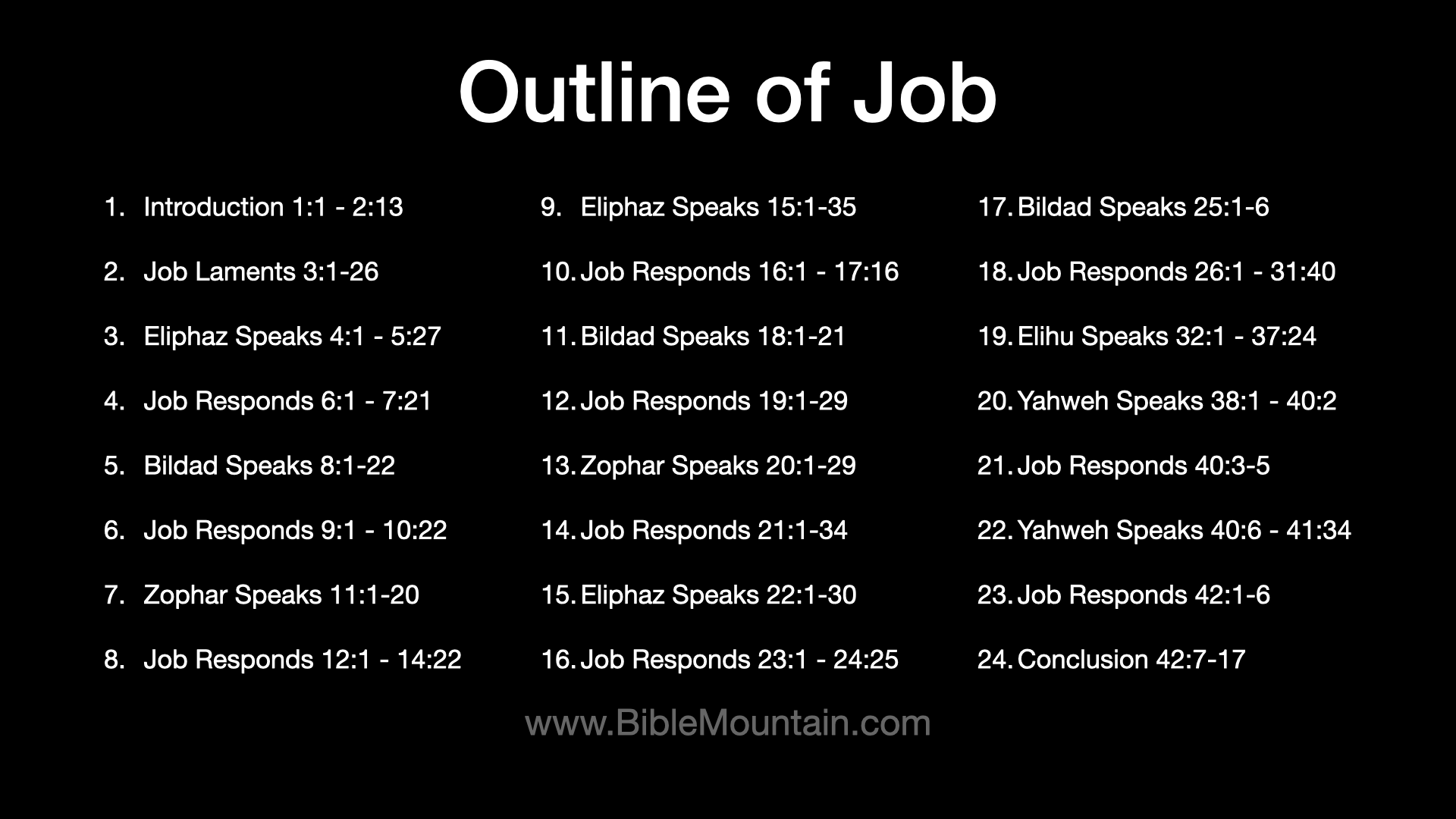
Today’s reading comes from the 18th section of Job. In the first six verses of chapter 28, Job described the materials that come out of the earth. He listed silver, gold, iron, copper, food, and sapphires.
Job 28:7 The path no bird of prey knows,
Nor has the falcon’s eye caught sight of it.
The pronoun “it” refers to the rocks deep inside the earth from which come sapphires and gold. Job said birds and falcons have never seen the source of sapphires and gold.
Job 28:8 The proud beasts have not trodden it,
Nor has the fierce lion passed over it.
Job 28:9 He sends his hand forth to the flint;
He overturns the mountains at the base.
The pronoun “he” refers to man (see Job 28:3). Wild animals have not seen the source of precious metals and stones, but man has dug into the earth and found those materials.
Job 28:10 He breaks out channels through the rocks,
And his eye sees anything precious.
Job 28:11 He dams up the streams from flowing,
And what is hidden he brings out to the light.
Mankind has been successful at unearthing the treasures buried underground.
Job 28:12 ¶ “But where can wisdom be found?
And where is the place of understanding?
The art of Hebrew poetry is repetition and contrast. Job used repetition to describe all the materials that come out of the earth, and then in verse 12 he highlighted the contrast that wisdom cannot be found in the earth. In the following verses Job used repetition to describe the many ways which will not lead to finding or acquiring wisdom.
Job 28:13 Man does not know its worth,
And it is not found in the land of the living.
Job 28:14 The deep says, ‘It is not in me’;
And the sea says, ‘It is not with me.’
Job 28:15 Pure gold cannot be given in place of it,
Nor can silver be weighed as its price.
Job 28:16 It cannot be valued in the gold of Ophir,
In precious onyx or sapphire.
Job 28:17 Gold or glass cannot meet its worth,
Nor can it be exchanged for articles of fine gold.
Job 28:18 Coral and crystal are not to be mentioned;
And the acquisition of wisdom is above that of pearls.
Job 28:19 The topaz of Ethiopia cannot meet its worth,
Nor can it be valued in pure gold.
Job 28:20 Where then does wisdom come from?
And where is the place of understanding?
Job effectively made the point that while we can grow food, dig precious metals out of the ground, acquire other physical goods, or pay teachers for knowledge, we cannot harvest or buy wisdom. That leads to the question of how do we find wisdom.
Job 28:21 Thus it is hidden from the eyes of all living
And concealed from the birds of the sky.
Job 28:22 Abaddon and Death say,
‘With our ears we have heard a report of it.’
Job 28:23 ¶ “God understands its way,
And He knows its place.
Job began by stating that God knows the source of wisdom.
Job 28:24 For He looks to the ends of the earth
And sees everything under the heavens.
Job 28:25 When He set weight to the wind
And meted out the waters by measure,
Job 28:26 When He set a limit for the rain
And a course for the thunderbolt,
Job 28:27 Then He saw it and recounted it;
He established it and also searched it out.
Job 28:28 So He said to man, ‘Behold, the fear of the Lord, that is wisdom;
And to turn away from evil is understanding.’”
Job stated that the fear of the Lord is wisdom. Job was not inspired by the Holy Spirit when he said this. The doctrine of inerrancy means the book of Job accurately records what Job said. That doesn’t mean everything Job said was true.
Having said that, in this case we know Job was correct because the book of Proverbs tells us that the fear of the Lord is the beginning of wisdom.
Many people in the 21st century are very passive about wisdom. They are not wise, nor do they care they are not wise. Thus, they don’t put forth thought or effort to acquire wisdom.
Job understood that wisdom is valuable. His thoughts in this passage echo the truths found in the first 9 chapters of Proverbs. More importantly, Job understood that the fear of the Lord is the beginning of wisdom.
Based on the truths about wisdom recorded in Proverbs and elsewhere, Job’s attitude about wisdom is a good example for us to follow. We should value wisdom. We should pursue wisdom by fearing Yahweh, our Creator.
Job 29:1 ¶ And Job continued to lift up his discourse and said,
Job 29:2 “Oh that I were as in months gone by,
As in the days when God kept me,
Job pined for his days of prosperity. In the following verses, Job used repetition to describe his former status in life.
Job 29:3 When His lamp shone over my head,
And by His light I walked through darkness,
Job 29:4 As I was in the prime of my days,
When the intimate counsel with God was over my tent,
Job 29:5 When the Almighty was yet with me,
And my children were around me,
Job 29:6 When my steps were bathed in butter,
And the rock poured out for me streams of oil!
Job 29:7 When I went out to the gate of the city,
When I took my seat in the square,
Job 29:8 The young men saw me and hid,
And the old men arose and stood.
Job 29:9 The princes stopped talking
And put their hands on their mouths;
Job 29:10 The voice of the nobles was hidden away,
And their tongue clung to their palate.
Job 29:11 For the ear heard, and it called me blessed,
And the eye saw, and it gave witness of me,
Job 29:12 Because I provided escape for the afflicted who cried for help,
And the orphan who had no helper.
Job 29:13 The blessing of the one ready to perish came upon me,
And I made the widow’s heart sing for joy.
One of the many flaws in 21st century society is that many people do not value wisdom. They do not desire to be wise, nor are they willing to seek wisdom or put forth any effort to acquire it.
This is tragic because the Bible teaches the value of wisdom, instructs us to seek it, and tells us where to find it.
Job understood that wisdom is valuable. His thoughts in this passage echo the truths found in the first 9 chapters of Proverbs. More importantly, Job understood that the fear of the Lord is the beginning of wisdom.
Based on the truths about wisdom recorded in Proverbs and elsewhere, Job’s attitude about wisdom is a good example for us to follow. We should value wisdom. We should pursue wisdom by fearing Yahweh, our Creator.
Do you desire wisdom?
Are you willing to put forth time and effort to acquire it?
Do you fear God, meaning are you afraid to disobey God and disappoint Him?
Thanks for visiting Bible Mountain. If you have already joined my email list, thank you and please tell others about Bible Mountain. If you have not joined my email list yet, please do so now. In order to join, go to Bible Mountain dotcom, click on subscribe, and that will take you to a page where you can sign up. Your email address will not be sold nor given away. Once again, thanks for visiting Bible Mountain.
“Scripture quotations taken from the (LSB®) Legacy Standard Bible®, Copyright © 2021 by The Lockman Foundation. Used by permission. All rights reserved. Managed in partnership with Three Sixteen Publishing Inc. LSBible.org and 316publishing.com.”