
Throughout the book of Job, we see Job’s reaction to the adversity that had suddenly appeared in his life. Many times his reaction was not admirable. He engaged in self-pity. He blamed God and accused Him of being an adversary.
Many times we have less than admirable reactions to the obstacles and setbacks of life. When we suffer, we ask why. If our pain persists, over time we can lose hope and become discouraged, just as Job became more and more discouraged over time.
However, in today’s passage, Job expressed a confidence in his eternal future which ultimately gave him hope. His hope is the same hope we can have as we seek to find meaning, particularly if and when our pain and suffering perseveres for years.
Today, we continue reading section 12.
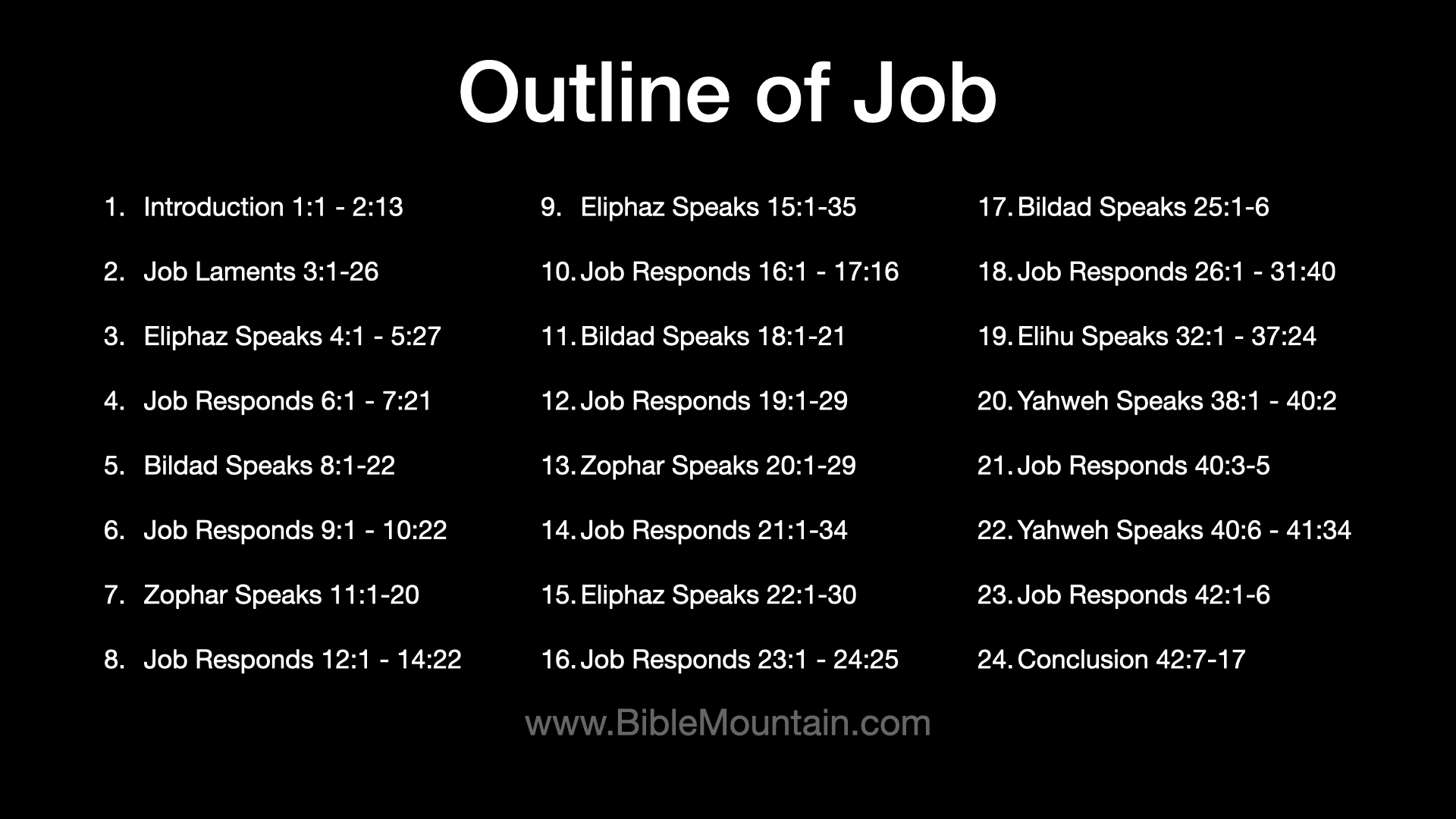
After Bildad made a short and clear declaration that those who do not know God will suffer hardship, Job explained his view that God had wronged him. Then Job began describing the extent to which friends and family had abandoned him.
Job 19:15 Those who sojourn in my house and my maidservants count me a stranger.
I am a foreigner in their sight.
Job 19:16 I call to my servant, but he does not answer;
I have to implore him with my mouth.
Job 19:17 My breath is offensive to my wife,
And I am loathsome to my own brothers.
Job 19:18 Even young children reject me;
I rise up, and they speak against me.
Job 19:19 All the men of my counsel abhor me,
And those I love have turned against me.
Hebrew poetry is about repetition. In verse 15-19, instead of simply saying all his family and friends had turned against him, Job listed various types of acquaintances and stated the unique way each group had rejected him.
Job 19:20 My bone clings to my skin and my flesh,
And I have escaped only by the skin of my teeth.
Job 19:21 Pity me, pity me, O you my friends,
For the hand of God has smitten me.
Take note of Job’s accusation. He stated that God had smitten him.
Job 19:22 Why do you persecute me as God does,
And are not satisfied with my flesh?
Job 19:23 ¶ “Oh that my words were written!
Oh that they were inscribed in a book!
Job 19:24 That with an iron stylus and lead
They were engraved in the rock forever!
The irony of this verse is that Job’s words were written down, and 4,000 years later, you and I are reading his words, just as he desired.
Job 19:25 As for me, I know that my Redeemer lives,
And at the last He will rise up over the dust of this world.
Look at the word “Redeemer”. This is a translation of the Hebrew word “gaal”. The word “gaal” is found in 83 different verses in the Old Testament.
Exodus uses gaal to say that God redeemed Israel from slavery in Egypt. Leviticus, Numbers, and Deuteronomy use gaal while detailing the laws about the right to redeem property, the requirements of the kinsman redeemer, and the restrictions on blood avengers. In the book of Ruth, Boaz is called a gaal, the redeemer of Ruth. The book of Psalms has multiple verses that refer to God as the redeemer.
Notice also in Job 19:25 the word “my”. Job made it personal. Job believed he had a Redeemer, One who would triumph over the world.
Job 19:26 Even after my skin is destroyed,
Yet from my flesh I shall behold God,
Job 19:27 Whom I myself shall behold,
And whom my eyes will see and not another.
My heart faints within me!
Look at the word “behold”. Job believed he would behold God.
Throughout the book of Job, there are multiple justifications for criticizing Job. He was angry against God, accused God of being against him, often engaged in self-pity, and lost his willingness to accept adversity from God. However, we see that deep in his soul, Job still knew that God was the One who would ultimately save him. Even in the depths of his despair and suffering, he still drew comfort and encouragement from the fact that at some point in the future he would be in the presence of God.
The book of Job deals with suffering and explaining why people suffer, particularly why good people go through hardship and adversity. As such, it helps us deal with pain and suffering in our lives. In verses 25-27 Job expressed a hope that should be at the heart of how we persevere through the adversity we face in our lives.
Ultimately, we have a Redeemer. After life on earth, those of us who are Christians will spend eternity with God in heaven where there will be no sorrow and no tears. That hope is the best medicine for enduring the pain and agony of life on earth.
Job 19:28 If you say, ‘How shall we persecute him?’
‘And the root of the matter is found in him?’
Job 19:29 Then be afraid of the sword for yourselves,
For wrath brings the punishment of the sword,
So that you may know there is judgment.”
Job 20:1 ¶ Then Zophar the Naamathite answered and said,
Look at the name “Zophar”.
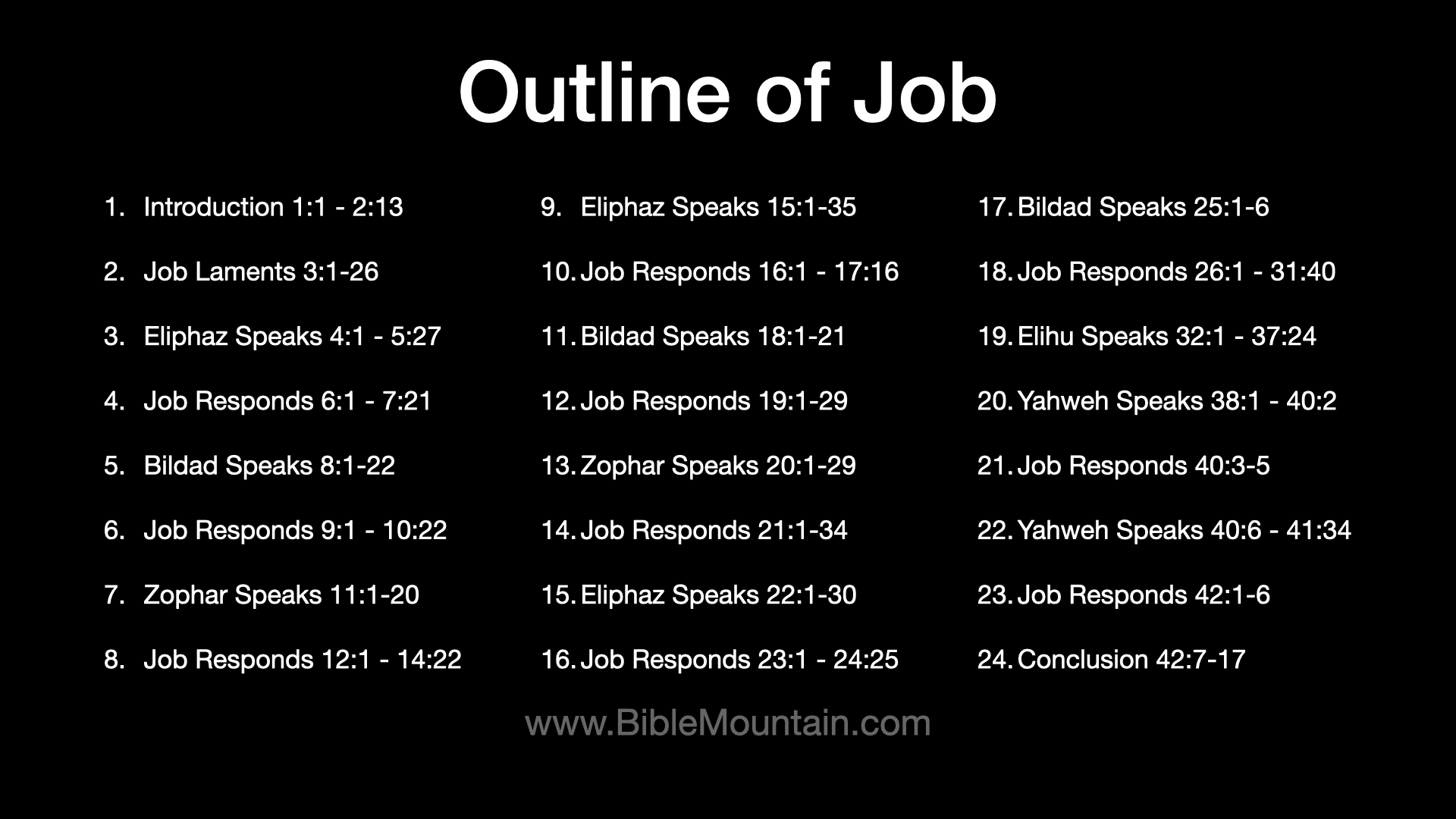
Chapter 20 is the 13th section of Job.
Job 20:2 “Therefore my disquieting thoughts make me respond,
Even because of my haste within me.
Job 20:3 I listened to the discipline which dishonors me,
And the spirit of my understanding makes me answer.
Notice the word “discipline”. Zophar treated Job’s words as discipline and dishonor.
Job 20:4 Do you know this from of old,
From the establishment of man on earth,
Job 20:5 That the shouts of joy of the wicked are short,
And the gladness of the godless momentary?
Look at the words “short” and “momentary”. Zophar acknowledged that sometimes wicked men prosper, but he insisted their triumph was short-lived. Since this is Hebrew poetry, verses 6-18 are a series of different statements that keep repeating this central idea.
Job 20:6 Though his loftiness goes up to the heavens,
And his head touches the clouds,
Job 20:7 He perishes forever like his refuse;
Those who have seen him will say, ‘Where is he?’
Job 20:8 He flies away like a dream, and they cannot find him;
Even like a vision of the night he is chased away.
Job 20:9 The eye which saw him sees him no longer,
And his place no longer beholds him.
Job 20:10 His sons seek the favor of the poor,
And his hands give back his wealth.
Job 20:11 His bones are full of his youthful vigor,
But it lies down with him in the dust.
Job 20:12 ¶ “Though evil is sweet in his mouth
And he hides it under his tongue,
Job 20:13 Though he desires it and will not forsake it,
And holds it to his palate,
Job 20:14 Yet his food in his stomach is changed
To the venom of cobras within him.
Job 20:15 He swallows up wealth,
But will vomit it up;
God will expel it from his belly.
Job 20:16 He sucks the poison of cobras;
The viper’s tongue kills him.
Job 20:17 He does not look at the streams,
The rivers flowing with honey and curds.
Job 20:18 He returns what he has attained
And cannot swallow it;
As to the wealth of his trading,
He cannot even enjoy it.
Job 20:19 For he has crushed and forsaken the poor;
He has seized a house which he has not built.
Throughout the book of Job, Job was angry against God, accused God of being against him, often engaged in self-pity, and lost his willingness to accept adversity from God. Most humans have the same reaction when they suffer. However, deep in his soul, Job still drew comfort and encouragement from the fact that at some point in the future he would be in the presence of God. That hope should be at the heart of how we persevere through the adversity we face in our lives.
We have a Redeemer. After life on earth, those of us who are Christians will spend eternity with God in heaven where there will be no sorrow and no tears. That hope is the best medicine for enduring the pain and agony of life on earth.
Do you know that you have a redeemer?
Are you able to draw comfort in the midst of suffering from the fact that someday you will be face to face with the Creator of the universe?
Thanks for visiting Bible Mountain. If you have already joined my email list, thank you and please tell others about Bible Mountain. If you have not joined my email list yet, please do so now. In order to join, go to Bible Mountain dotcom, click on subscribe, and that will take you to a page where you can sign up. Your email address will not be sold nor given away. Once again, thanks for visiting Bible Mountain.
“Scripture quotations taken from the (LSB®) Legacy Standard Bible®, Copyright © 2021 by The Lockman Foundation. Used by permission. All rights reserved. Managed in partnership with Three Sixteen Publishing Inc. LSBible.org and 316publishing.com.”