
Daily Scripture Reading Job 15:7 - 16:5
One of the recurring features of life is conflict between generations. Older people tend to be set in their ways. Younger generations want to change and try new things. Elderly people have a lot of experience and wisdom and want to pass advice on to younger people, but sometimes younger people don’t want to listen.
In general, older people are wiser because they have seen more and have a broader array of experiences to draw from. Oftentimes, the elderly are right when they give advice to younger generations. However, there is such a thing as an old fool. The story of Job is proof that older does not always mean wiser.
Today we resume reading in the middle of section 9. This section is Eliphaz speaking to Job.
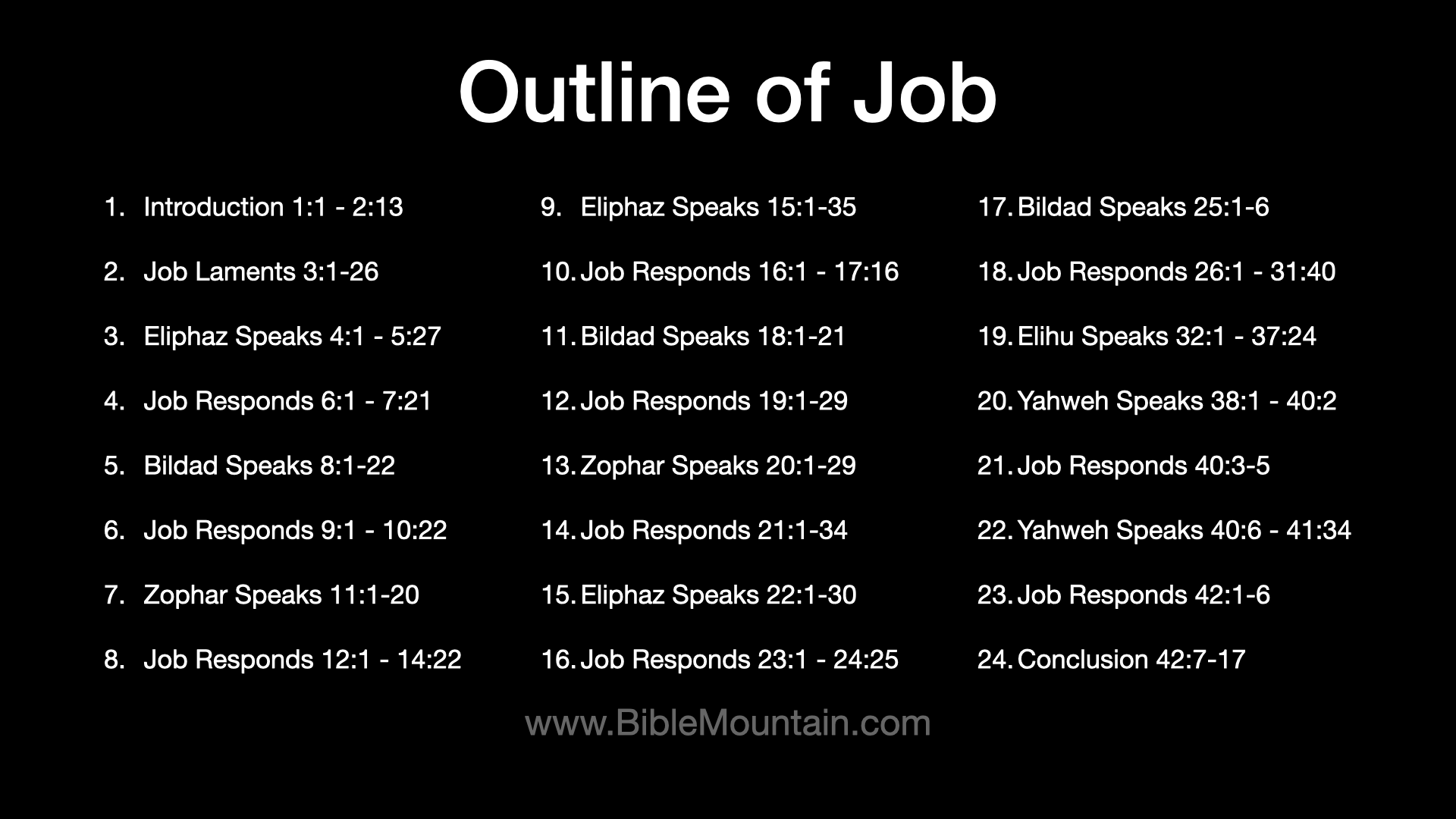
Job 15:7 ¶ “Were you the first man to be born,
Or were you brought forth before the hills?
Job 15:8 Do you hear the secret counsel of God,
And cut down wisdom only unto yourself?
Job 15:9 What do you know that we do not know?
What do you understand that is not with us?
Look at the two questions in this verse. They were rhetorical questions intended to claim that Job was not wiser than his friends. This was a consistent theme throughout this dialogue. Job kept accusing his friends of thinking they knew more than he did and his friends kept accusing Job of thinking he was more knowledgeable.
Job 15:10 Both the gray-haired and the aged are among us,
Older than your father.
Look at the words “aged” and “older than your father”. We often picture Job and his three friends being the same age. However, it appears from this verse that the three friends were older than Job, even older than Job’s father. If Job was younger than his three friends, that casts a different light on this whole dialogue.
In general, older people are wiser because they have seen more and have a broader array of experiences to draw from. In verse 10, Eliphaz appealed to the fact that the three friends were older and wiser as proof that the three friends were right that Job was suffering because he had sinned.
However, just because a person is older does not mean he is wiser. In Job’s case, we know from the first two chapters of Job that Job was not suffering because he had sinned; therefore, the story of Job is proof that older does not always mean wiser.
Job 15:11 Are the consolations of God too small for you,
Even the word spoken gently with you?
Job 15:12 Why does your heart take you away?
And why do your eyes flash,
Job 15:13 That you should turn your spirit against God
And allow such words to go out of your mouth?
Job 15:14 What is man, that he should be pure,
Or he who is born of a woman, that he should be righteous?
Eliphaz’s statement about no man being right before God agrees with Romans 3 which states that none are righteous.
Job 15:15 Behold, He puts no faith in His holy ones,
And the heavens are not pure in His sight;
Job 15:16 How much less one who is abominable and corrupt,
Man, who drinks unrighteousness like water!
Job 15:17 ¶ “I will tell you, listen to me;
And what I have beheld I will also recount;
Job 15:18 What wise men have told,
And have not concealed from their fathers,
Job 15:19 To whom alone the land was given,
And no stranger passed among them.
Job 15:20 The wicked man writhes in pain all his days,
And numbered are the years stored up for the ruthless.
Once again Eliphaz stated that wicked people suffer. The implication was that Job was suffering because he had sinned. The following verses describe the supposed agony endured by the wicked.
Job 15:21 Sounds of dread are in his ears;
While at peace the destroyer comes upon him.
Job 15:22 He does not believe that he will return from darkness,
And he is destined for the sword.
Job 15:23 He wanders about for food, saying, ‘Where is it?’
He knows that a day of darkness is ready at his hand.
Job 15:24 Distress and anguish terrify him;
They overpower him like a king ready for the attack,
Job 15:25 Because he has stretched out his hand against God
And magnifies himself against the Almighty.
Notice the word “because”. According to Eliphaz, the experiences listed in verses 20-24 always take place when a man rebels against God. The following verses contain more descriptions of the supposed status of wicked men.
Job 15:26 He rushes headlong at Him
With his massive shield.
Job 15:27 For he has covered his face with his fat
And made his thighs heavy with flesh.
Job 15:28 He has dwelt in desolate cities,
In houses no one would inhabit,
Which are destined to become ruins.
Job 15:29 He will not become rich, nor will his wealth endure;
And his grain will not stretch out over the land.
Job 15:30 He will not be able to depart from darkness;
The flame will wither his shoots,
And by the breath of His mouth he will depart.
Job 15:31 Let him not believe in emptiness, deceiving himself;
For emptiness will be his reward,
Job 15:32 When his days are not yet fulfilled,
And his palm branch is not green.
Job 15:33 He will drop off his unripe grape like the vine,
And will cast off his flower like the olive tree.
In verses 32-33 Eliphaz claimed that wicked men will die young.
Job 15:34 For the company of the godless is barren,
And fire consumes the tents of the corrupt.
Job 15:35 They conceive trouble and give birth to wickedness,
And their belly prepares deception.”
Job 16:1 ¶ Then Job answered and said,
Look at the name “Job”. This verse begins section 10 which is Job responding to Eliphaz.
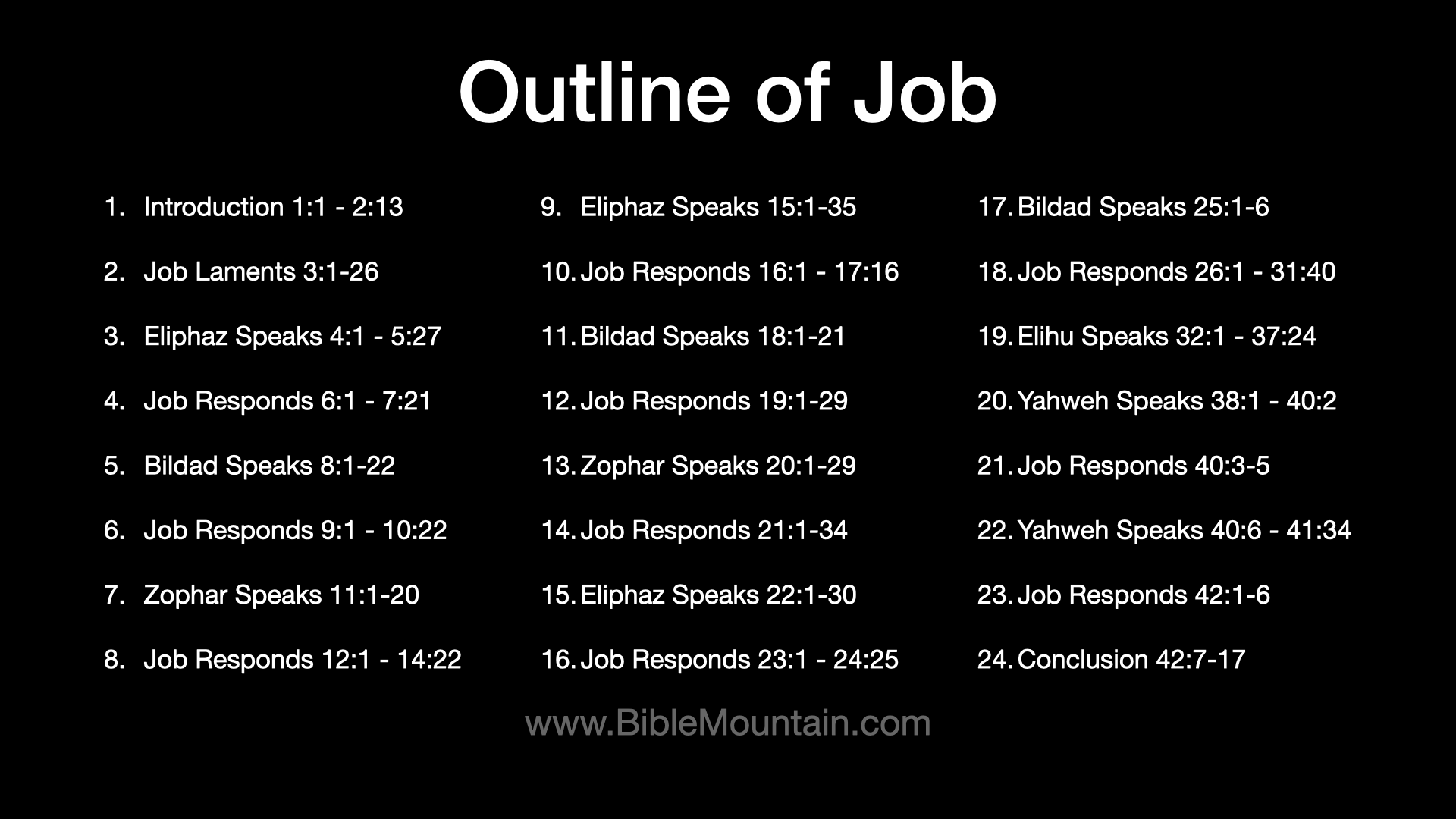
Job 16:2 “I have heard many such things;
Troublesome comforters are you all.
One of the features of this long dialogue between Job and his friends is that these supposed friends kept insulting each other.
Job 16:3 Is there no end to windy words?
Or what pains you that you answer?
Job 16:4 I too could speak like you,
If your soul were in the place of my soul.
I could compose words against you
And shake my head at you.
Job 16:5 I could encourage you with my mouth,
And the solace of my lips could lessen your pain.
Think about the contrast between verses 4 and 5. In verse 4 Job said he could be like his friends and be insulting. In verse 5 Job claimed that if he were in his friends shoes, he could be encouraging and healing.
Elderly people have a lot of experience and wisdom that they want to pass on to younger people, but sometimes younger people don’t want to listen. In general, older people are wiser, but not always.
Eliphaz appealed to the fact that the three friends were older and wiser than Job as proof that the three friends were right that Job was suffering because he had sinned. However, just because a person is older does not mean he is wiser. In Job’s case, we know from the first two chapters of Job that Job was not suffering because he had sinned; therefore, the story of Job is proof that older does not always mean wiser.
It is wise for younger people to consider the advice of the elderly because the elderly do have a lot of experience to draw from. However, when the elderly seek to prove their point, they should have reasons for their beliefs, and not just ask to be believed because they are older and wiser.
Who is someone you know who is an old fool?
What is an occasion in your life when an older person insisted that he be believed simply because he was older and supposedly wiser?
Thanks for visiting Bible Mountain. If you have already joined my email list, thank you and please tell others about Bible Mountain. If you have not joined my email list yet, please do so now. In order to join, go to Bible Mountain dotcom, click on subscribe, and that will take you to a page where you can sign up. Your email address will not be sold nor given away. Once again, thanks for visiting Bible Mountain.
“Scripture quotations taken from the (LSB®) Legacy Standard Bible®, Copyright © 2021 by The Lockman Foundation. Used by permission. All rights reserved. Managed in partnership with Three Sixteen Publishing Inc. LSBible.org and 316publishing.com.”