
Humans want life to be fair. Accordingly, we want God to treat everyone equally and fairly. Some people believe that if God is good, then He will be fair; likewise, if God is not fair, then He is not good.
The issue of fairness was at the heart of the debate over Job’s calamity. Job’s friends believed God is fair; therefore, Job’s suffering had to be the result of sin. Job knew he had not committed any sin that brought his calamity upon him; therefore, he had to conclude God is not always fair.
Today, we continue reading the 8th section of Job, which is Job’s response to the words of Zophar.
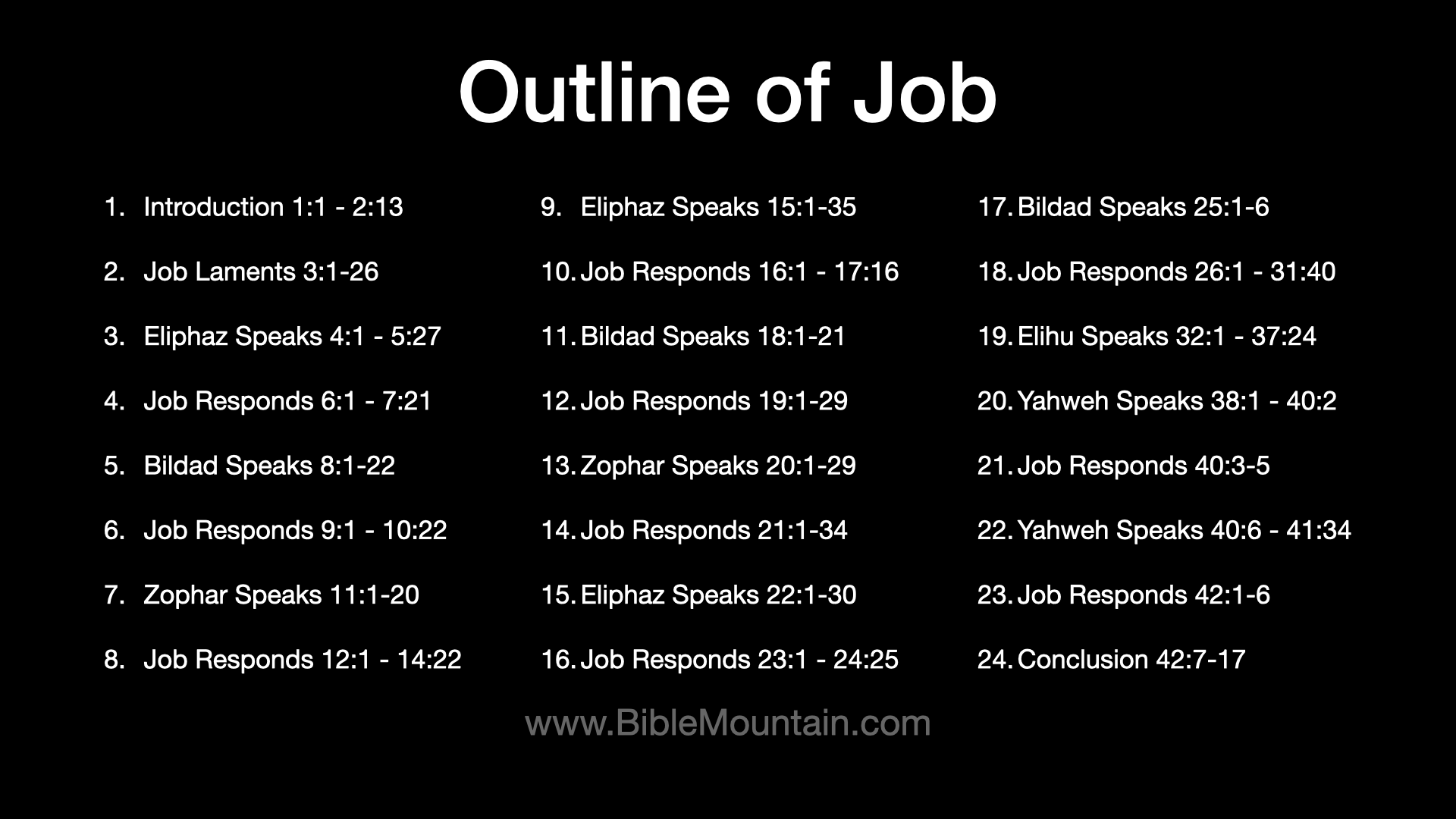
After Zophar correctly assessed God’s overwhelming power over humans, but incorrectly promised that Job would prosper if he repented, Job insisted Yahweh was the one who brought about Job’s downfall. Job argued that God is sovereign and simply does what He wants to do. The implication is that God is not always fair, meaning Job was not necessarily suffering due to sin.
Job 12:13 ¶ “With Him are wisdom and might;
To Him belong counsel and discernment.
As with Job’s three friends, Job was not inspired when he spoke, so his words were not necessarily without error. The inspiration of Scripture and Biblical inerrancy mean the person who wrote the book of Job accurately recorded what Job said. It does not mean Job was perfect in what he said.
In this case Job was correct that wisdom, might, counsel, and discernment are with God, but we cannot use this passage to prove those facts about God. Instead, we know Job was correct because other passages of scripture tell us those things are true of God.
Job 12:14 Behold, He pulls down, and it cannot be rebuilt;
He closes a man in, and it cannot be opened.
Hebrew poetry is about repetition and contrast. In verse 14, Job made two statement, but he was communicating one main idea: Yahweh is all-powerful and can do anything He wants to do.
Job 12:15 Behold, He restrains the waters, and they dry up;
And He sends them out, and they overturn the earth.
Verse 15 describes the contrast between Yahweh restraining water or sending water out; however, both ideas show Yahweh’s power and prerogative to do anything.
Job 12:16 With Him are strength and sound wisdom;
The misled and the misleader belong to Him.
Job 12:17 He makes counselors walk barefoot
And makes fools of judges.
Verse 17 is two different ways of saying that God can humble judges, which advances Job’s argument that God is all-powerful.
Job 12:18 He opens the bond of kings
And binds their loins with a belt.
Verse 18 describes the contrast between God’s ability to release kings and His ability to bind kings. Both of those abilities reflect God’s right to do as He pleases.
Job 12:19 He makes priests walk barefoot
And subverts the enduring ones.
Job 12:20 He removes speech from the faithful
And takes away the discerning taste of the elders.
Job 12:21 He pours contempt on nobles
And loosens the belt of the strong.
Job 12:22 He reveals mysteries from the darkness
And brings out the shadows of death into light.
Job 12:23 He makes the nations great, then makes them perish;
He enlarges the nations, then leads them away.
Verse 23 is more contrast between enlarging and shrinking nations, which further proves God’s overwhelming strength and sovereignty.
Job 12:24 He removes the heart of wisdom from the heads of the earth’s people
And makes them wander in a pathless waste.
Job 12:25 They grope in darkness with no light,
And He makes them wander about like a drunken man.
The main idea of verses 13-25 is that God is mighty and unstoppable. He does as He pleases, and there is not necessarily any rhyme or reason to what God does.
Job 13:1 ¶ “Behold, my eye has seen all this;
My ear has heard and understood it.
Job 13:2 What you know I also know;
I have not fallen short of you.
Job 13:3 ¶ “But I would speak to the Almighty,
And I desire to argue with God.
Look at the phrase “I desire to argue with God.” That is brazen. No human can win an argument with God.
Job 13:4 But you cover me with lies;
You are all worthless physicians.
In the English language, we use the same word, the word “you”, for both 2nd person singular and 2nd person plural. Biblical Hebrew had different words for 2nd person singular and 2nd person plural. In verse 4, the word “you” in Hebrew was plural, meaning Job was referring to all three friends. Job accused his friends of slander and worthlessness.
Job 13:5 O that you would be completely silent,
And that it would become your wisdom!
Job 13:6 Please hear my argument
And give heed to the contentions of my lips.
Job 13:7 Will you speak what is unrighteous for God,
And speak what is deceitful for Him?
Job believed his friends were saying things about God that were not true.
Job 13:8 Will you show partiality for Him?
Will you contend for God?
Job 13:9 Will it be well when He examines you?
Or will you deceive Him as one deceives a man?
Job 13:10 He will surely reprove you
If you secretly show partiality.
Job 13:11 Will not His exaltedness terrify you,
And the dread of Him fall on you?
Job 13:12 Your memorable sayings are proverbs of ashes;
Your defenses are defenses of clay.
Job 13:13 ¶ “Be silent before me so that I may speak;
Then let come on me what may.
Job 13:14 Why should I take my flesh in my teeth
And put my life in my hands?
Job 13:15 Though He slay me,
I will hope in Him.
Nevertheless I will argue my ways before Him.
Notice the words “Though He slay me, I will hope in Him.” Amongst Job’s complaining and desire to argue with God, he still was willing to serve and trust God. However, that did not mean Job wasn’t going to plead with God for relief.
Job 13:16 This also will be my salvation,
For a godless man may not come before His presence.
Job 13:17 Listen carefully to my words,
And let my declaration fill your ears.
Job 13:18 Behold now, I have arranged my case for justice;
I know that I will be declared righteous.
Look at the words “declared righteous”. Job was firmly convinced he had done nothing to deserve his calamity.
Job 13:19 Who will contend with me?
For now I am silent and will breathe my last.
One of the challenges of reading the book of Job is discerning when Job was speaking to his friends and when he was speaking to God. Up through verse 19, Job appeared to be speaking to Zophar. Beginning with verse 20, it appears Job was speaking to God.
Job 13:20 ¶ “Only two things do not do to me,
Then I will not hide from Your face:
Job 13:21 Move Your hand far from me,
And let not the dread of You terrify me.
Job 13:22 Then call, and I will answer;
Or let me speak, then respond to me.
Job 13:23 How many are my iniquities and sins?
Make known to me my transgression and my sin.
There were accusations that Job had sinned. Job asked God to reveal his sin, if it indeed existed.
Humans want life to be fair. Some people believe that if God is good, then He will be fair; likewise, if God is not fair, then He is not good.
Job’s friends believed God is fair; therefore, they believed Job’s suffering had to be the result of sin. Job knew he had not committed any sin that brought his calamity upon him; therefore, he had to conclude God is not always fair.
In what ways is life unfair?
In what ways do you lack things you deserve?
In what ways do you have things you do not deserve?
Why are
Thanks for visiting Bible Mountain. If you have already joined my email list, thank you and please tell others about Bible Mountain. If you have not joined my email list yet, please do so now. In order to join, go to Bible Mountain dotcom, click on subscribe, and that will take you to a page where you can sign up. Your email address will not be sold nor given away. Once again, thanks for visiting Bible Mountain.
“Scripture quotations taken from the (LSB®) Legacy Standard Bible®, Copyright © 2021 by The Lockman Foundation. Used by permission. All rights reserved. Managed in partnership with Three Sixteen Publishing Inc. LSBible.org and 316publishing.com.” humans so obsessed with fairness?