
People tend to assume that healthy and wealthy people are wise and have good character. Meanwhile, they don’t make positive assumptions about those who are sick and poor. The story of Job proves the fallacy of making those assumptions.
Yesterday, we finished reading Job’s response to Bildad, which turned into Job speaking to Yahweh, complaining about his lot in life, and wondering why God ever brought him out of the womb.
Job 11:1 ¶ Then Zophar the Naamathite answered and said,
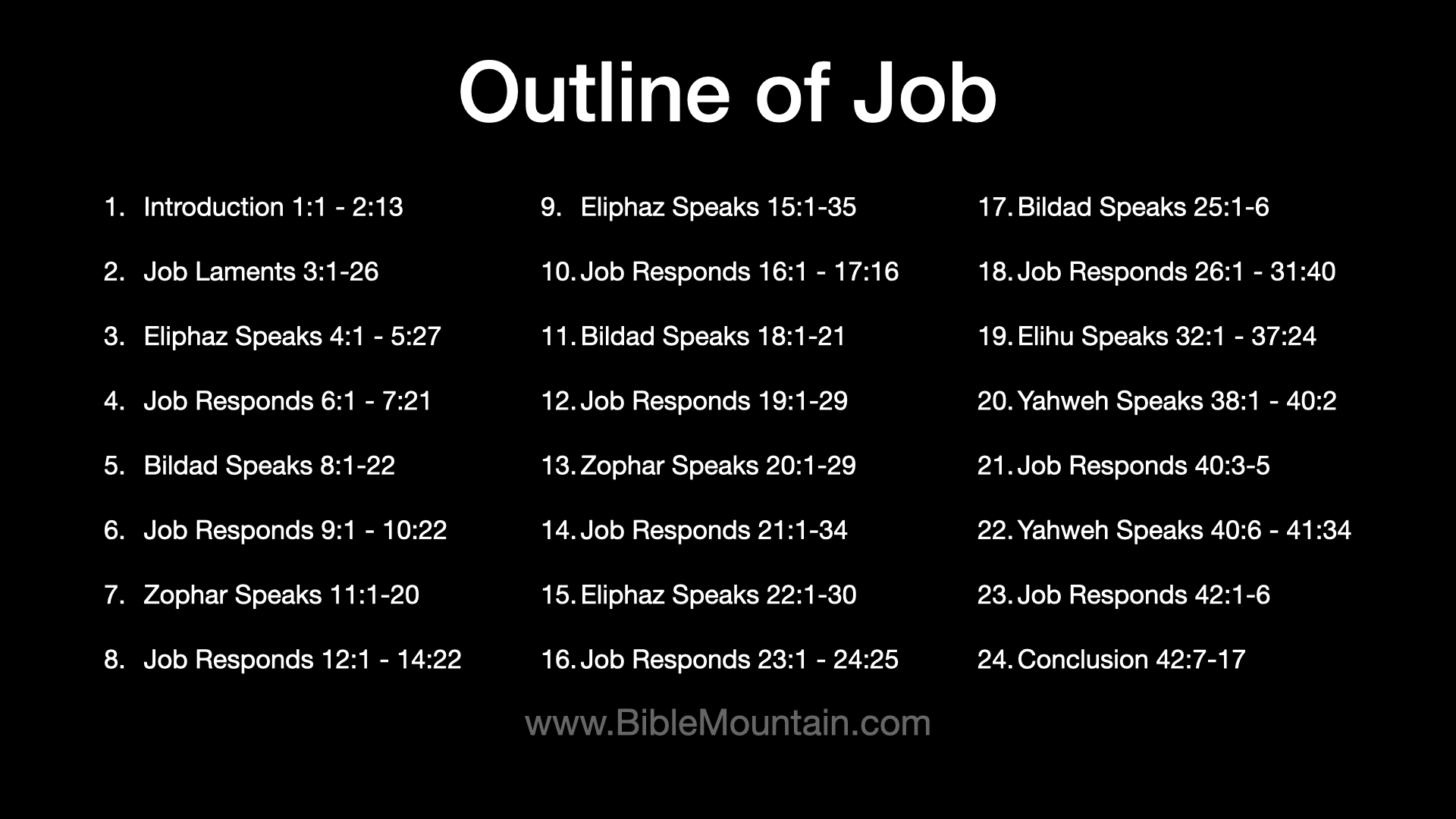
Notice the name “Zophar”. This is the beginning of section 7, in which Zophar expressed his opinion on Job’s situation.
Job 11:2 “Shall a multitude of words go unanswered,
And a man of lips be in the right?
Look at the word “multitude”. Zophar meant that as a criticism.
Job 11:3 Shall your boasts silence men?
And shall you mock and none rebuke?
The words “boasts” and “mock” also indicate Zophar was being critical.
Job 11:4 You have said, ‘My learning is pure,
And I am innocent in your eyes.’
Notice the single quote before the word “My” and after the word “eyes”. Zophar was speaking, but in this verse he quoted Job. This is probably a reference to Job 10:2 and/or 10:7 in which Job told his friends what he desired to say to God.
The pronoun “You” was spoken by Zophar and refers to Job. The word “My” was spoken by Job, so it refers to Job. “I” refers to Job. The word “your” refers to God. Zophar reminded Job that he had just told God that he was innocent.
Job 11:5 But would that God might speak,
And open His lips against you,
Job 11:6 And tell you the secrets of wisdom!
For sound wisdom has two sides.
Know then that God forgets a part of your iniquity.
Job 11:7 ¶ “Can you find the depths of God?
Can you find the limits of the Almighty?
These were rhetorical questions. Humans cannot begin to find the depths or limits of God.
Job 11:8 They are high as the heavens, what can you do?
Deeper than Sheol, what can you know?
These were also rhetorical. Since God is beyond comprehension, men are powerless compared to God.
Keep in mind we cannot use this passage as proof that God is all-powerful. Biblical inerrancy means the Bible accurately recorded what Zophar communicated. It does not mean he was correct in what he said. In this case Zophar was correct, and we know Zophar was correct because other passages in the Bible tell us about God’s power and human feebleness in comparison, but this passage alone is not proof that God is all-powerful.
Job 11:9 Its measure is longer than the earth
And broader than the sea.
Job 11:10 If He sweeps by or shuts up,
Or calls an assembly, who can turn Him around?
Job 11:11 For He knows worthless men,
And He sees wickedness, so will He not carefully consider it?
I believe Zophar was implying that since God recognizes worthlessness and wickedness, He will punish it.
Job 11:12 Yet an empty headed man will obtain a heart of wisdom,
And the foal of a wild donkey is born a man.
Zophar stated that God is so powerful, He can give a fool a heart of wisdom or turn a foal into a man.
Job 11:13 ¶ “If you would set your heart right
And spread out your hand to Him,
The phrase “set your heart right” means to repent.
Job 11:14 If wickedness is in your hand, put it far away,
And do not let unrighteousness dwell in your tents;
Putting away wickedness also means repent.
Job 11:15 Then, indeed, you could lift up your face without moral defect,
And you would be steadfast and not fear.
Look at the word “then”. Zophar told Job if he would repent, then he would prosper.
Job 11:16 For you would forget your trouble,
As waters that pass by, so you would remember it.
Job 11:17 And your lifetime would arise brighter than noonday;
Darkness would be like the morning.
Job 11:18 Then you would trust, because there is hope;
And you would search around and rest securely.
Job 11:19 You would lie down and none would make you tremble,
And many would entreat your favor.
Job 11:20 But the eyes of the wicked will come to an end,
And escape will perish from them;
And their hope is the expiring of their soul.”
Zophar essentially told Job he could either repent and prosper, or he could remain wicked and perish, in which case his only hope was to die.
Again, Zophar was not inspired, so he did not speak without error. Biblical inerrancy only means the Bible accurately recorded what Zophar said. Zophar was correct in describing the power of God and weakness of men. He was not correct in claiming that Job would prosper if he would repent.
Job 12:1 ¶ Then Job answered and said,
Notice the name “Job”.
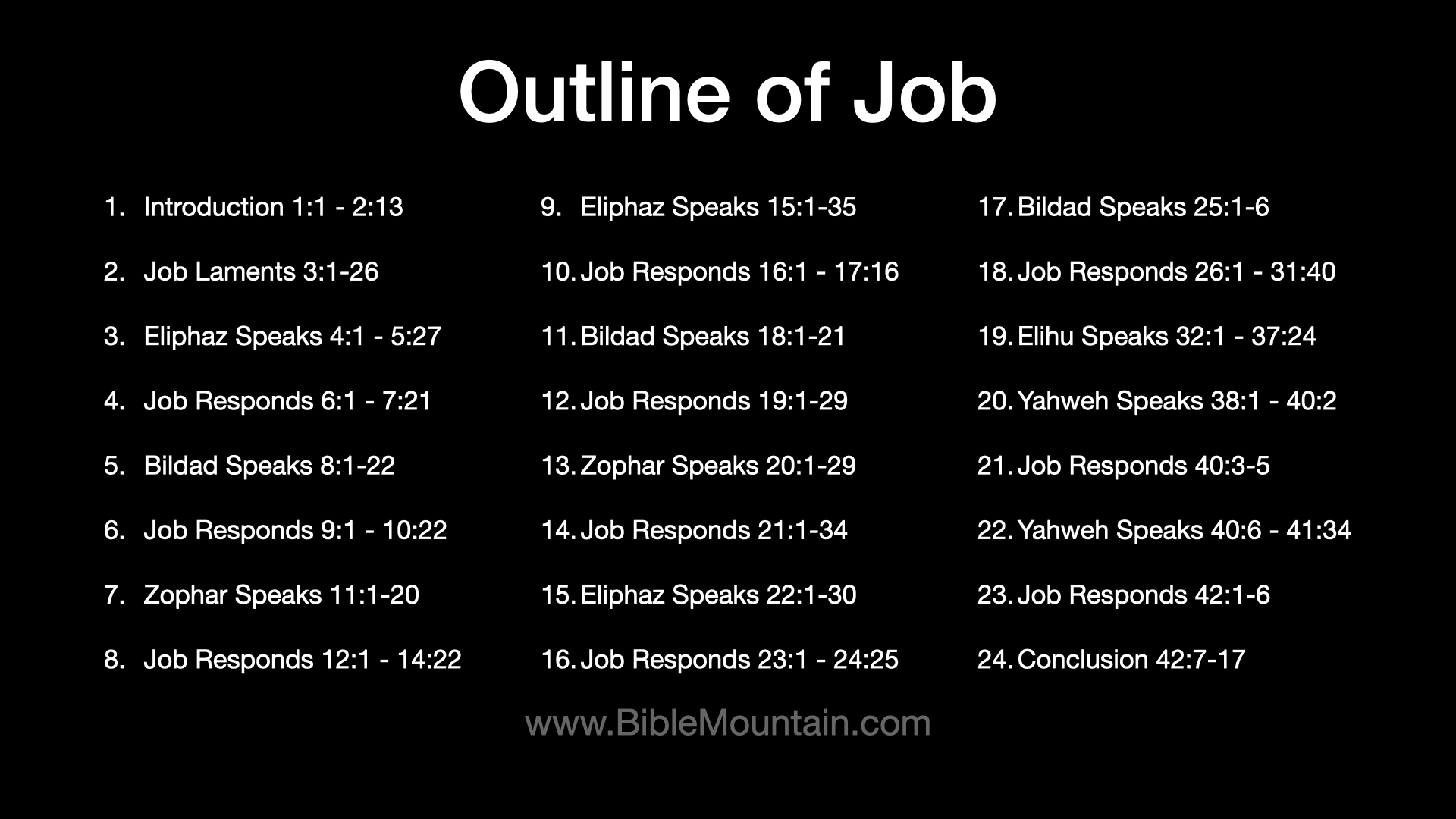
This is the beginning of section 8 in which Job responds to Zophar.
Job 12:2 “Truly then you are the people,
And with you wisdom will die!
This is sarcasm. Job accused his friends of thinking they were the only wise people on earth.
Job 12:3 But I have a heart of wisdom as well as you;
I do not fall short of you.
And who does not know such things as these?
The friends spoke as if they were wiser than Job, but Job rejected that premise.
Job 12:4 I am a laughingstock to my friends,
The one who called on God and He answered him;
The righteous and blameless man is a laughingstock.
Look at the word “laughingstock”. Job’s downfall was not just that he went from being rich and healthy to being poor and sickly. It was also that he went from being respected to being a laughingstock.
Look at the last line of verse 4. Job claimed the righteous and blameless man was a laughingstock. That was a true statement. The first 2 chapters of Job tell us Job was blameless and upright. The speeches by his friends indicate the low opinion they had of him now that he was penniless and ill.
Job’s descent into being a laughingstock was not due to anything Job did. The book of Job is clear that Job’s loss of wealth, family, and health was due to a dialogue between God and Satan.
Unfortunately, this is a common human assumption. We tend to ascribe wisdom and uprightness to those who are rich and healthy. Wealthy people receive deference and respect simply due to their wealth. Meanwhile, wise and righteous people who are poor and/or sickly are not acknowledged for their wisdom and great character simply because of their poverty.
We should judge people by their knowledge, wisdom, and behavior, not by their wealth or health.
Job 12:5 As for upheaval, there is only contempt by the one who acts at ease,
But it is prepared for those whose feet slip.
Job 12:6 The tents of the destroyers are complacent,
And those who provoke God are secure,
Whom God brings into their power.
Job 12:7 ¶ “But now ask the beasts, and let them instruct you;
And the birds of the sky, and let them tell you.
Job 12:8 Or muse to the earth, and let it instruct you;
And let the fish of the sea recount it to you.
Job 12:9 Who among all these does not know
That the hand of Yahweh has done this,
Job 12:10 In whose hand is the life of every living thing,
And the breath of all the flesh of man?
Job 12:11 Does not the ear test words,
As the palate tastes its food?
Job 12:12 Wisdom is with aged men,
With long life is discernment.
The story of Job proves the shallowness of how humans typically assess other humans. When Job was healthy and wealthy, he was respected. When Yahweh allowed Satan to remove all Job’s wealth and afflict him with boils from head to toe, then Job was considered a laughingstock. Job’s character and wisdom did not change, only his external circumstances changed.
People tend to assume that healthy and wealthy people are wise and have good character. Meanwhile, they don’t make positive assumptions about those who are sick and poor. The story of Job proves the fallacy of making those assumptions.
Who are some wealthy people you know who are ascribed with wisdom and righteousness that they don’t deserve?
Who are some poor people you know who are not credited with the wisdom and godliness they actually possess?
In what ways are you guilty of making assumptions based on external appearances instead of the content of a person’s mind and heart?
Thanks for visiting Bible Mountain. If you have already joined my email list, thank you and please tell others about Bible Mountain. If you have not joined my email list yet, please do so now. In order to join, go to Bible Mountain dotcom, click on subscribe, and that will take you to a page where you can sign up. Your email address will not be sold nor given away. Once again, thanks for visiting Bible Mountain.
“Scripture quotations taken from the (LSB®) Legacy Standard Bible®, Copyright © 2021 by The Lockman Foundation. Used by permission. All rights reserved. Managed in partnership with Three Sixteen Publishing Inc. LSBible.org and 316publishing.com.”