
When Americans and westerners read the Bible, we tend to interpret it using our cultural values and mores. 21st century western societies have certain expectations, standard practices, and mindsets that govern how we conduct business and interact with each other. When westerners read the Bible, we assume people in Bible times had the same priorities and attitudes.
Today, we will read about the purchase of some land that took place around 2,000 BC. This story will illustrate that people in the ancient near east conducted life and business with a mindset that was very different than ours. This means we need to have a flexible mind when we read the Bible.
Gen. 23:1 ¶ And Sarah lived 127 years; these were the years of the life of Sarah.
Gen. 23:2 Sarah died in Kiriath-arba (that is, Hebron) in the land of Canaan; and Abraham came to mourn for Sarah and to weep for her.
In chapter 22, Abraham was living near Beersheba. The Bible does not tell us when Abraham went to Hebron. This was not the first time Abraham sojourned near Hebron. The 13th chapter of Genesis tells us Abraham lived near Hebron shortly after he and Lot separated. That was where Abram was living when Abram rescued Lot from captivity (see Genesis 14:13) and when Sodom and Gomorrah were destroyed (see Genesis 18).
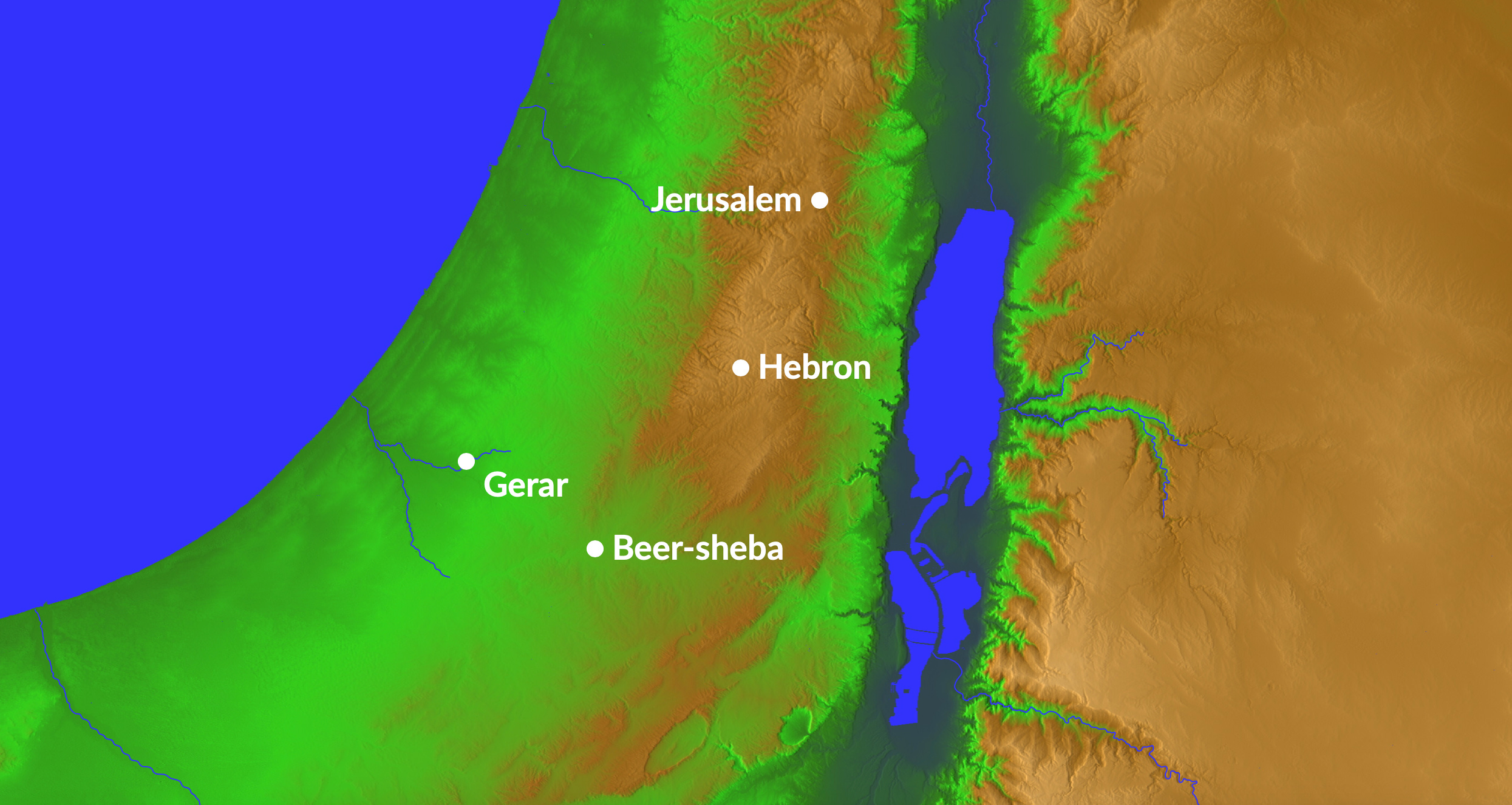
Hebron was located on top of the mountain range that ran north to south between the Jordan River Valley and the Mediterranean Sea.
Gen. 23:3 Then Abraham rose from before his dead and spoke to the sons of Heth, saying,
Heth was a son of Canaan (see Gen. 10:15), meaning the sons of Heth were Canaanites.
Gen. 23:4 “I am a sojourner and a foreign resident among you; give me a possession for a burial site among you that I may bury my dead out of my sight.”
Gen. 23:5 And the sons of Heth answered Abraham, saying to him,
Gen. 23:6 “Hear us, my lord, you are a mighty prince among us; bury your dead in the choicest of our burial sites; none of us will refuse you his burial sites for burying your dead.”
Gen. 23:7 So Abraham rose and bowed to the people of the land, the sons of Heth.
Notice the word “bowed”. Abraham was in the process of negotiating for some land, and bowing was part of the negotiation process. That is quite different than anything that happens during real estate transactions in our society.
When Americans and westerners read the Bible, we tend to interpret it using our cultural values and mores. 21st century western societies have certain expectations, standard practices, and mindsets that govern how we conduct business and interact with each other. When westerners read the Bible, we assume they had the same priorities and attitudes.
However, this passage, which illustrates a negotiation, reveals practices that are quite different than anything we will experience in 21st century western cultures. This illustrates that in order to fully understand Bible history, we need to understand and recognize that they approached life and business with a very different mindset than us.
Gen. 23:8 And he spoke with them, saying, “If it is your desire for me to bury my dead out of my sight, hear me, and meet with Ephron the son of Zohar for me,
Gen. 23:9 that he may give me the cave of Machpelah which belongs to him, which is at the end of his field; for the full price let him give it to me in your presence as a possession for a burial site.”
Note the words “full price”. Abraham offered to buy the cave of Machpelah. This verse also reveals that this negotiation was conducted in public, not in private.
Gen. 23:10 Now Ephron was sitting among the sons of Heth; and Ephron the Hittite answered Abraham in the hearing of the sons of Heth, even of all who went in at the gate of his city, saying,
Gen. 23:11 “No, my lord, hear me; I give you the field, and I give you the cave that is in it. In the sight of the sons of my people I give it to you; bury your dead.”
Look at the word “no”. Ephron offered to give the field and the cave to Abraham for free.
Gen. 23:12 And Abraham bowed before the people of the land.
Once again we see the word “bowed”. Abraham was a sojourner and a stranger; therefore, he did the bowing, indicating a lower position.
Gen. 23:13 And he spoke to Ephron in the hearing of the people of the land, saying, “If you will only please hear me; I will give the silver for the field, accept it from me that I may bury my dead there.”
Abraham offered again to buy the burial place.
Gen. 23:14 Then Ephron answered Abraham, saying to him,
Gen. 23:15 “My lord, hear me; a piece of land worth four hundred shekels of silver, what is that between me and you? So bury your dead.”
Notice the indirect nature of the negotiation. Ephron did not ask for a certain price, he stated what it was worth, and then emphasized that the amount was not a huge amount of money for either he or Abraham.
Gen. 23:16 So Abraham heard Ephron; and Abraham weighed out for Ephron the silver which he had named in the hearing of the sons of Heth, four hundred shekels of silver, commercial standard.
Now that Ephron had stated the value of the land, Abraham was able to pay for the burial spot.
In our culture, both parties to a negotiation try to get the most value for themselves that they can get. When Abraham and Ephron negotiated, they attempted to minimize the value they got for themselves.
Gen. 23:17 ¶ So Ephron’s field, which was in Machpelah, which faced Mamre, the field and the cave which was in it, and all the trees which were in the field, that were within all the confines of its border, were deeded over
Gen. 23:18 to Abraham as purchased in the sight of the sons of Heth, before all who came in at the gate of his city.
Gen. 23:19 After this, Abraham buried Sarah his wife in the cave of the field at Machpelah facing Mamre (that is, Hebron) in the land of Canaan.
Gen. 23:20 So the field and the cave that is in it were deeded over to Abraham for a possession for a burial site by the sons of Heth.
21st century western societies have certain expectations, standard practices, and mindsets that govern how we conduct business and interact with each other. When westerners read the Bible, we assume people who lived in Bible times had the same priorities and attitudes.
When Abraham bought a burial place for Sarah, the negotiation was conducted in public, and the process included bowing and indirect communication. That is quite different than how we conduct real estate transactions. This illustrates that in order to fully understand Bible history, we need to understand and recognize that people in the ancient near east approached life and business with a mindset that was quite different than the mindset that governs our lives.
Thanks for visiting Bible Mountain. If you have already joined my email list, thank you and please tell others about Bible Mountain. If you have not joined my email list yet, please do so now. In order to join, go to Bible Mountain dotcom, click on subscribe, and that will take you to a page where you can sign up. Your email address will not be sold nor given away. Once again, thanks for visiting Bible Mountain.
“Scripture quotations taken from the (LSB®) Legacy Standard Bible®, Copyright © 2021 by The Lockman Foundation. Used by permission. All rights reserved. Managed in partnership with Three Sixteen Publishing Inc. LSBible.org and 316publishing.com.”