
As you probably know, there is a lot of conflict in the Middle East, including ongoing strife between the Jews and Palestinians. There has long been a belief that the Holy Land belongs to the Jews. The Israelites lived in the land between the Jordan River and the Mediterranean Sea for hundreds of years. Jerusalem has been the center of Jewish religion for 3,000 years. Therefore, some claim that land belongs to the Jews, meaning the land should belong to the Jews today.
In recent decades, related to current Middle Eastern politics, some people reject the notion that the area known as the Holy Land belongs to the Jews. The reasoning is that if the Holy Land belongs to the Jews, then what should we do with the Palestinians?
The belief that the land belongs to the Jews has origins in the Bible. Today’s passage is one of many that speaks to this issue.
After a brief sojourn in Egypt, Abraham and Lot traveled to Bethel, which sits on top of a mountain range. Between the two of them, they had so much cattle and wealth that they decided to split. Abraham stayed up on the mountain while Lot went down into the Jordan River Valley and went to Sodom.
Gen. 13:14 ¶ And Yahweh said to Abram, after Lot had separated from him, “Now lift up your eyes and look from the place where you are, northward and southward and eastward and westward;
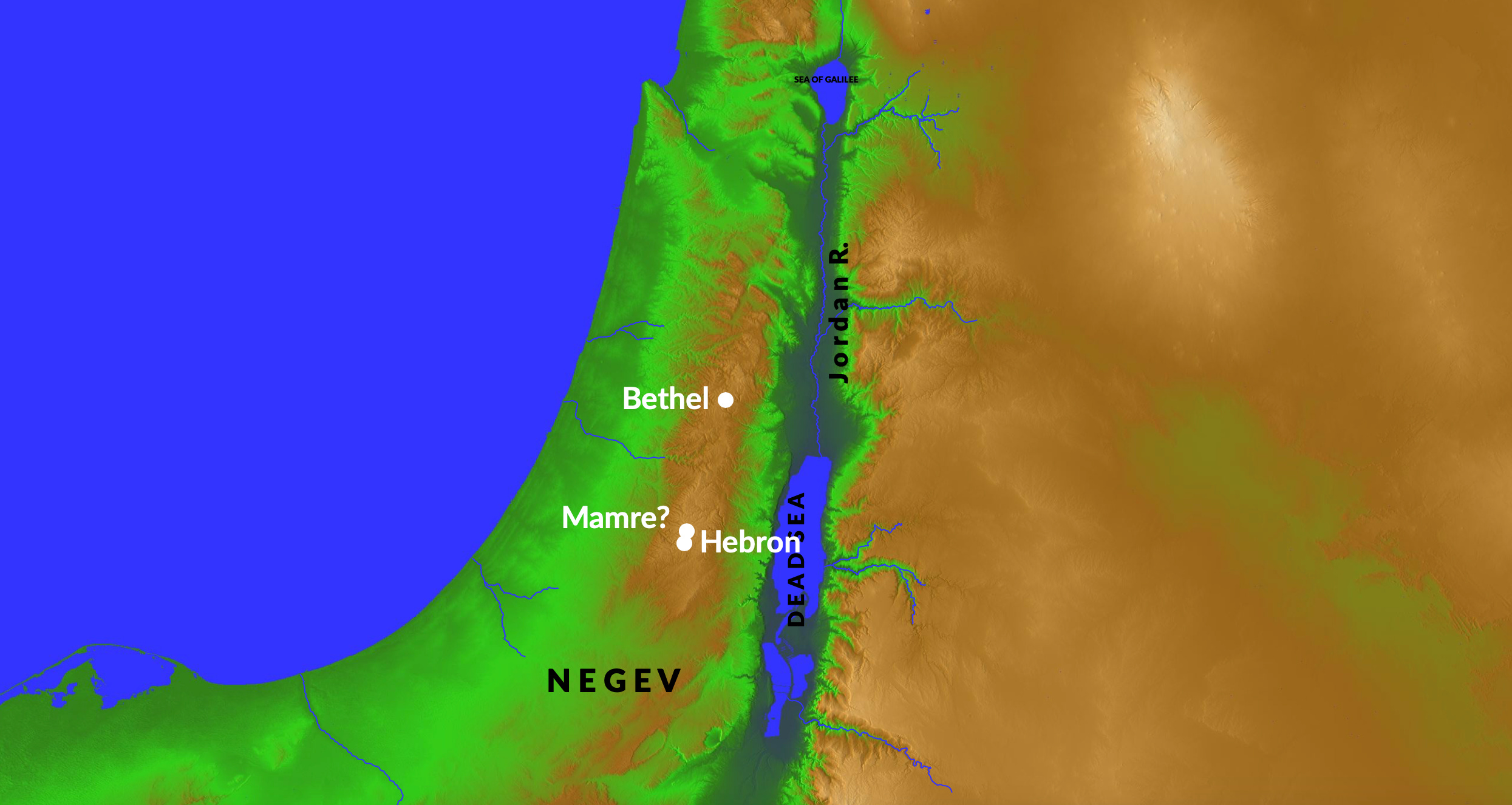
Gen. 13:15 for all the land which you see, I will give it to you and to your seed forever.
Abraham was in Bethel when this happened. He was on the ridge of a mountain range. He would have been able to see down to the Mediterranean Sea and across the Jordan River.
Look at the word “forever”. Yahweh did not merely promise this land to Abram during Abram’s lifetime, He promised it to Abram’s descendants forever. Genesis 26 tells us the land was given to the descendants of Isaac. Then Genesis 28 tells us the land was given to the descendants of Jacob, meaning it was given to the Israelites.
This verse makes it clear that God spoke regarding the question of who is entitled to this land. I agree there is a thorny question of what to do with the Palestinians, but the existence of the Palestinians does not negate the fact that God determined who is the rightful possessors of this land.
Gen. 13:16 And I will make your seed as the dust of the earth, so that if anyone can number the dust of the earth, then your seed can also be numbered.
At this point in time, Abram and Sarai were childless.
Gen. 13:17 Arise, walk about the land through its length and breadth; for I will give it to you.”
Gen. 13:18 Then Abram moved his tent and came and lived by the oaks of Mamre, which are in Hebron, and there he built an altar to Yahweh.
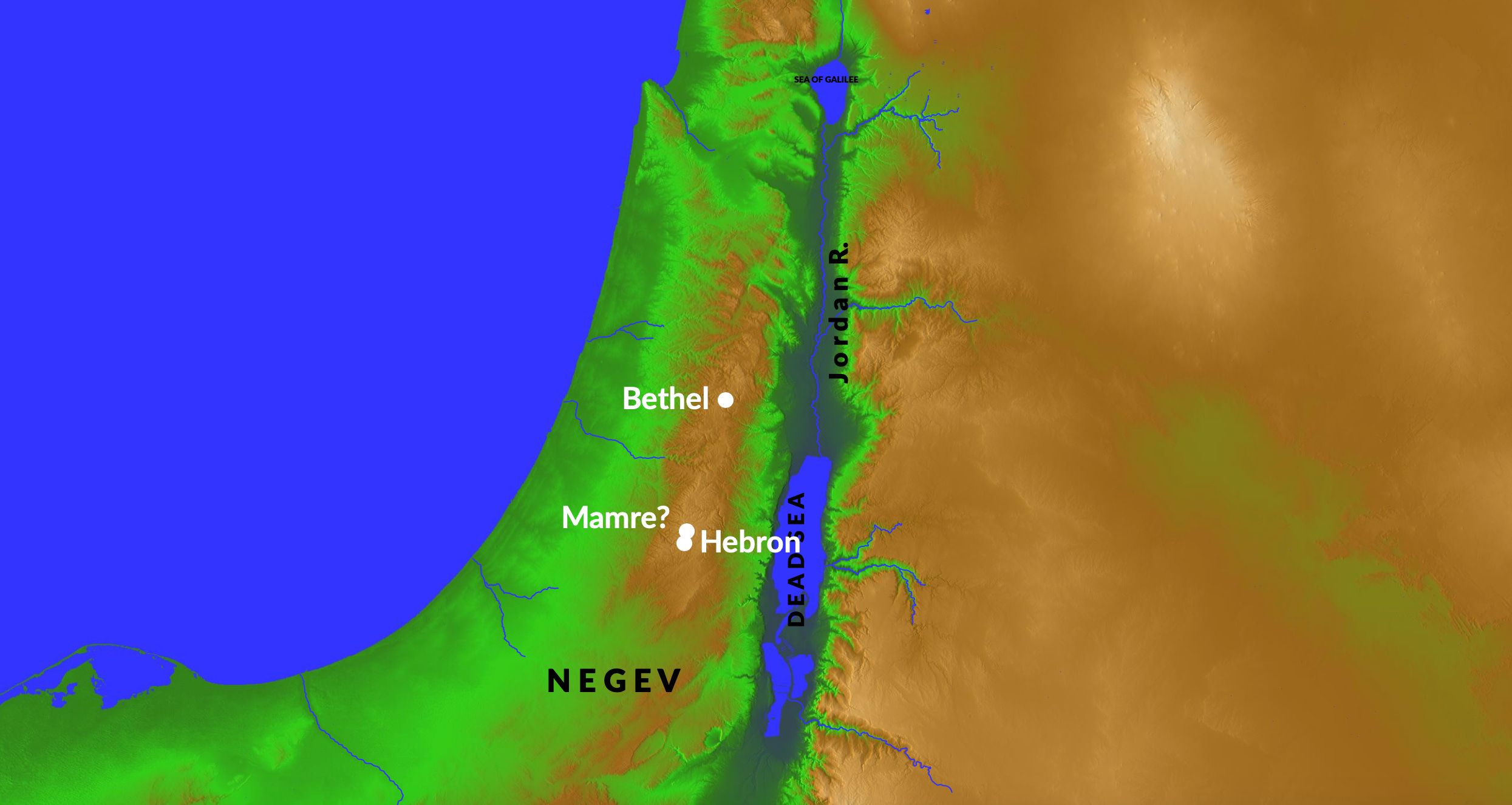
It is approximately 25 miles / 40 km from Bethel to Mamre. That would be a one day journey.
Gen. 14:1 ¶ And it happened in the days of Amraphel king of Shinar, Arioch king of Ellasar, Chedorlaomer king of Elam, and Tidal king of Goiim,
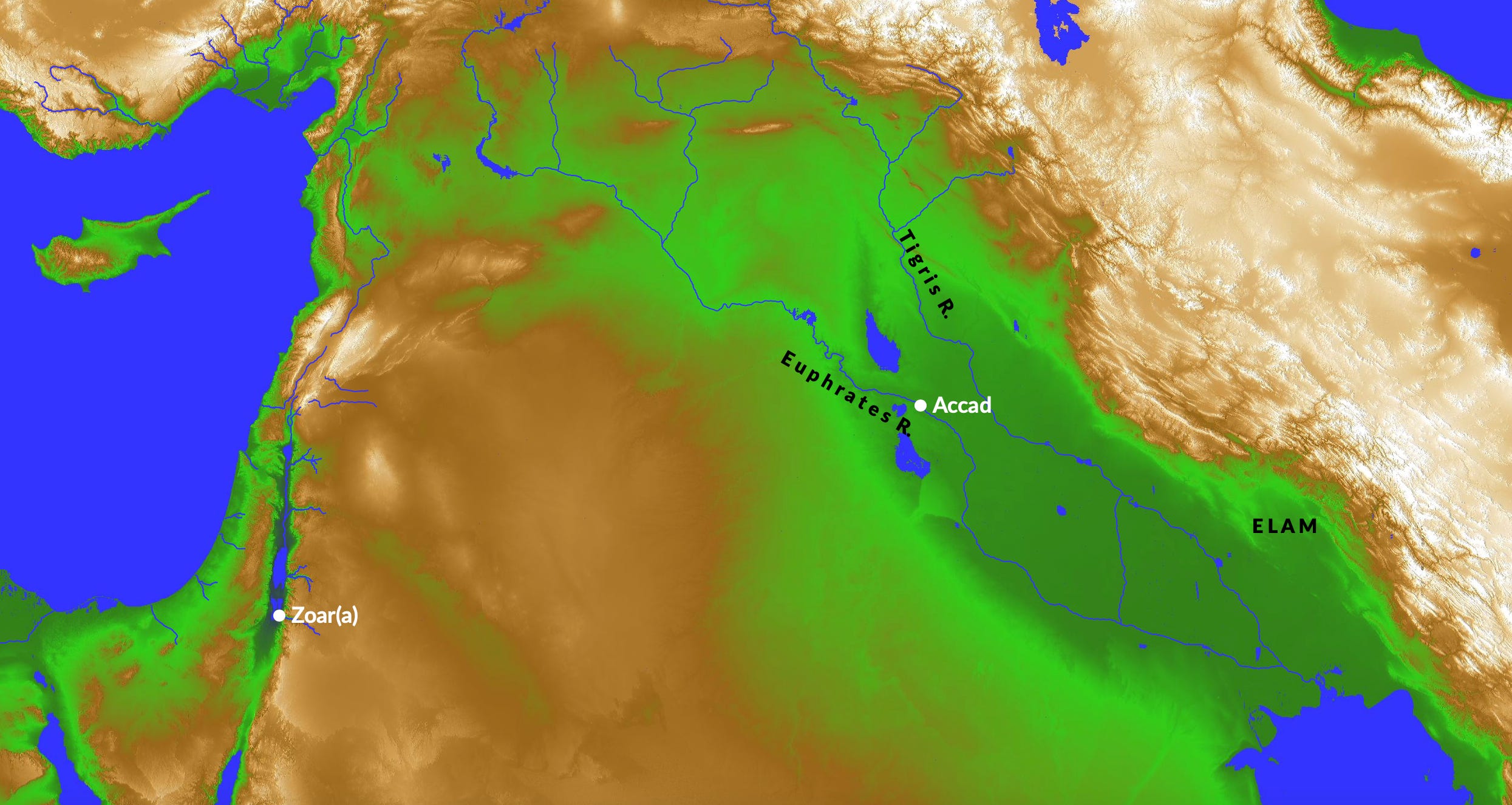
Shinar was in the lower Mesopotamian Valley. Elam was an area just east of the Tigris River. These four kings were from the lower Mesopotamian Valley.
Gen. 14:2 that they made war with Bera king of Sodom, and with Birsha king of Gomorrah, Shinab king of Admah, and Shemeber king of Zeboiim, and the king of Bela (that is, Zoar).
These five kings were from the area around the Dead Sea. The Mesopotamian Alliance made war against the Dead Sea Alliance.
Gen. 14:3 All these came as allies to the valley of Siddim (that is, the Salt Sea).
The Mesopotamian Alliance went to the Dead Sea, (Salt Sea). It is at least 600 miles / 1,000 km from Mesopotamia to the Dead Sea. That journey would take at least 20 days.
Gen. 14:4 Now for twelve years they had served Chedorlaomer, but the thirteenth year they rebelled.
The 5 kings in the Dead Sea Alliance had served Chedorlaomer for 12 years, but then rebelled.
Gen. 14:5 So in the fourteenth year Chedorlaomer and the kings that were with him, came and struck the Rephaim in Ashteroth-karnaim and the Zuzim in Ham and the Emim in Shaveh-kiriathaim,
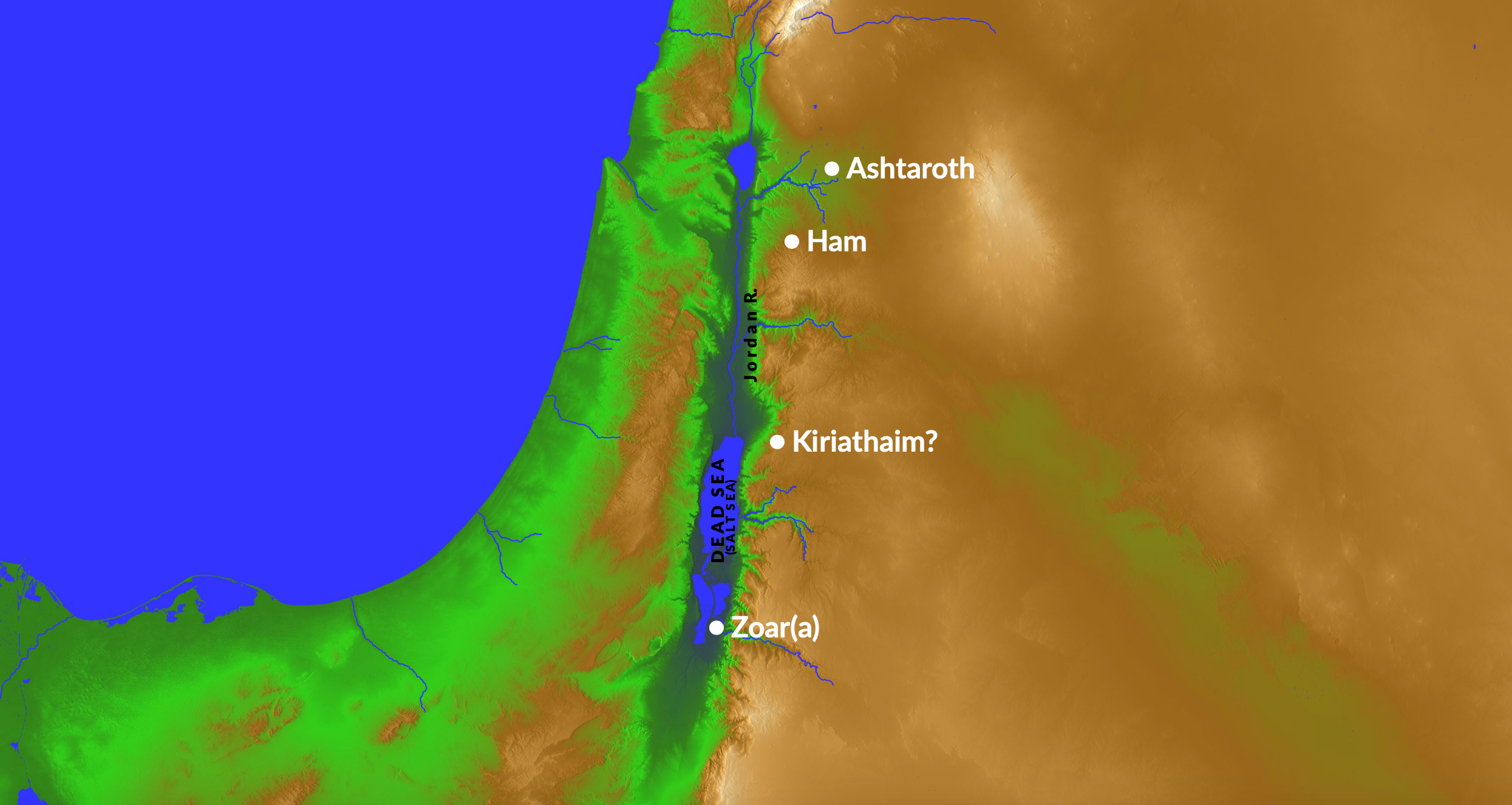
First, the Mesopotamian Alliance struck cities which were east of the Jordan River and north of the Dead Sea.
Gen. 14:6 and the Horites in their Mount Seir, as far as El-paran, which is by the wilderness.
Gen. 14:7 Then they turned back and came to En-mishpat (that is, Kadesh). And they struck all the country of the Amalekites, and also the Amorites, who were living in Hazazon-tamar.
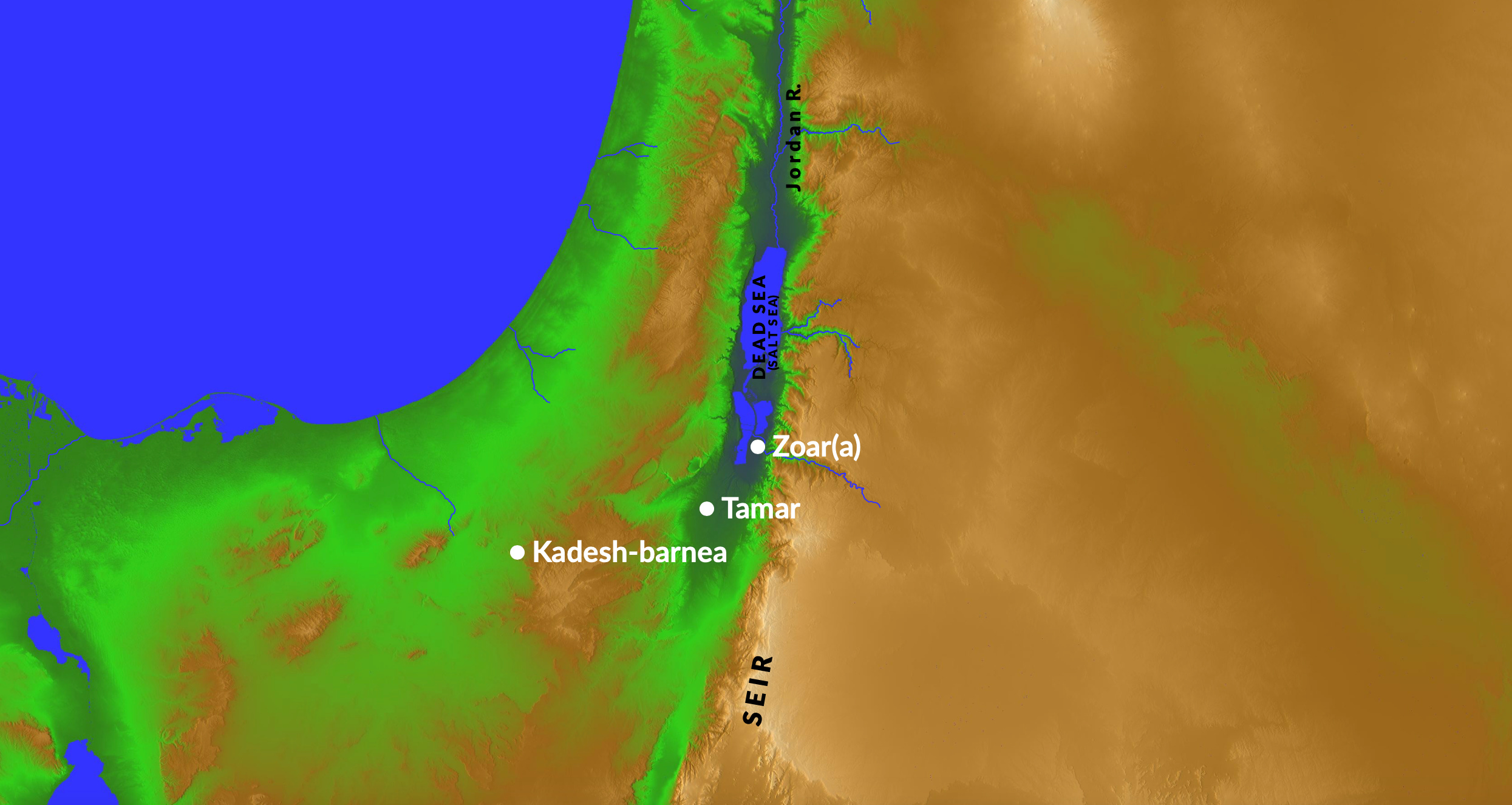
Next, the Mesopotamian Alliance struck cities which were south of the Dead Sea.
Gen. 14:8 And the king of Sodom and the king of Gomorrah and the king of Admah and the king of Zeboiim and the king of Bela (that is, Zoar) came out; and they arranged themselves for battle against them in the valley of Siddim,
Gen. 14:9 against Chedorlaomer king of Elam and Tidal king of Goiim and Amraphel king of Shinar and Arioch king of Ellasar, four kings against five—
Finally, the Dead Sea Alliance went out to fight the Mesopotamian Alliance.
Gen. 14:10 now the valley of Siddim was full of tar pits—and the kings of Sodom and Gomorrah fled, and they fell into them; but those who remained behind fled to the hill country.
The Dead Sea Alliance lost the battle.
Gen. 14:11 Then they took all the possessions of Sodom and Gomorrah and all their food supply and departed.
The pronoun “they” refers to the Mesopotamian Alliance.
Gen. 14:12 They also took Lot, Abram’s nephew, and his possessions and departed; now he was living in Sodom.
Gen. 14:13 ¶ Then a fugitive came and told Abram the Hebrew. Now he was dwelling by the oaks of Mamre the Amorite, brother of Eshcol and brother of Aner, and these were in a covenant with Abram.
Gen. 14:14 So Abram heard that his relative had been taken captive, and he led out his trained men, born in his house, 318 in number, and went in pursuit as far as Dan.
Notice the number “318”. That is how many soldiers Abram had in his employ. Abram had to be exceedingly wealthy in order to afford that many trained men.
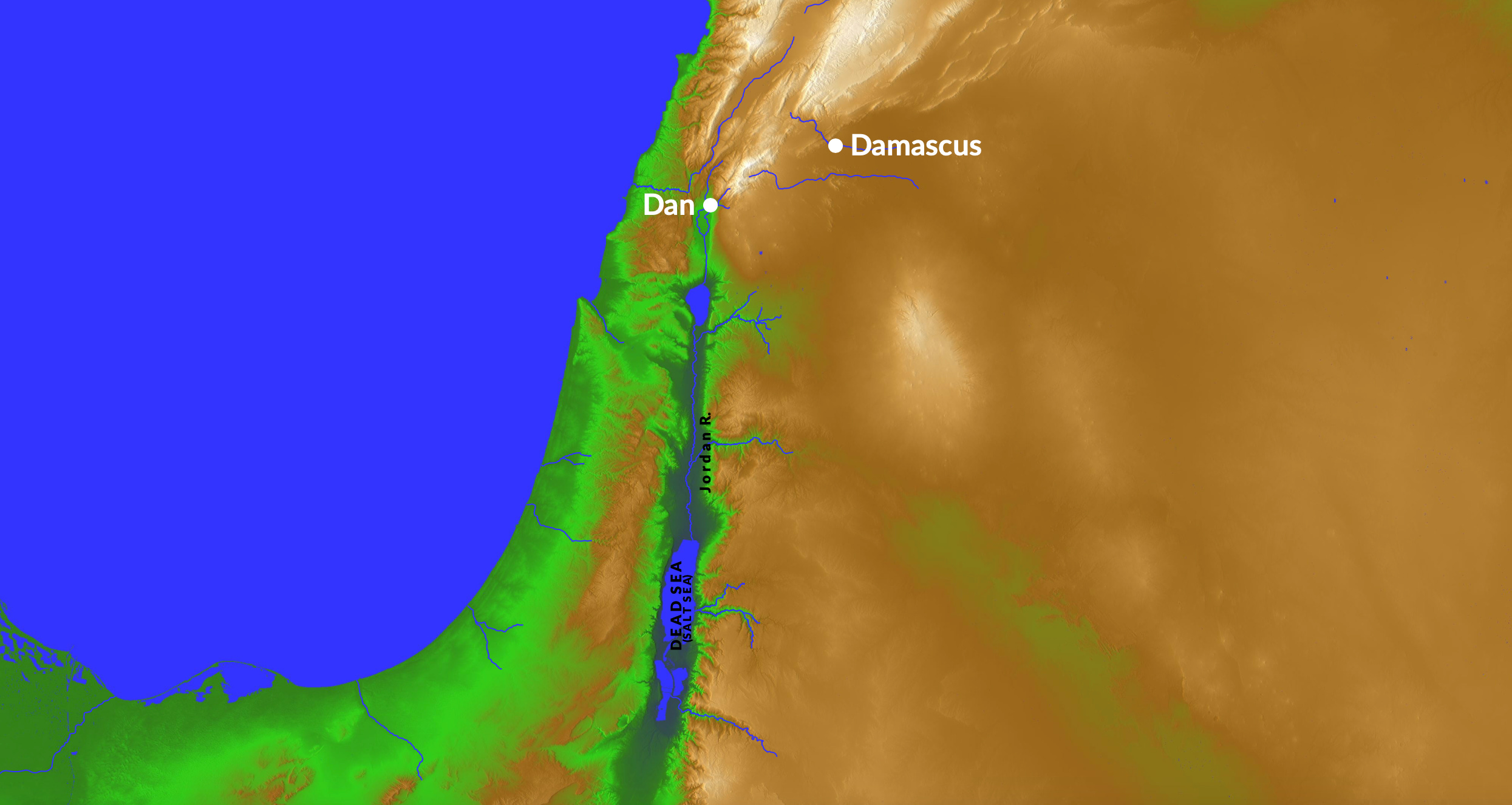
After defeating the Dead Sea Alliance, the Mesopotamian Alliance went north to go back to Mesopotamia. Abram and his men pursued them to Dan, which was north of the Sea of Galilee.
Gen. 14:15 And he divided his men against them by night, he and his servants, and struck them and pursued them as far as Hobah, which is north of Damascus.
Gen. 14:16 And he brought back all the possessions, and he also brought back his relative Lot with his possessions and also the women and the people.
As you probably know, there is a lot of conflict in the Middle East, including ongoing strife between the Jews and Palestinians. There has long been a belief that the Holy Land belongs to the Jews. In recent decades some people reject the notion that the area known as the Holy Land belongs to the Jews.
In today’s passage we saw that God gave this land to Abram’s seed forever. Later passages in Genesis tell us the inheritance of the land was passed down to Isaac and then to Jacob. The descendants of Jacob are the Israelites, meaning the Holy Land belongs to the Israelites. The thorny question of what to do with the Palestinians does not nullify the fact that God gave this land to Israel.
Thanks for visiting Bible Mountain. If you have already joined my email list, thank you and please tell others about Bible Mountain. If you have not joined my email list yet, please do so now. In order to join, go to Bible Mountain dotcom, click on subscribe, and that will take you to a page where you can sign up. Your email address will not be sold nor given away. Once again, thanks for visiting Bible Mountain.
“Scripture quotations taken from the (LSB®) Legacy Standard Bible®, Copyright © 2021 by The Lockman Foundation. Used by permission. All rights reserved. Managed in partnership with Three Sixteen Publishing Inc. LSBible.org and 316publishing.com.”