
If is fairly well-known that when Abram and Sarai traveled, Abram said Sarai was his sister, with the result that Sarai was taken into another man’s house. Most Christians criticize Abram for lying, allowing Sarai to be taken in order to protect himself, and not trusting God to protect him.
There are two problems with that criticism. First, it is not completely fair in light of what Abram thought would happen compared to what actually happened. Second, it is somewhat hypocritical because modern missionaries do something very similar.
When Abram entered Canaan, he first went to Shechem. Then he lived between Bethel and Ai for a time before heading south toward the Negev.
Gen. 12:10 ¶ Now there was a famine in the land; so Abram went down to Egypt to sojourn there, for the famine was severe in the land.
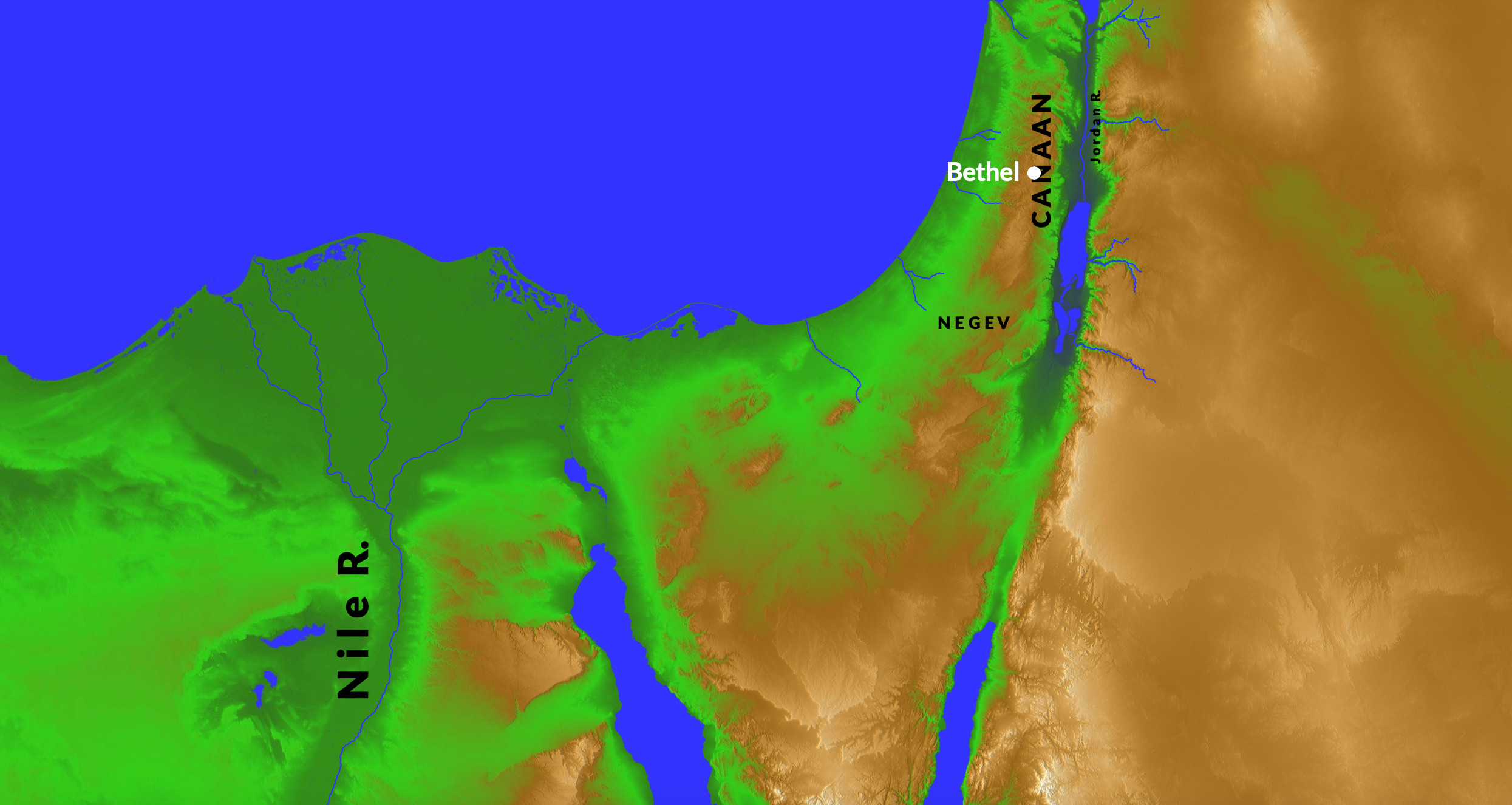
It was about 200 miles / 325 km from the Negev to the Nile River in Egypt. That would be about a 7 day walk.
Gen. 12:11 And it happened as he drew near to entering Egypt, that he said to Sarai his wife, “Now behold, I know that you are a woman beautiful in appearance;
Gen. 12:12 and it will be when the Egyptians see you, that they will say, ‘This is his wife’; and they will kill me, but they will let you live.
It appears that in their culture adultery was worse than murder. The Egyptians would not have dared to take Sarai while she was married to Abram, but the Egyptians apparently would not have hesitated to kill Abram and then take Sarai.
Take note that Abram was afraid of being killed.
Gen. 12:13 Please say that you are my sister so that it may go well with me because of you, and that I may live on account of you.”
Abram is often criticized for lying about his relationship with Sarai; however, he lied in order to protect his life.
Today, missionaries do something similar. Many missionaries work in limited access countries. They are not forthright about why they are living in the country they are in. Instead, they hide the truth to gain entrance to the country and in order to avoid being killed. That is not much different than what Abram did.
Furthermore, part of the criticism levied against Abram is that he should have trusted that God would protect his life. We could say the same thing to missionaries. If a missionary is truly called by God to go to a limited access country, at what point should they be open and honest about what they are doing and trust that God will protect them?
Gen. 12:14 Now it happened when Abram came into Egypt, that the Egyptians saw that the woman was very beautiful.
Gen. 12:15 And Pharaoh’s officials saw her and praised her to Pharaoh; and the woman was taken into Pharaoh’s house.
People criticize Abram for lying and allowing Pharaoh to take his wife. However, I don’t think that is what happened. I think this was a very unexpected turn of events.
I believe Abram expected that an Egyptian would offer a dowry for his “sister”, a dowry that Abram could refuse. Since Abram was only in Egypt a short time because of a famine, Abram intended to keep refusing any offer of a dowry until he was able to leave Egypt again.
However, when Pharaoh learned about Sarai, he didn’t offer a dowry, thus giving Abram a chance to refuse. Instead, Pharaoh simply took her. Abram was not powerful enough to resist Pharaoh’s seizure.
Gen. 12:16 Therefore he treated Abram well because of her; and sheep and oxen and donkeys and male and female servants and female donkeys and camels came into his possession.
Take note that Abram’s wealth increased quite significantly.
Gen. 12:17 ¶ But Yahweh struck Pharaoh and his house with great plagues because of Sarai, Abram’s wife.
Gen. 12:18 Then Pharaoh called Abram and said, “What is this you have done to me? Why did you not tell me that she was your wife?
Gen. 12:19 Why did you say, ‘She is my sister,’ so that I took her for myself as a wife? So now, here is your wife, take her and go.”
Gen. 12:20 So Pharaoh commanded his men concerning him; and they sent him away with his wife and all that belonged to him.
Gen. 13:1 ¶ So Abram went up from Egypt to the Negev, he and his wife and all that belonged to him, and Lot with him.
Up to this point, the text is not clear if Lot went to Egypt with Abram. This verse tells us he did.
Gen. 13:2 ¶ Now Abram was very rich in livestock, in silver and in gold.
Don’t miss the word “rich”. Abram was very wealthy.
Gen. 13:3 And he went on his journeys from the Negev as far as Bethel, to the place where his tent had been at the beginning, between Bethel and Ai,
Gen. 13:4 to the place of the altar which he had made there formerly; and there Abram called upon the name of Yahweh.
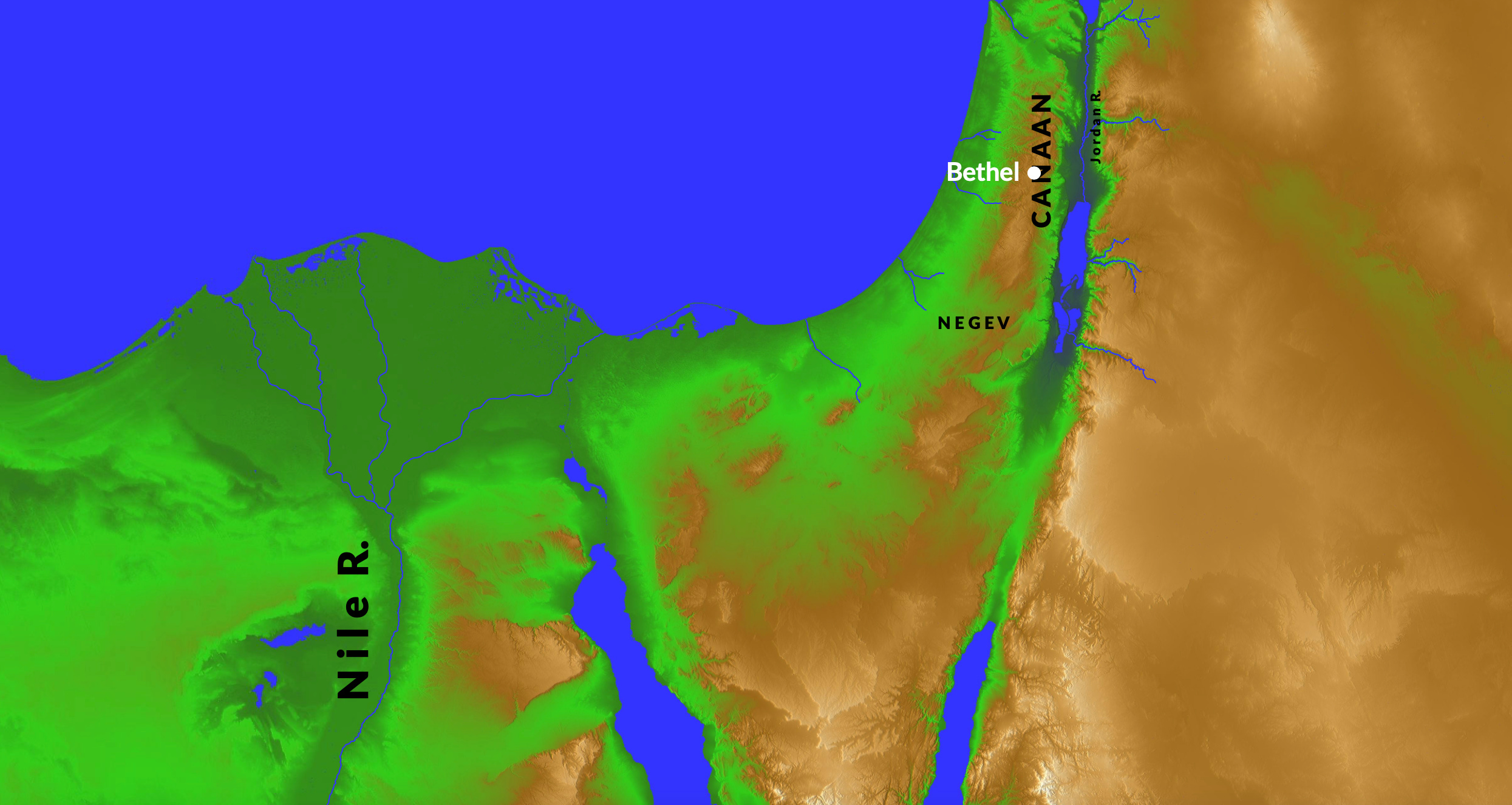
Abram and Lot traveled to Bethel. Bethel was on top of the mountain range that ran between the Mediterranean Sea and the Jordan River. That gave them a long distance view of all the land around them.
Gen. 13:5 ¶ Now Lot, who was going with Abram, also had flocks and herds and tents.
Gen. 13:6 And the land could not sustain them while living together, for their possessions were so abundant that they were not able to live together.
This reinforces the truth that they were very wealthy.
Gen. 13:7 And there was strife between the herdsmen of Abram’s livestock and the herdsmen of Lot’s livestock. Now the Canaanite and the Perizzite were living then in the land.
Gen. 13:8 ¶ So Abram said to Lot, “Please let there be no strife between you and me, nor between my herdsmen and your herdsmen, for we are brothers.
Gen. 13:9 Is not the whole land before you? Please separate from me; if to the left, then I will go to the right; or if to the right, then I will go to the left.”
Gen. 13:10 Then Lot lifted up his eyes and saw all the valley of the Jordan, that it was well watered everywhere—this was before Yahweh destroyed Sodom and Gomorrah—like the garden of Yahweh, like the land of Egypt as you go to Zoar.
The fact that they were at Bethel, on top of the mountain, gave them the ability to see a long distance. It is only 17 miles / 27 km from Bethel to the Jordan River.
Notice the phrases “well watered” and “before Yahweh destroyed Sodom and Gomorrah”. If you saw the Jordan Valley today, you would not describe it as well watered. However, apparently the valley was quite different before God destroyed Sodom and Gomorrah.
Gen. 13:11 So Lot chose for himself all the valley of the Jordan, and Lot journeyed eastward. Thus they separated from each other.
Gen. 13:12 Abram lived in the land of Canaan, while Lot lived in the cities of the valley and moved his tents as far as Sodom.
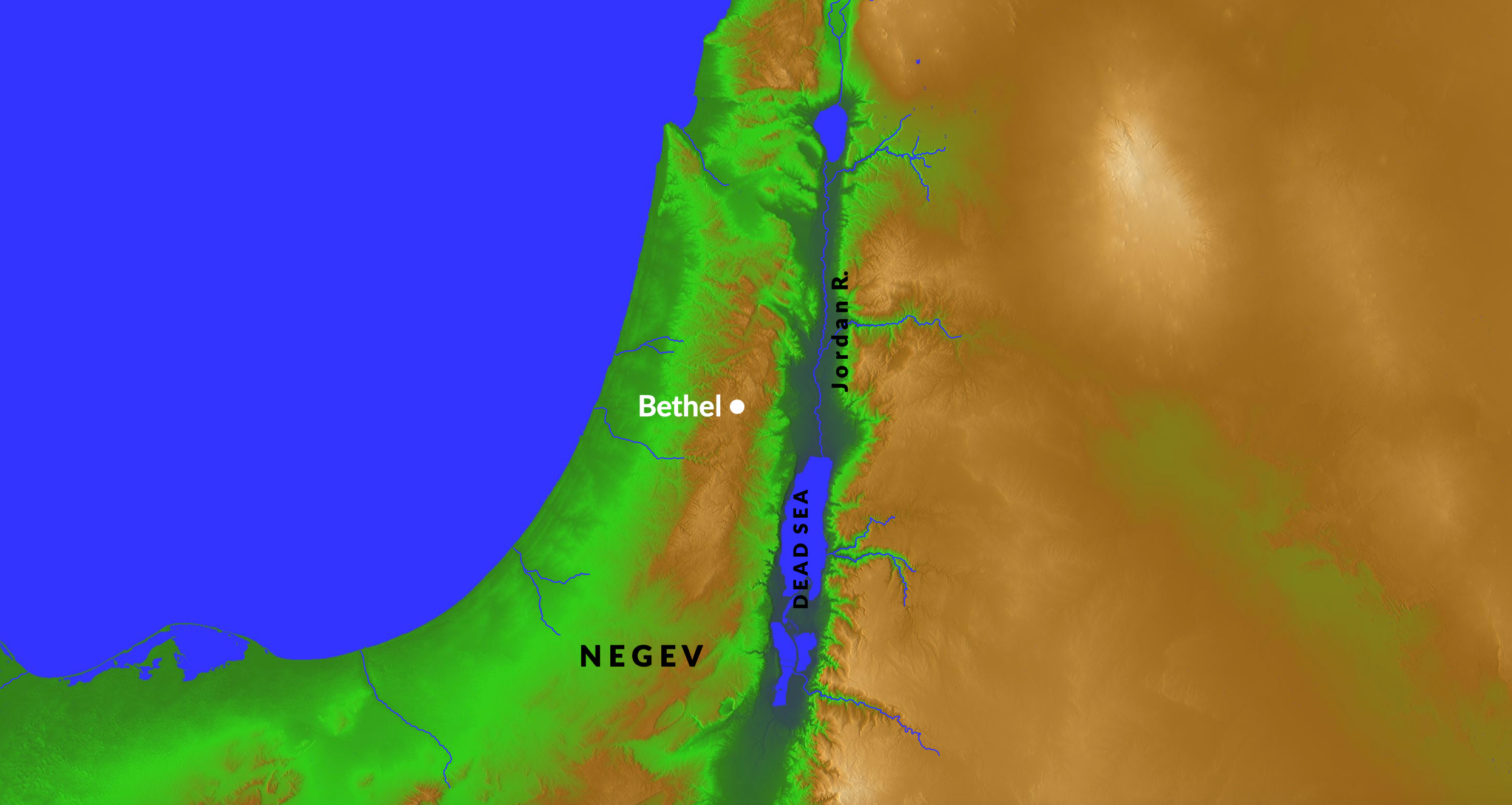
Sodom was somewhere near the Dead Sea. It was about 20 miles / 35 km down to the Dead Sea. That would have been a one day walk.
Gen. 13:13 Now the men of Sodom were evil and sinners, exceedingly so, against Yahweh.
Abram is often criticized for lying about his relationship with Sarai; however, he lied in order to protect his life. Today, missionaries do something similar. Many missionaries work in limited access countries. They are not forthright about why they are living in the country they are in. Instead, they hide the truth to gain entrance to the country and in order to avoid being killed. That is not much different than what Abram did.
Furthermore, part of the criticism levied against Abram is that he should have trusted that God would protect his life. We could say the same thing to missionaries. If a missionary is truly called by God to go to a limited access country, at what point should they be open and honest about what they are doing and trust that God will protect them?
Is it right or wrong for missionaries to be deceptive and withhold the complete truth in order to gain access to a limited access country?
If missionaries should not be deceptive in order to gain access to certain countries, how should we get the gospel into those countries?
Thanks for visiting Bible Mountain. If you have already joined my email list, thank you and please tell others about Bible Mountain. If you have not joined my email list yet, please do so now. In order to join, go to Bible Mountain dotcom, click on subscribe, and that will take you to a page where you can sign up. Your email address will not be sold nor given away. Once again, thanks for visiting Bible Mountain.
“Scripture quotations taken from the (LSB®) Legacy Standard Bible®, Copyright © 2021 by The Lockman Foundation. Used by permission. All rights reserved. Managed in partnership with Three Sixteen Publishing Inc. LSBible.org and 316publishing.com.”