
Yesterday, we finished reading Moses’ first dialogue which began in the first chapter of Deuteronomy. In that dialogue, Moses reviewed Israel’s history and reminded Israel of the importance of obeying Yahweh.
Today, we will begin reading Moses’ second dialogue, in which he repeated the ten commandments. We will be reminded of what it looks like when people see God. This gives us guidance on whether or not to believe anyone in the 21st century who claims to have seen a glimpse of Jesus in heaven.
Deut. 4:41 ¶ Then Moses set apart three cities across the Jordan to the east toward the sunrise,
Deut. 4:42 that a manslayer might flee there, who slew his neighbor without premeditation, not hating him previously; so he shall flee to one of these cities that he might live:
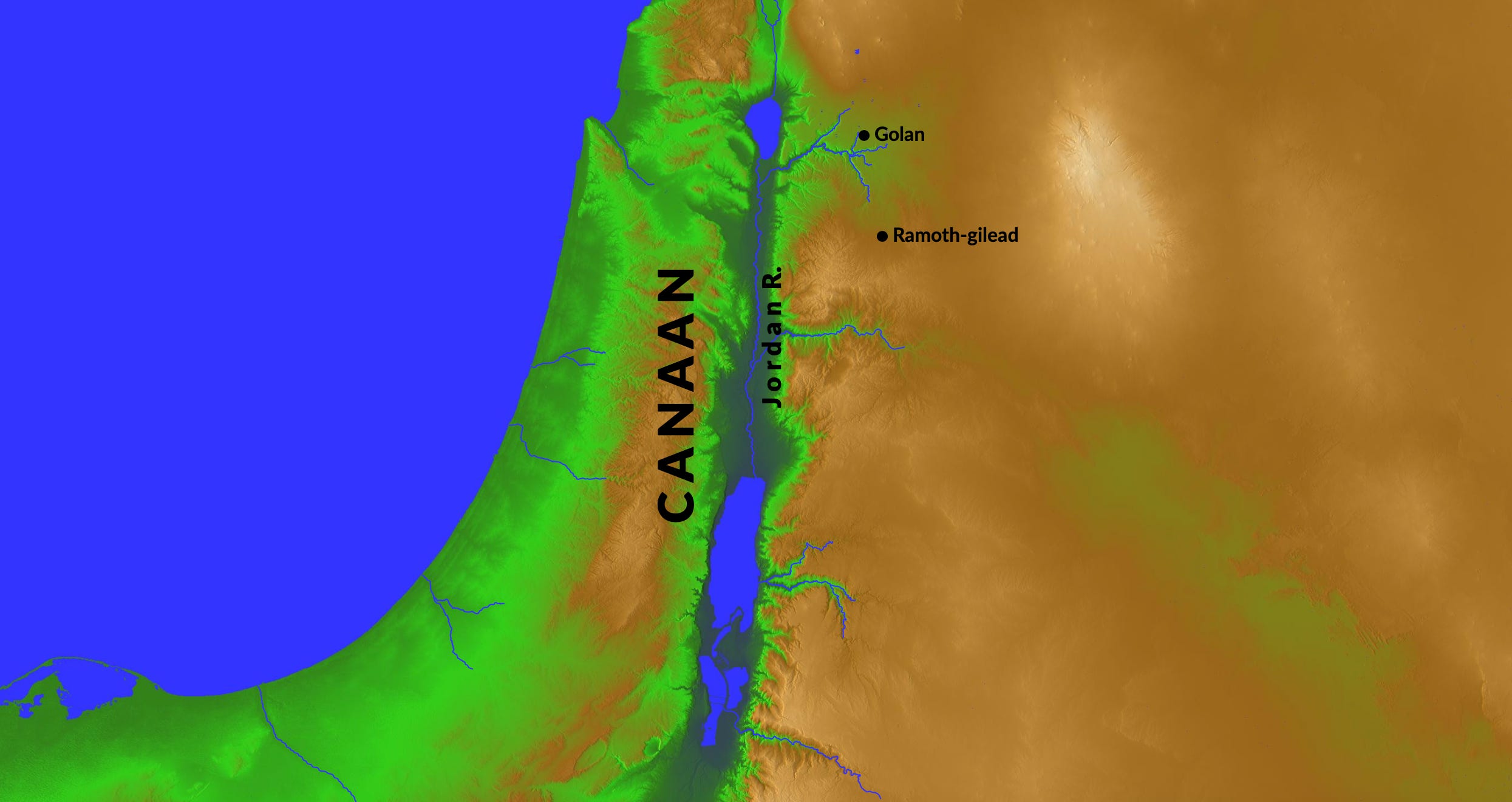
The Promised Land was on the west side of the Jordan River. However, two and a half tribes settled on the east side of the Jordan. They needed cities of refuge, so three cities of refuge were designated on their side of the Jordan. It was necessary to have cities on both sides of the Jordan because the Jordan River flooded at certain times of the year, making it uncrossable during flood season.
Deut. 4:43 Bezer in the wilderness on the plateau for the Reubenites, and Ramoth in Gilead for the Gadites, and Golan in Bashan for the Manassites.
Deut. 4:44 ¶ Now this is the law which Moses set before the sons of Israel;
Deut. 4:45 these are the testimonies and the statutes and the judgments which Moses spoke to the sons of Israel when they came out from Egypt,
Deut. 4:46 across the Jordan, in the valley opposite Beth-peor, in the land of Sihon king of the Amorites who lived at Heshbon, whom Moses and the sons of Israel struck down when they came out from Egypt.
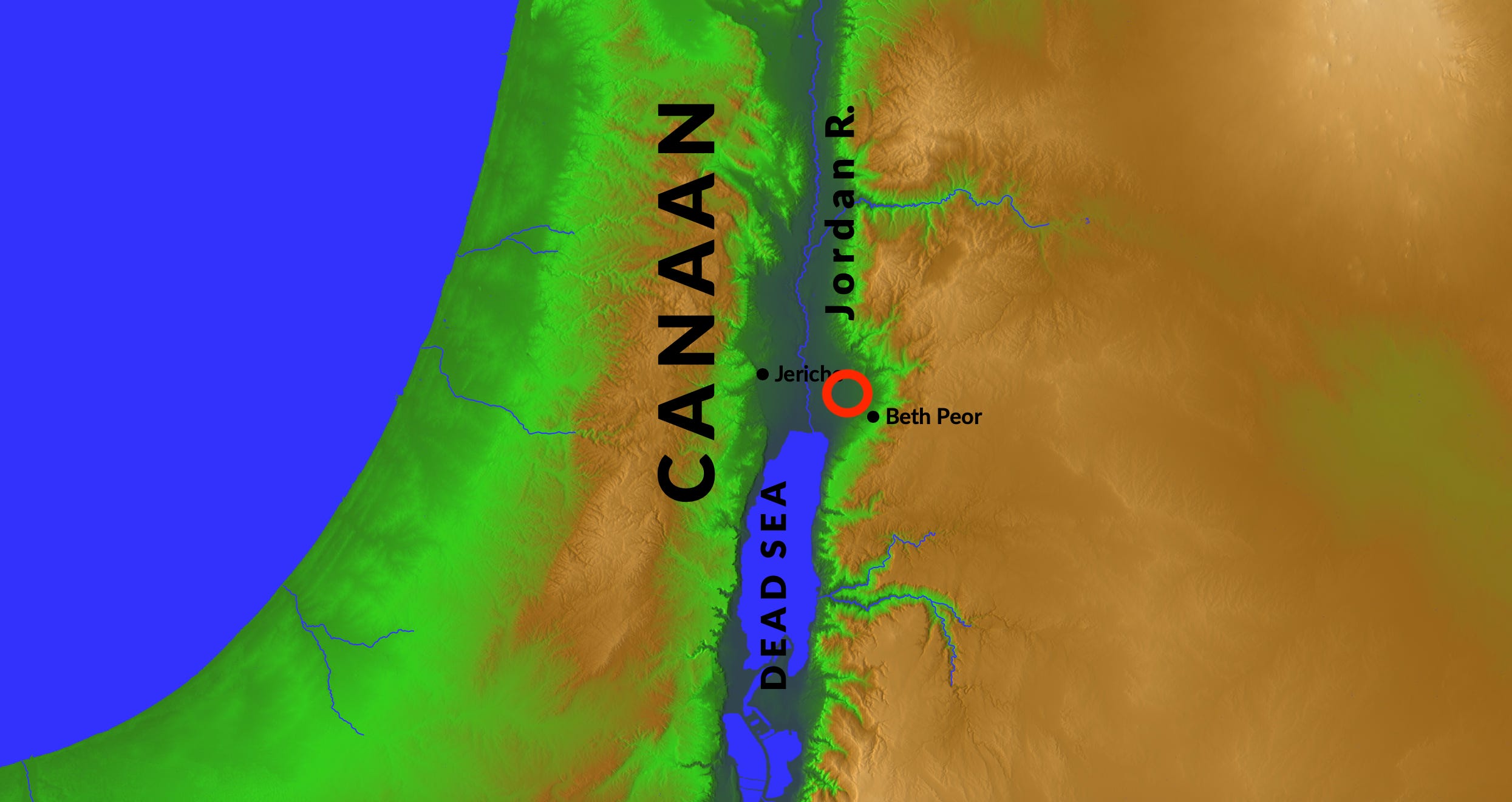
Verse 46 tells us where the Israelites were camping when the events of Deuteronomy took place.
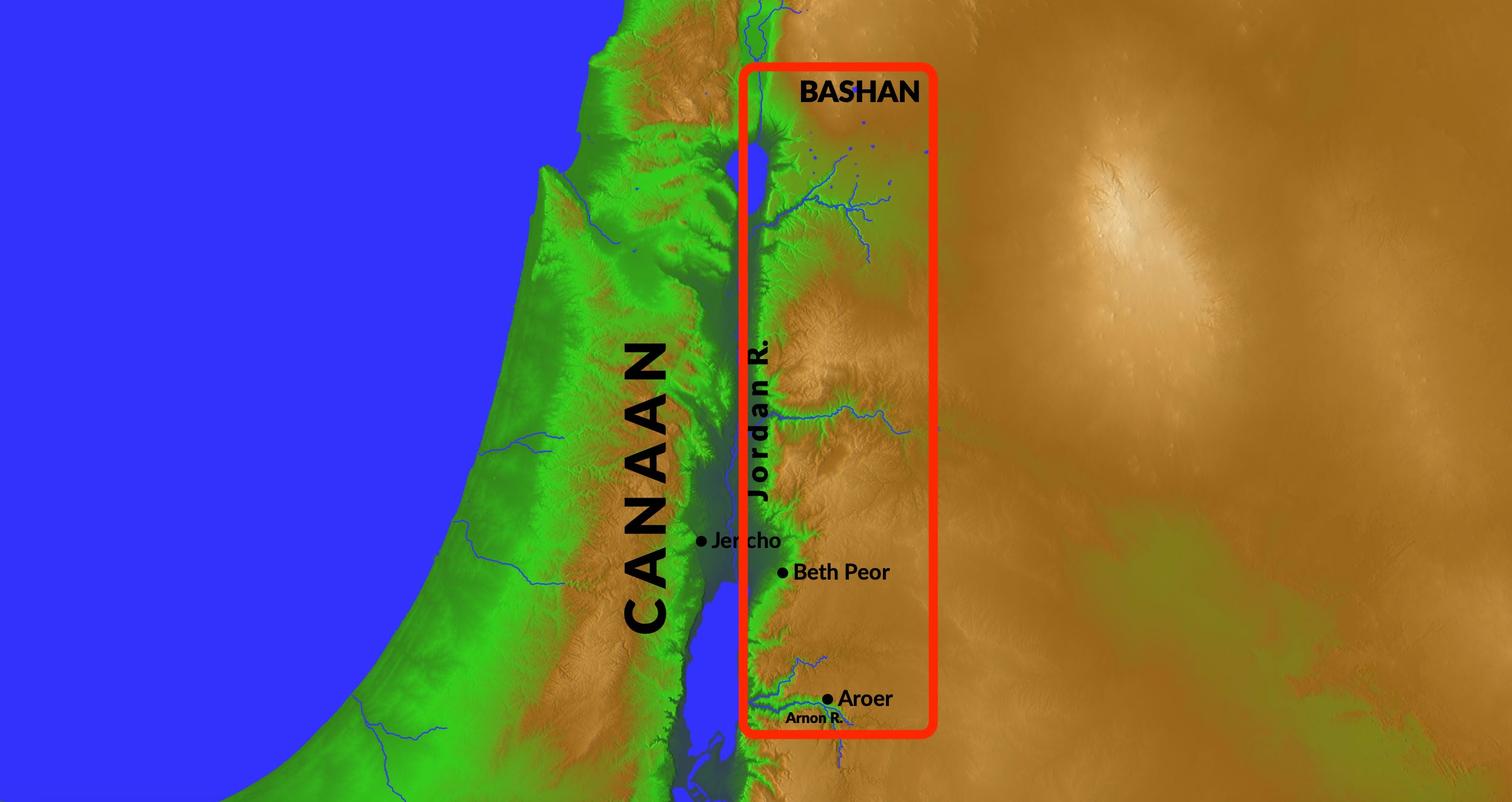
Deut. 4:47 And they took possession of his land and the land of Og king of Bashan, the two kings of the Amorites, who were across the Jordan to the east toward the sunrise,
Deut. 4:48 from Aroer, which is on the edge of the valley of Arnon, even as far as Mount Sion (that is, Hermon),
Deut. 4:49 with all the Arabah across the Jordan to the east, even as far as the sea of the Arabah, at the foot of the slopes of Pisgah.
Deut. 5:1 ¶ Then Moses summoned all Israel and said to them: ¶ “Hear, O Israel, the statutes and the judgments which I am speaking today in your hearing, that you may learn them and be careful to do them.
Notice the opening quotation mark in the middle of this verse. Chapter 5 begins the second speech Moses delivered to Israel while they were camped on the east side of the Jordan River.
Look at the phrase “be careful to do them”. Israel was to be very intentional about obeying Yahweh.
Deut. 5:2 Yahweh our God cut a covenant with us at Horeb.
Deut. 5:3 Yahweh did not cut this covenant with our fathers, but with us, with all those of us alive here today.
Many of the people who were listening to Moses had been alive when Israel was at Mount Sinai. They would have been under the age of twenty, but they would have been old enough to remember Mount Sinai.
The covenant Yahweh made with Israel at Mount Sinai included all Israelite descendants.
Deut. 5:4 Yahweh spoke to you face to face at the mountain from the midst of the fire.
Notice the words “midst of the fire”. When Yahweh came down on Mount Sinai, He was surrounded by fire.
There are people in our day who claim they had a near-death experience and saw Jesus. Their story goes something like this:
David, a quiet Christian who taught Sunday school in rural Ohio, collapsed one afternoon while mowing his lawn. His heart stopped for several minutes. In that time he found himself standing on soft, glowing grass beneath a gentle golden light. The air was warm and sweet with the scent of flowers. A crystal-clear river wound between peaceful hills, and a deep, perfect calm filled everything. There was no fear—only joy and rest.
Jesus stood a short distance away, smiling with kind eyes. His simple white robe shone softly, and the scars on His open hands were plain to see. He spoke David’s name as if they had always known each other. “David,” He said gently, “it is not yet your time. There is still work for you. Go and tell them I am real, and that the door is open.”
The next moment David was gasping on his own front yard as paramedics revived him. Later he shared the experience simply and without exaggeration: he had been to a place of pure peace and had met Jesus there face to face.
David claimed he saw Jesus in a very pleasant, harmless environment. The problem with his claim is that Biblical accounts of Yahweh coming to earth or people going to heaven and seeing Yahweh involve thunder, lightning, and fire.
When Yahweh came down to Mount Sinai, He was surrounded by fire. When Isaiah saw the Lord, Yahweh was surrounded by smoke and the thresholds shook (see Isaiah 6). When the Apostle John was taken to heaven, he saw flashes of lightning and peals of thunder (see Revelation 4:5).
If a person claims to have seen heaven in a near-death experience, and their depiction of heaven is at odds with what the Bible says happens when people see visions of heaven, then we should be skeptical of the claim that they saw heaven.
Deut. 5:5 I was standing between Yahweh and you at that time, to declare to you the word of Yahweh; for you were afraid because of the fire and did not go up the mountain. He said,
Deut. 5:6 ¶ ‘I am Yahweh your God who brought you out of the land of Egypt, out of the house of slavery.
The following verses are a recitation of the ten commandments. The wording is almost identical to how the ten commandments are recorded in Exodus 20.
Deut. 5:7 ¶ ‘You shall have no other gods before Me.
Deut. 5:8 ¶ ‘You shall not make for yourself an idol—any likeness of what is in heaven above or on the earth beneath or in the water under the earth.
Deut. 5:9 You shall not worship them or serve them; for I, Yahweh your God, am a jealous God, visiting the iniquity of the fathers on the children and on the third and the fourth generations of those who hate Me,
Notice the word “jealous”. Yahweh is the One and only God. He gets jealous when He is not recognized as the One and only God. He gets jealous when glory and adoration that belongs to Him is given to false gods.
Deut. 5:10 but showing lovingkindness to thousands, to those who love Me and keep My commandments.
Take note of the contrast between verses 9 and 10. Verse 9 tells us Yahweh punishes those who hate Him. Verse 10 tells us He shows lovingkindness to those who love Him.
Deut. 5:11 ¶ ‘You shall not take the name of Yahweh your God in vain, for Yahweh will not leave him unpunished who takes His name in vain.
Deut. 5:12 ¶ ‘Observe the sabbath day to keep it holy, as Yahweh your God commanded you.
Deut. 5:13 Six days you shall labor and do all your work,
Deut. 5:14 but the seventh day is a sabbath of Yahweh your God; in it you shall not do any work, you or your son or your daughter or your male slave or your female slave or your ox or your donkey or any of your cattle or your sojourner who is within your gates, so that your male slave and your female slave may rest as well as you.
Deut. 5:15 You shall remember that you were a slave in the land of Egypt, and Yahweh your God brought you out of there with a mighty hand and with an outstretched arm; therefore Yahweh your God commanded you to observe the sabbath day.
Verses 14-15 contain a variation from the wording of the ten commandments found in Exodus 20. Exodus 20 told the Israelites to rest on the sabbath because Yahweh rested on the seventh day of creation and blessed the seventh day (see Exodus 20:11). Deuteronomy told the Israelites to rest on the sabbath so that their slaves could rest and as a reminder that they had been slaves in Egypt and Yahweh brought them out.
From time to time, people will claim they had a near-death experience and saw a glimpse of Jesus in heaven. However, their claims usually depict heaven as a quiet, peaceful place. That is at odds with how the Bible depicts heaven. Whenever Bible characters saw God or heaven, they saw thunder, lightning, and fire. We should be skeptical of any account of going to heaven that is at odds with how the Bible depicts heaven.
Thanks for visiting Bible Mountain. If you have already joined my email list, thank you and please tell others about Bible Mountain. If you have not joined my email list yet, please do so now. In order to join, go to Bible Mountain dotcom, click on subscribe, and that will take you to a page where you can sign up. Your email address will not be sold nor given away. Once again, thanks for visiting Bible Mountain.
“Scripture quotations taken from the (LSB®) Legacy Standard Bible®, Copyright © 2021 by The Lockman Foundation. Used by permission. All rights reserved. Managed in partnership with Three Sixteen Publishing Inc. LSBible.org and 316publishing.com.”