
Today, we begin reading through the book of Deuteronomy. This book is a series of speeches which Moses gave to the Israelites in which he reviewed the law and reminded them of how they got to where they were. In today’s passage, we will see a prohibition against distorting justice. This is similar to New Testament commands against showing favoritism.
First, let’s look at the historical context of Deuteronomy.
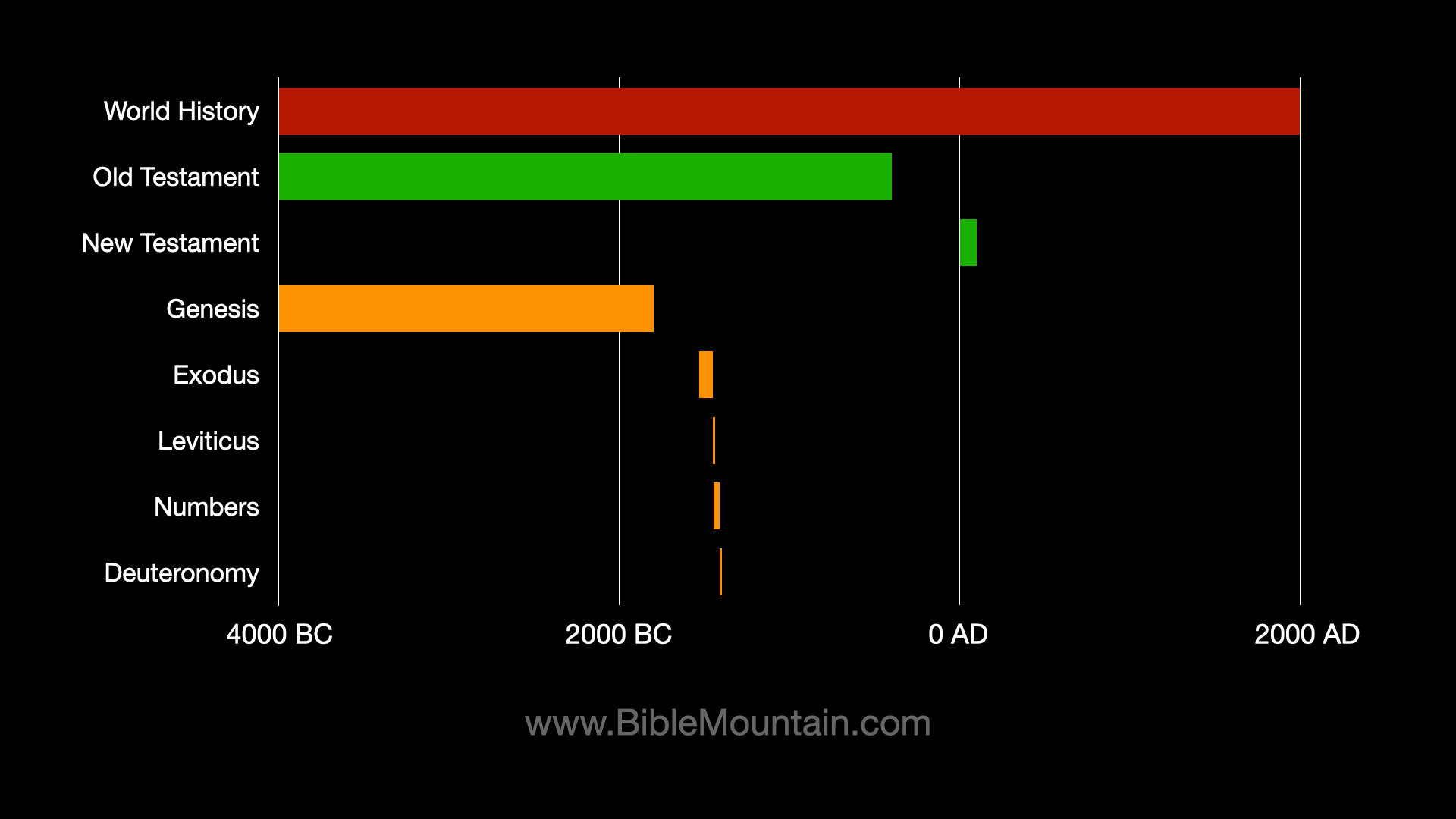
World history began around 4000 BC, which was 6,000 years ago. The Old Testament records events from 4000 BC up to about 400 BC. The New Testament records events from the 1st century AD. Genesis begins with creation and tells about history up to about 1800 BC. Exodus, Leviticus, and Numbers tell about Moses growing up, delivering Israel from slavery, receiving the Mosaic law at Mount Sinai, and leading Israel through the wilderness for 40 years. Moses lived around 1500 BC.
The book of Deuteronomy spans less than a year. At the beginning of the book, Israel was poised to cross the Jordan River and enter the Promised Land. Before they did that, Moses reviewed their history and their law. This was the last thing Moses did before he died.
Deut. 1:1 ¶ These are the words which Moses spoke to all Israel across the Jordan in the wilderness, in the Arabah opposite Suph, between Paran and Tophel and Laban and Hazeroth and Dizahab.
Look at the statement “These are the words which Moses spoke”. This sums up the entire book. Most of the book records words which Moses spoke to Israel.
Look at the words “across the Jordan”. This was written from the perspective of the Promised Land, which was Canaan, which was on the west side of the Jordan River, so across meant on the east side of the Jordan.
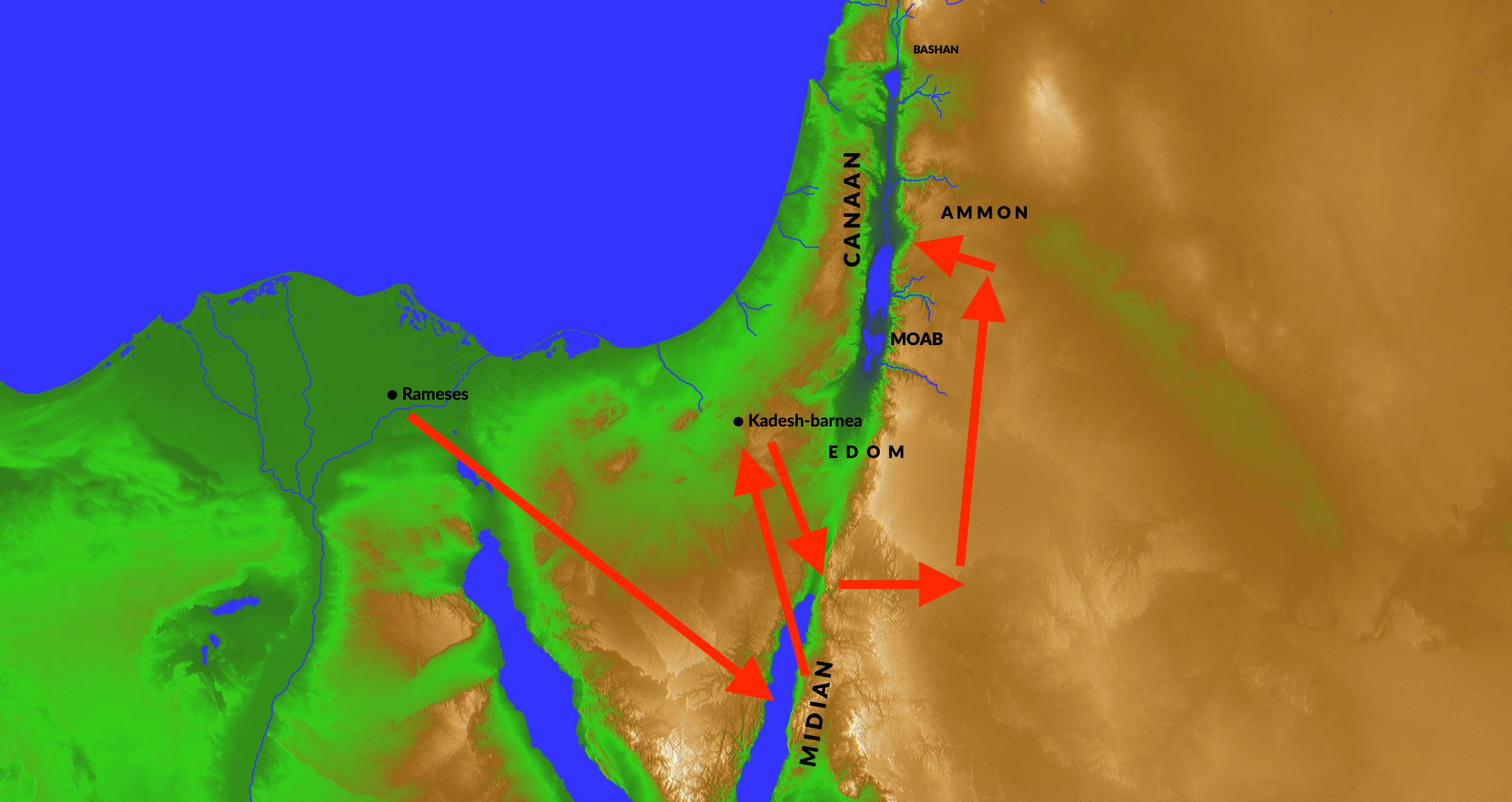
At the beginning of the book of Exodus, Israel was living in Rameses in Egypt. Moses led Israel out of slavery, took them to Mount Sinai in Midian, and received the Mosaic Law, which is recorded in Exodus and Leviticus. The book of Numbers tells us that when they left Mount Sinai, they went to Kadesh Barnea to enter the Promised Land, but 10 of the spies discouraged Israel, so Israel had to wander in the wilderness for forty years. After their wanderings, they traveled along the east side of Edom and Moab, conquered multiple kingdoms on the east side of the Jordan River, and then arrived at the east bank of the Jordan, across from Jericho, poised to finally enter the Promised Land. At that point the events recorded in Deuteronomy took place.
Deut. 1:2 It is eleven days’ journey from Horeb by the way of Mount Seir to Kadesh-barnea.
Deut. 1:3 Now it happened, in the fortieth year, on the first day of the eleventh month, Moses spoke to the children of Israel, according to all that Yahweh had commanded him to give to them,
Notice the word “fortieth”. The events in Deuteronomy took place in the fortieth year after Israel left Egypt.
Notice the word “eleventh”. Moses spoke toward the end of the year.
Deut. 1:4 after he had struck down Sihon the king of the Amorites, who lived in Heshbon, and Og the king of Bashan, who lived in Ashtaroth and Edrei.
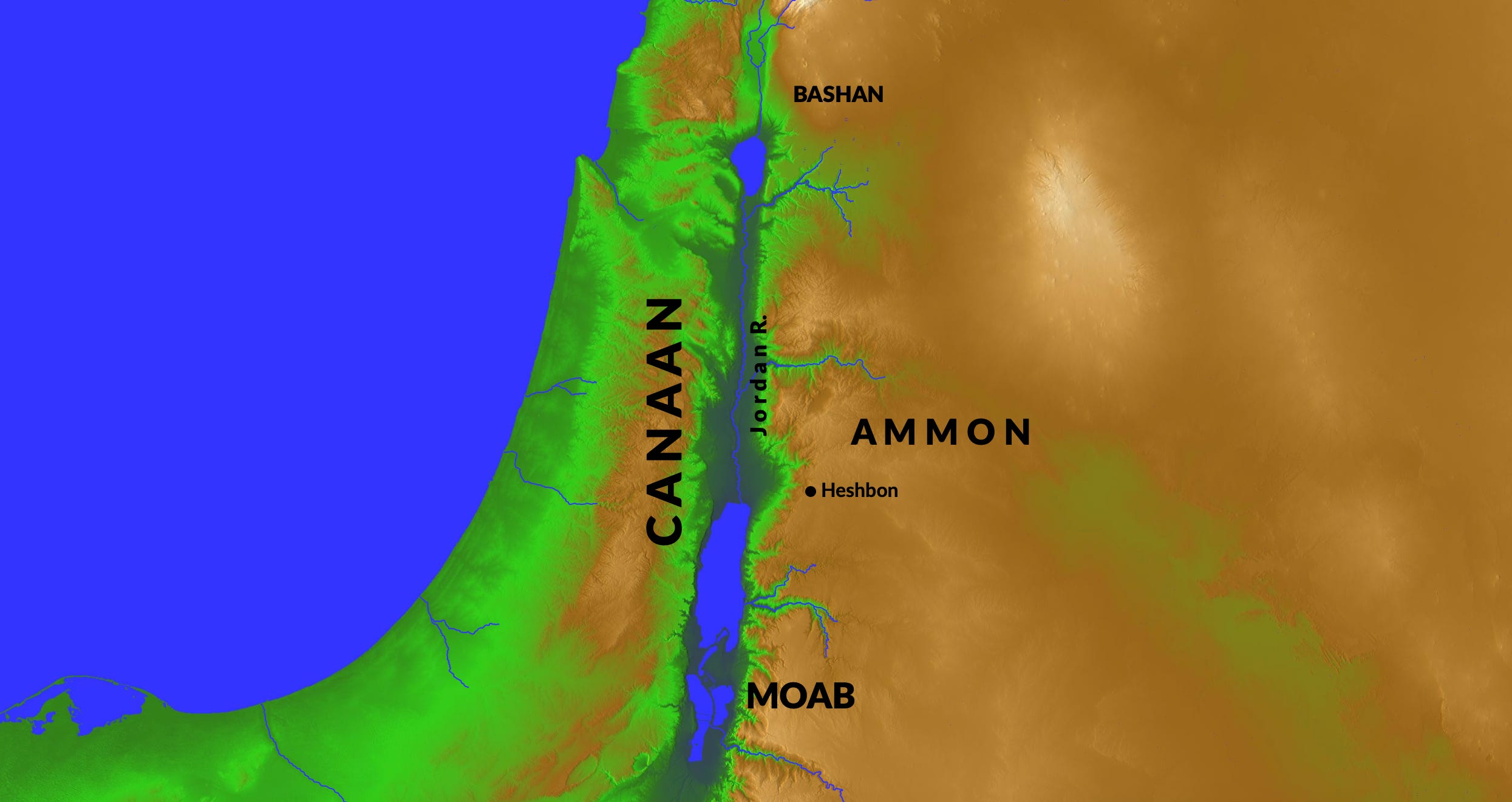
The Amorites lived on the east side of the Jordan River. The conquests of Sihon and Og are recorded in Numbers 21.
Deut. 1:5 Across the Jordan in the land of Moab, Moses undertook to expound this law, saying,
Notice the word “saying”. Verse 6 begins a speech of Moses.
Deut. 1:6 ¶ “Yahweh our God spoke to us at Horeb, saying, ‘You have stayed long enough at this mountain.
Horeb is another name for Mount Sinai.
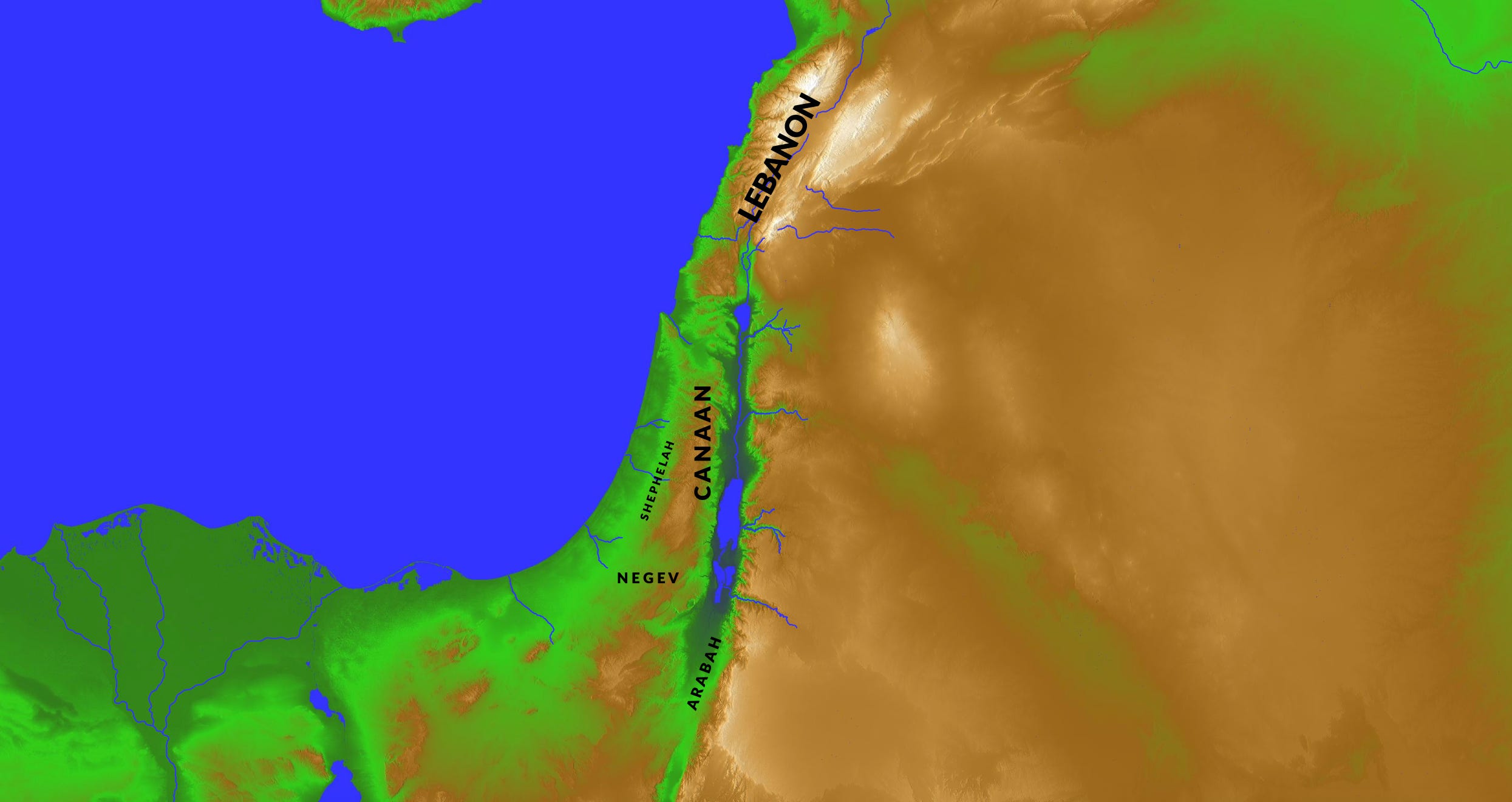
Deut. 1:7 Turn and set out, and go to the hill country of the Amorites, and to all their neighbors in the Arabah, in the hill country and in the Shephelah and in the Negev and by the seacoast, the land of the Canaanites, and Lebanon, as far as the great river, the river Euphrates.
The hill country of the Amorites was the land of Canaan, the Promised Land.
Deut. 1:8 See, I have given over the land before you; go in and possess the land which Yahweh swore to give to your fathers, to Abraham, to Isaac, and to Jacob, to them and to their seed after them.’
Deut. 1:9 ¶ “And I spoke to you at that time, saying, ‘I am not able to bear the burden of you alone.
Deut. 1:10 Yahweh your God has multiplied you, and behold, you are this day like the stars of heaven in number.
Deut. 1:11 May Yahweh, the God of your fathers, increase you a thousand-fold more than you are and bless you, just as He has promised you!
Deut. 1:12 How can I alone bear the load and burden of you and your strife?
Deut. 1:13 Choose wise and understanding and experienced men from your tribes, and I will appoint them as your heads.’
Deut. 1:14 Then you answered me and said, ‘The thing which you have said to do is good.’
Deut. 1:15 So I took the heads of your tribes, wise and experienced men, and gave them as heads over you, leaders of thousands and of hundreds, of fifties and of tens, and officers for your tribes.
Deut. 1:16 ¶ “Then I commanded your judges at that time, saying, ‘Hear the cases between your brothers, and judge righteously between a man and his brother or the sojourner who is with him.
Notice the word “righteously”. The judges were commanded to be righteous in their judgments.
Don’t miss the word “sojourner”. Even non-Israelites were to be treated fairly.
Deut. 1:17 You shall not show partiality in judgment; you shall hear the small and the great alike. You shall not fear man, for the judgment is God’s. The case that is too hard for you, you shall bring to me, and I will hear it.’
Look at the command “You shall not show partiality”. Judges were required to do what was right.
Ponder the expression “You shall hear the small and the great alike.” Judges were not allowed to favor the rich or powerful in order to curry favor with them. Nor were they allowed to favor the poor or helpless simply because they were on the lower rungs of society. Judges were required to hear both sides and then make a decision based on the facts of the case.
We see similar commands in the New Testament that apply to us today. James prohibited us from showing favoritism to the rich and giving them the best seat in our assembly simply because they are rich (see James 2:1-7). At the end of a list of commands, Paul commanded us to obey without bias, doing nothing in partiality (see 1 Timothy 5:21).
Deut. 1:18 And I commanded you at that time all the things that you should do.
Deut. 1:19 ¶ “Then we set out from Horeb and went through all that great and fearsome wilderness which you saw on the way to the hill country of the Amorites, just as Yahweh our God had commanded us; and we came to Kadesh-barnea.
Deut. 1:20 And I said to you, ‘You have come to the hill country of the Amorites which Yahweh our God is about to give us.
Deut. 1:21 See, Yahweh your God has given over the land before you; go up, take possession, as Yahweh, the God of your fathers, has spoken to you. Do not fear or be dismayed.’
It was at this point that Moses sent twelve spies to spy out the land of Canaan. We will read about that tomorrow.
It is very tempting for humans to distort justice. Sometimes we want to curry favor with the rich and powerful. Other times we want to be partial to the poor and weak because they have a tough lot in life. However, the Bible is clear that we must not show partiality.
Instead, we are to act righteously and justly. When someone does something wrong, they should pay a price regardless of their station in life. Likewise, when someone deserves justice, they should receive justice, regardless of their high or low position in society.
Thanks for visiting Bible Mountain. If you have already joined my email list, thank you and please tell others about Bible Mountain. If you have not joined my email list yet, please do so now. In order to join, go to Bible Mountain dotcom, click on subscribe, and that will take you to a page where you can sign up. Your email address will not be sold nor given away. Once again, thanks for visiting Bible Mountain.
“Scripture quotations taken from the (LSB®) Legacy Standard Bible®, Copyright © 2021 by The Lockman Foundation. Used by permission. All rights reserved. Managed in partnership with Three Sixteen Publishing Inc. LSBible.org and 316publishing.com.”